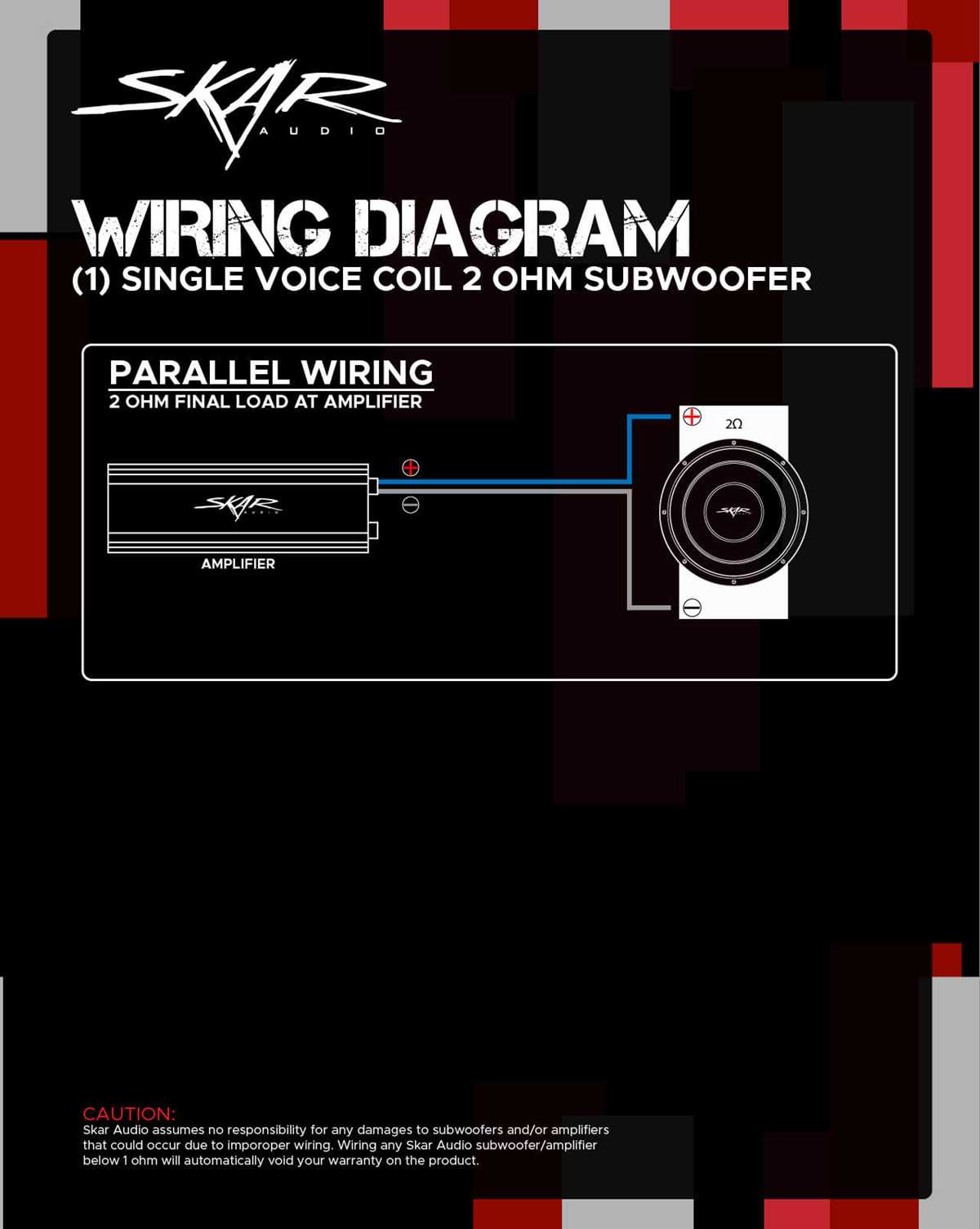
Connect the two voice coils of a bass driver in series when the amplifier supports a 2-resistance load. Join the positive terminal of the first coil to the negative terminal of the second coil, then route the remaining positive and negative terminals to the amplifier output. This configuration doubles the electrical resistance seen by the amplifier channel and prevents overload on units that cannot run at extremely low impedance.
Parallel connection produces a much lower load and should only be used with amplifiers rated for heavy current output. In this arrangement, both positive coil terminals connect together and both negative terminals connect together before running to the amplifier output terminals. The resulting resistance drops to 0.5 resistance units, which increases current flow and amplifier heat generation.
Series connection for two voice coils inside one bass driver
Use series linking when the amplifier lists a safe operating load of 2 resistance units or higher. This setup keeps current within safe limits and reduces the risk of amplifier shutdown during high bass passages.
- Connect coil A positive terminal to amplifier positive output
- Link coil A negative terminal to coil B positive terminal
- Connect coil B negative terminal to amplifier negative output
This chain path forces current to pass through both coils sequentially. Each coil adds resistance, resulting in a combined load that stabilizes amplifier operation.
Voltage and current behavior
Voltage from the amplifier distributes across both coils while current remains equal through each section of the circuit. Heat output stays moderate, which suits daily listening systems that run long sessions.
Parallel connection for high power amplifier setups
Use parallel linking only with amplifiers designed for extremely low impedance loads. Many high power mono amplifiers designed for competition systems can operate under these conditions.
- Join both positive coil terminals together
- Join both negative coil terminals together
- Run a single positive lead from the joined terminals to amplifier positive output
- Run a single negative lead from the joined terminals to amplifier negative output
This arrangement allows current to split between both coils, which lowers the total resistance seen by the amplifier channel. The result is higher power transfer and stronger low-frequency output.
Amplifier compatibility check
Verify that the amplifier specification sheet lists stable operation at 0.5 resistance units. If the amplifier is rated only for 1 or 2 units, use series linking instead. Running below the supported load range may trigger protection circuits or damage output transistors.
Multiple bass drivers in one system
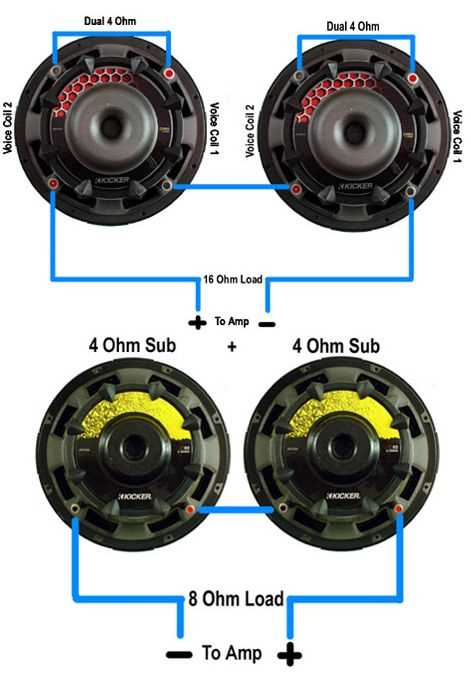
When two drivers with twin voice coils are installed, combine series and parallel links to reach a stable amplifier load. For example, connect the coils of each driver in series to form a 2-unit load per driver, then join both drivers in parallel at the amplifier terminals to reach a final 1-unit load.
Dual 1 Ohm Subwoofer Wiring Diagram for Series and Parallel Amplifier Loads
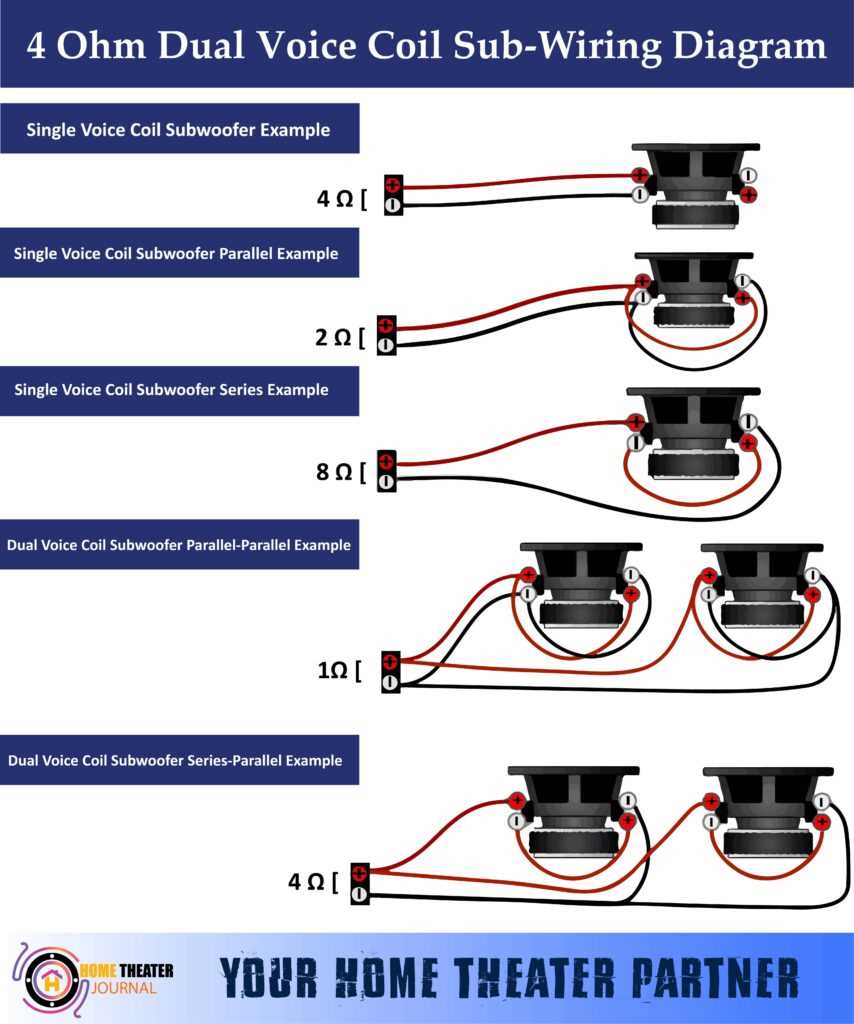
Connect the two voice coils of the low-frequency speaker in series when the amplifier is stable at a 2-resistance load. Join the negative terminal of the first coil to the positive terminal of the second coil. The remaining positive and negative terminals then run directly to the amplifier output. This path forces current through both coils sequentially and raises the total load seen by the amplifier channel.
Use parallel linking only with amplifiers rated for extremely low impedance operation. In this configuration, both positive coil terminals connect together and both negative terminals connect together before reaching the amplifier outputs. The resulting load becomes 0.5 resistance units, which dramatically increases current draw and power transfer to the bass driver.
Series configuration behavior
Voltage from the amplifier divides across the two coils while current remains identical through each coil. Because each coil adds resistance to the circuit, amplifier temperature stays lower during long playback sessions. This setup is common for daily audio systems where stability matters more than peak output.
Parallel configuration behavior
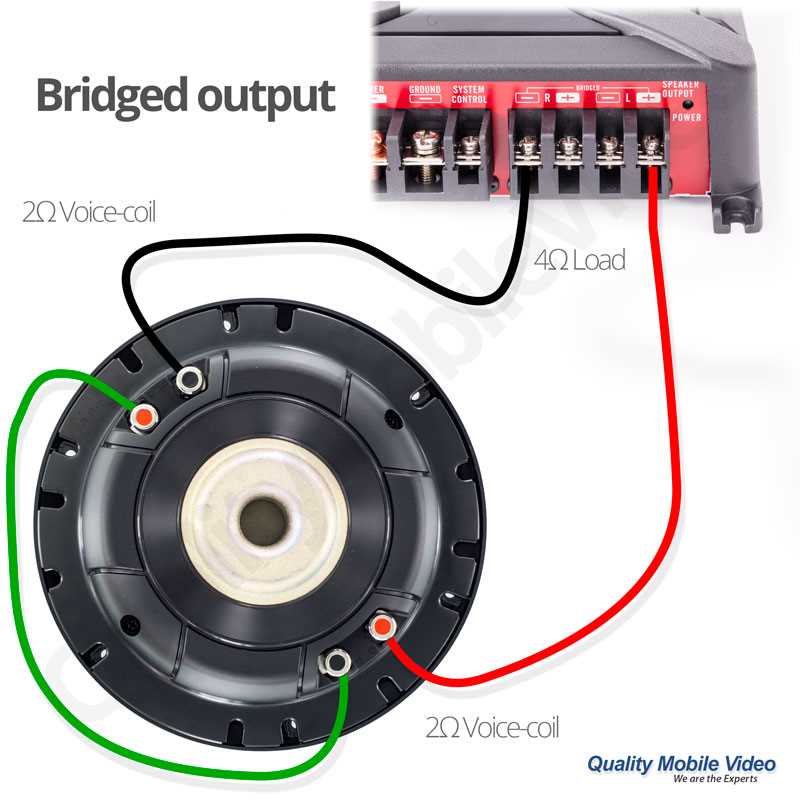
Parallel linking splits current between both coils while voltage remains equal across them. The amplifier encounters a much lower load and therefore pushes higher current. Use thick speaker cable, secure terminal connections, and verify that the amplifier specification sheet lists safe operation at 0.5 resistance units to prevent overheating or shutdown.
Before connecting the bass driver, measure the combined coil resistance with a multimeter. Place probes across the final positive and negative leads going to the amplifier. A reading close to 2 units confirms a series layout, while a value near 0.5 units indicates parallel linking.