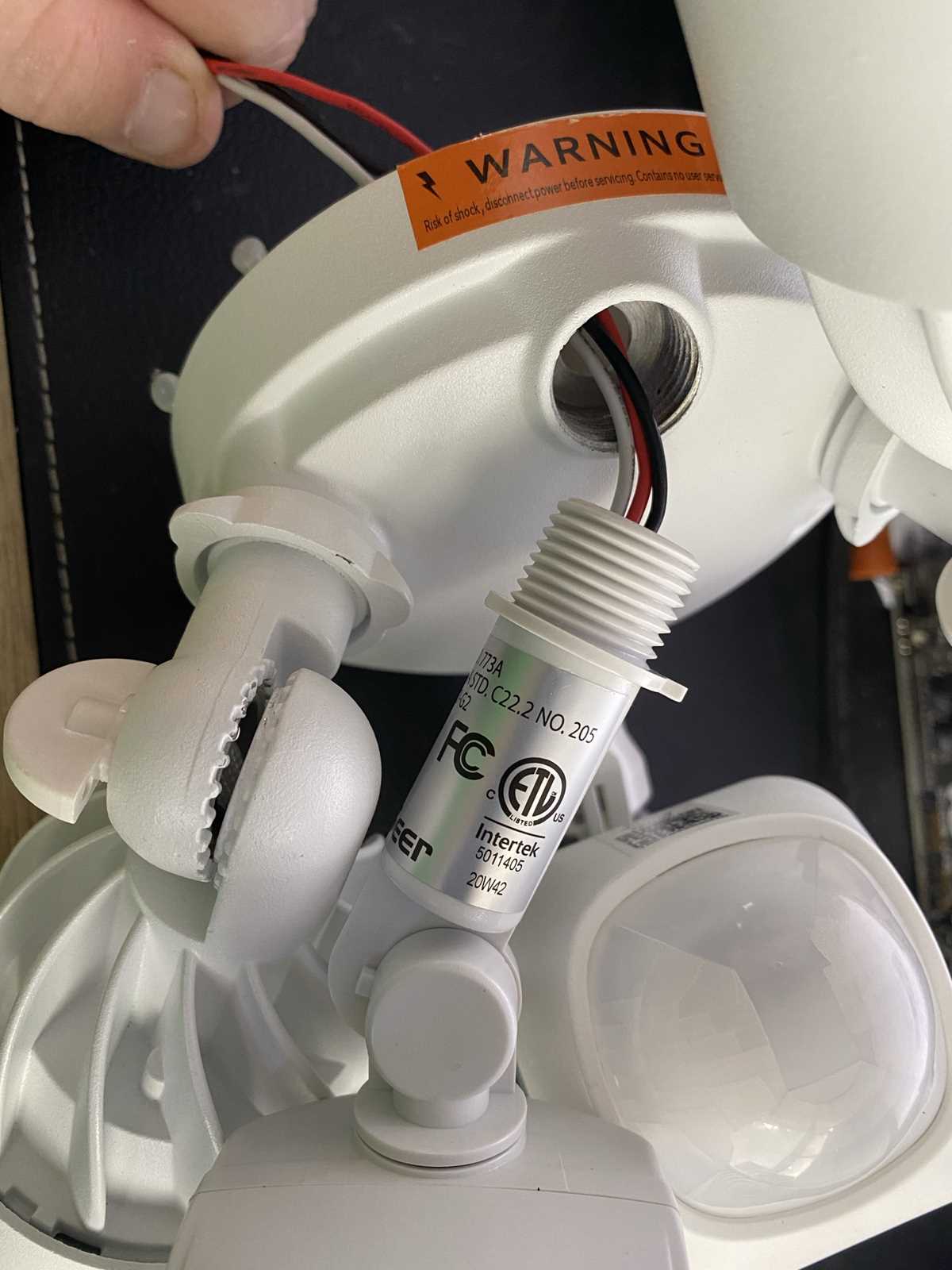
Turn off the circuit breaker that feeds the exterior lighting box before connecting the security camera with integrated LED lamps. This device operates from a standard 120-volt AC line and connects through three conductors: line, neutral, and protective ground. Confirm the absence of voltage using a tester before touching the conductors inside the junction box.
Identify the supply leads inside the wall box. The black conductor normally carries line voltage from the breaker panel, the white conductor returns current as neutral, and the bare copper or green lead provides grounding. Matching these conductors with the corresponding leads from the security lighting unit allows the device to power the camera module, LED lamps, and motion detection electronics.
Mount the bracket securely to the exterior junction box using weather-resistant screws and a gasket. The device base connects directly to the house electrical supply through wire connectors placed inside the box. Keep all splices inside the enclosure to protect them from moisture and dust.
After connecting the conductors, restore power at the breaker and confirm operation. The security unit should power up, the status indicator should activate, and the lighting modules should respond to motion detection. If the device does not start, check that the line and neutral leads are not reversed and confirm that the circuit breaker supplies steady voltage.
Label the circuit in the breaker panel and record the connection layout for future service. Having a clear reference of the supply path and junction box connections simplifies troubleshooting if the lighting system or camera stops responding later.
Ring Floodlight Cam wiring diagram with power line neutral and ground connections
Disconnect the breaker supplying the exterior junction box before connecting the outdoor security camera with integrated LED lamps. This device operates on a 120-volt AC circuit and requires three conductors from the house electrical supply: line, neutral, and grounding. Verify zero voltage with a tester between the line lead and neutral before handling the conductors.
Match the supply leads inside the junction box with the three conductors from the security lighting unit. The black lead normally carries line voltage from the breaker panel and connects to the device line conductor. The white lead acts as neutral and links to the neutral conductor from the device harness. The bare copper or green lead attaches to the grounding screw or ground wire from the unit, forming a protective path back to the panel.
Place all splices inside the weatherproof junction box and secure them with rated wire connectors. Mount the camera lighting assembly to the box using the provided bracket and gasket to prevent water entry. After restoring power, confirm that the device powers up, the LED lamps activate through motion detection, and the network indicator shows connection status.
Ring Floodlight Cam wiring diagram for connecting line neutral and ground in outdoor junction box
Switch off the breaker supplying the exterior lighting circuit before opening the junction box. Use a voltage tester between the hot conductor and neutral to confirm that the circuit carries no current. Most outdoor camera lighting units operate on 120-volt AC from a standard branch circuit.
Identify the three supply conductors inside the junction box. Typical residential cable contains:
- Black lead carrying line voltage from the breaker
- White lead acting as neutral return
- Bare copper or green lead connected to grounding
Attach these supply leads to the conductors from the security lighting device using weather-rated wire connectors. Match line to line, neutral to neutral, and grounding to the device ground conductor or mounting bracket screw.
Typical connection sequence
Follow a consistent order while making the connections:
- Connect the grounding lead to the box grounding screw or bracket terminal
- Join the neutral conductors with a wire connector
- Attach the line conductor to the device hot lead
- Fold conductors neatly into the junction enclosure
Keep all electrical splices fully inside the outdoor box. Moisture exposure causes corrosion and unstable electrical contact. Use silicone gasket seals or foam pads supplied with the mounting plate to block water entry around the device base.
Mounting and cable positioning
Secure the mounting bracket firmly to the junction box using corrosion-resistant screws. Route the device conductors through the center opening so they remain clear of the mounting hardware. Tighten the fixture base until the gasket compresses evenly against the wall surface.
Restore power at the breaker and observe device startup. The indicator light should activate and the LED lamps should respond when motion passes in front of the unit. If the device fails to power on, recheck line and neutral connections and verify voltage at the junction box.