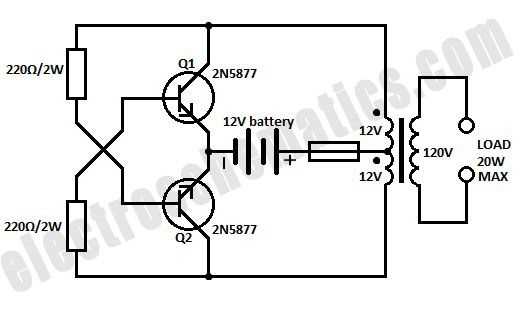
Use a stable 12-volt battery as the energy source to maintain consistent voltage output. Connect a robust transformer capable of handling at least 100 watts to prevent overloads during operation.
Select high-frequency transistors or MOSFETs to achieve clean conversion and reduce heat buildup. Ensure proper heatsinking to avoid thermal damage and maintain long-term performance.
Integrate a fuse or circuit breaker between the battery and the converter to protect against short circuits. A 10-amp fuse typically provides sufficient protection for small household loads.
Use quality capacitors on both input and output sides to stabilize voltage and minimize ripple. Electrolytic capacitors rated at 25V or higher with low ESR are recommended.
Arrange all components on a non-conductive base to prevent accidental shorting. Maintain at least 1 cm spacing between high-voltage paths for safety and reliability.
Check output with a multimeter before connecting sensitive devices. The AC voltage should remain within 10% of the expected level under normal load conditions.
Label input and output terminals clearly to avoid wiring errors. Include a switch to control power flow and isolate the converter when not in use for added safety.
12V DC to 12V AC Inverter Construction and Connection Guide
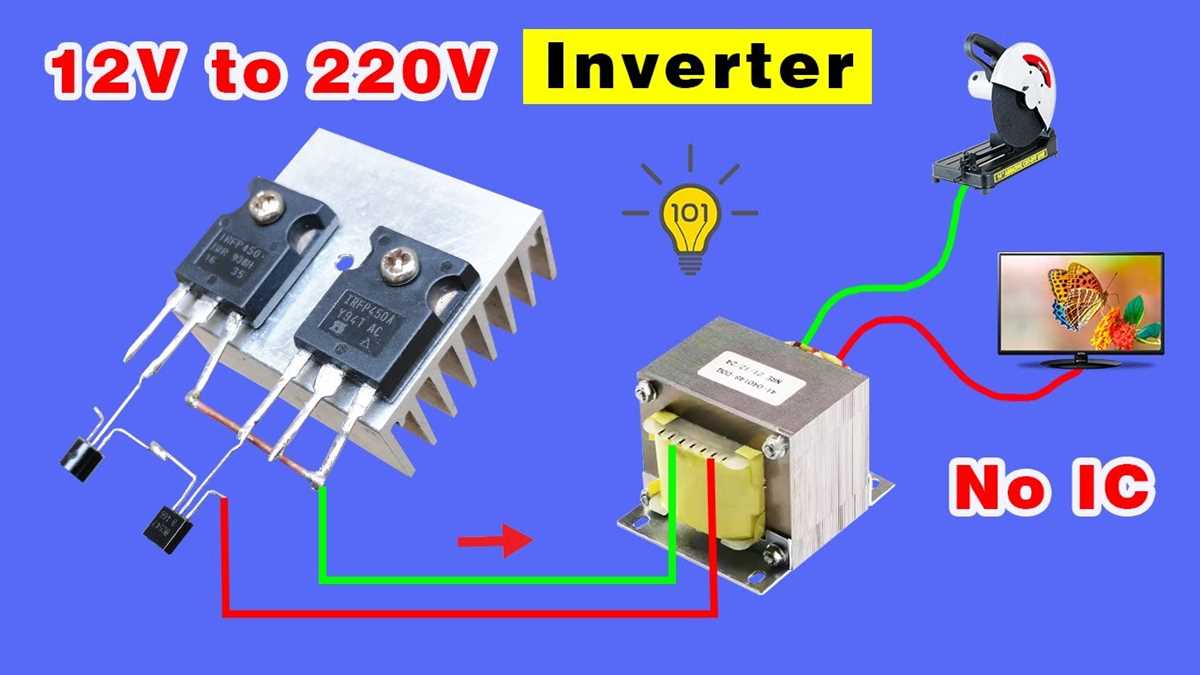
Start with a stable low-voltage source rated at 12 volts to feed the conversion module. Ensure terminals are clean and secure to prevent voltage drops during operation.
Select high-speed switching transistors to drive the transformer efficiently. Connect them with adequate heatsinks and maintain correct polarity to avoid damage.
Integrate a step-up transformer to convert the direct current to alternating current. Match the transformer rating with the maximum expected load, typically 100–150 watts for small household devices.
Install protective components such as fuses and capacitors to stabilize input and output voltages. Place a 10-amp fuse on the input line and use low-ESR capacitors at both ends to reduce ripple and spikes.
Verify connections and output voltage with a multimeter before attaching sensitive devices. Ensure the alternating voltage stays within ±10% of the target and label all terminals to prevent accidental misconnection.
Selecting Components and Calculating Voltage Requirements
Choose transistors with voltage ratings at least 25% higher than the expected input to handle current surges without overheating. Ensure the collector-emitter voltage exceeds the source voltage under load conditions.
Calculate the transformer turns ratio to match the desired alternating voltage output. For a step-up from 12 volts direct to roughly 12 volts alternating RMS, use a 1:1 ratio with consideration for peak voltage swing and load efficiency.
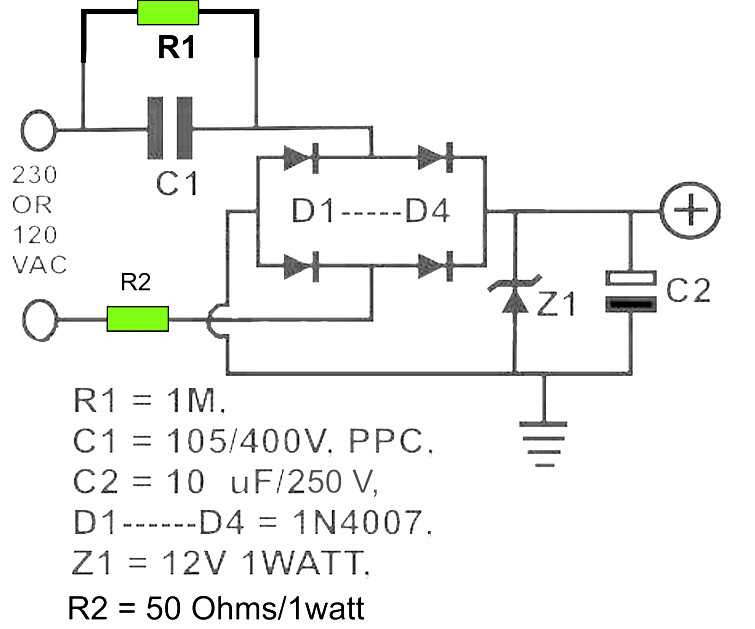
Use capacitors to stabilize the supply and filter noise. Electrolytic capacitors rated at 25 volts with a tolerance of ±20% are suitable, and low-ESR types reduce heat buildup during repeated switching cycles.
Resistors in the driver stage must handle pulse currents. Select values that limit base or gate currents while ensuring fast switching, typically in the 10–50 ohm range for small modules.
Determine wire gauge to carry full load current without significant voltage drop. For 5–10 amps, 16–14 AWG copper conductors provide sufficient capacity while minimizing heating.
Include protective devices like fuses or PTC resettable resistors. Choose ratings slightly above normal current draw to allow startup surges but prevent overcurrent damage.
Verify total voltage requirements by measuring open-circuit and loaded output. Adjust transformer taps or component values if the AC amplitude deviates more than ±10% from the target to maintain safe and stable operation.