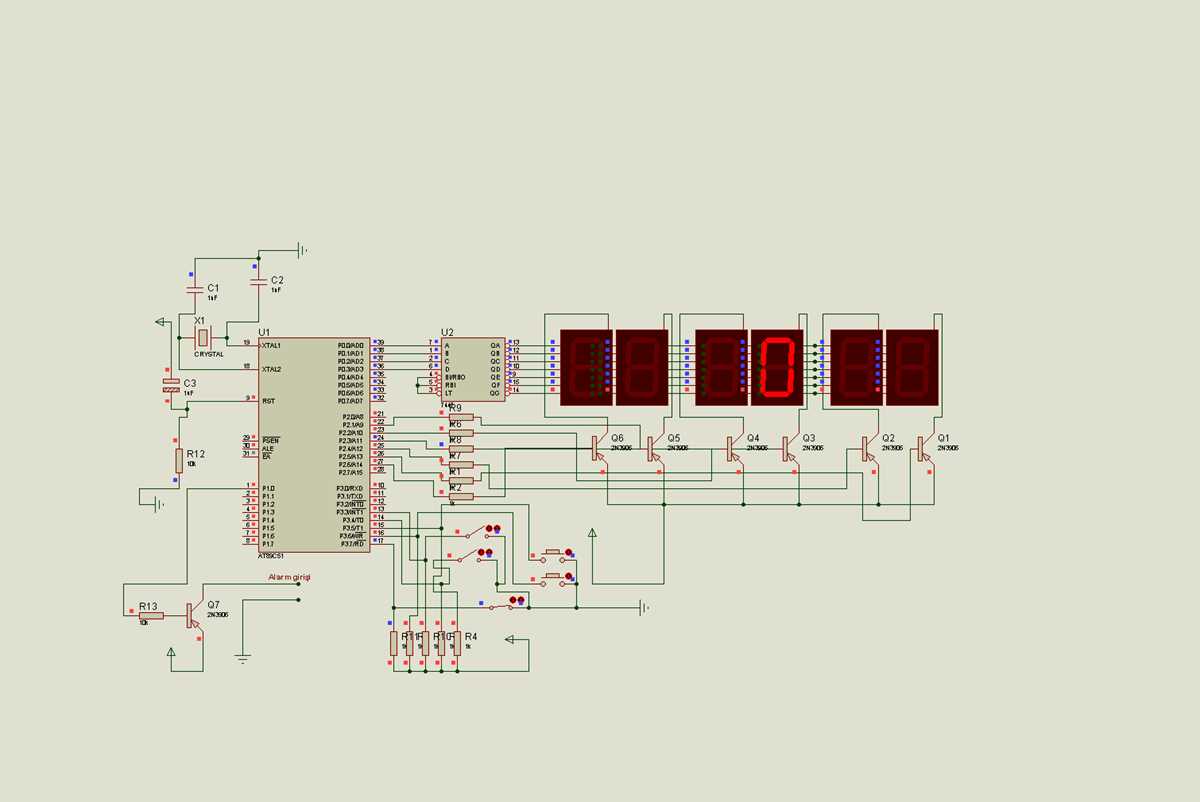
Use a stable one-second pulse source before connecting the numeric LED modules. Accurate time indication depends on a precise timing signal, usually generated by a 32.768 kHz quartz crystal connected to a divider chip such as the CD4060 or similar frequency splitter. After internal division, the signal becomes a 1 Hz pulse that advances counting chips responsible for seconds and minutes.
Numeric LED indicators with seven light bars require a driver that converts binary coded data into the correct bar pattern. A common solution uses chips like the 74LS47 or CD4511, which translate a four-bit value into the seven control lines that illuminate the proper bars. Each LED bar usually needs a current-limiting resistor between 220 Ω and 470 Ω depending on supply level and brightness.
Connect the counting stage in a chain so that each stage advances the next. A typical setup uses decade counters such as the CD4017 or BCD counters like the 74LS90. The first unit counts seconds from 0 to 9, the next handles the tens of seconds from 0 to 5, and additional counters track minutes and hours. Carry outputs from one chip feed the input of the following chip, allowing the time value to increment correctly.
Power distribution also affects stable operation. Most logic chips used in these timekeeping builds operate at 5 V, so a regulated supply with filtering capacitors of about 100 µF plus smaller 0.1 µF bypass capacitors near each chip helps prevent flicker and counting errors. Short connection traces and a shared ground line reduce noise that could disturb the counting sequence.
7 Segment Display Clock Circuit Diagram With IC Connections and Time Counting Layout
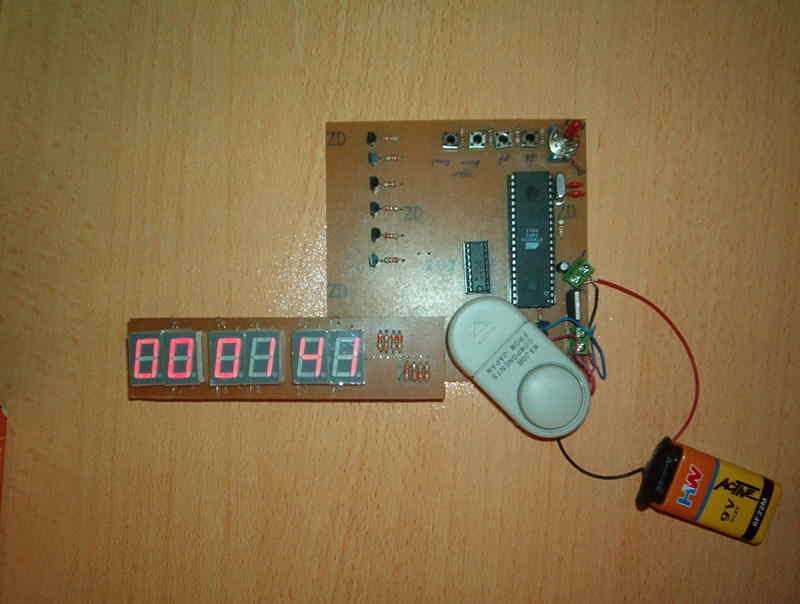
Generate a stable one-second pulse before linking the numeric LED indicators. A quartz resonator rated at 32.768 kHz connected to a divider chip such as CD4060 or a similar counter reduces the frequency step by step until a 1 Hz signal appears. This pulse feeds the first counting chip and advances the seconds register once per second.
Main integrated chips used in the time counting chain
- Quartz oscillator divider such as CD4060 producing the base timing pulse
- BCD counters like 74LS90 or CD4518 counting units and tens of seconds
- Decoder drivers such as CD4511 translating binary values to LED bar patterns
- LED numeric modules showing digits from 0 to 9
The first counter handles the units of seconds from 0 to 9. Its carry output connects to the next counter responsible for tens of seconds. That stage resets after reaching the value 5, creating a 60-second cycle. The same carry principle feeds the minute counters so the numeric sequence advances automatically without manual control.
Each LED bar within the numeric indicator requires a resistor placed in series with the driver output. Typical values range from 220 Ω to 470 Ω for a 5 V supply. Without these resistors the LED elements draw excessive current, which may damage the driver chip or cause uneven brightness across the digits.
Power distribution guidelines
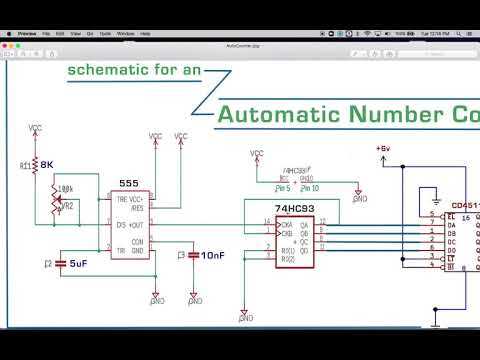
- Use a regulated 5 V supply for logic chips
- Place a 0.1 µF ceramic capacitor near every IC power pin
- Add a 100 µF electrolytic capacitor near the supply input
- Keep the ground line short and shared by all chips
Arrange the chips so the signal flow moves from the oscillator stage to the counting units and then to the LED drivers. Short traces between the counters and driver chips reduce timing errors and prevent unstable digit changes during transitions between values such as 09 to 10.
Pin Mapping Between 7 Segment LED Units and BCD Decoder Driver Chips
Match each LED bar lead with the correct driver output pin before powering the board. Decoder chips such as CD4511 or 74LS47 convert a four-bit BCD value into seven control lines labeled A through G. Each of these outputs must connect to the corresponding bar of the numeric LED unit. If line A from the driver reaches the wrong LED bar, the digit pattern becomes distorted and numbers appear incorrectly.
The numeric LED module typically exposes eight or ten pins. Seven pins control the light bars labeled A, B, C, D, E, F, and G, while one common pin connects either to ground or to the positive supply depending on module type. A common cathode module links the shared pin to ground, while a common anode version connects the shared pin to the positive supply rail.
Place a resistor in series with every driver output. Typical values range from 220 Ω to 470 Ω for a 5 V logic supply. These resistors limit current through each LED bar and maintain balanced brightness across all digits. Without them, driver chips may exceed their current rating and the LED elements may degrade after extended use.
Verify the mapping by testing digits sequentially. Apply BCD values from 0000 to 1001 at the decoder input pins and observe the illuminated pattern. Correct mapping produces numbers 0 through 9 in order. Incorrect line connections often show mixed patterns such as missing bars or extra illuminated sections, indicating that two control lines are swapped.