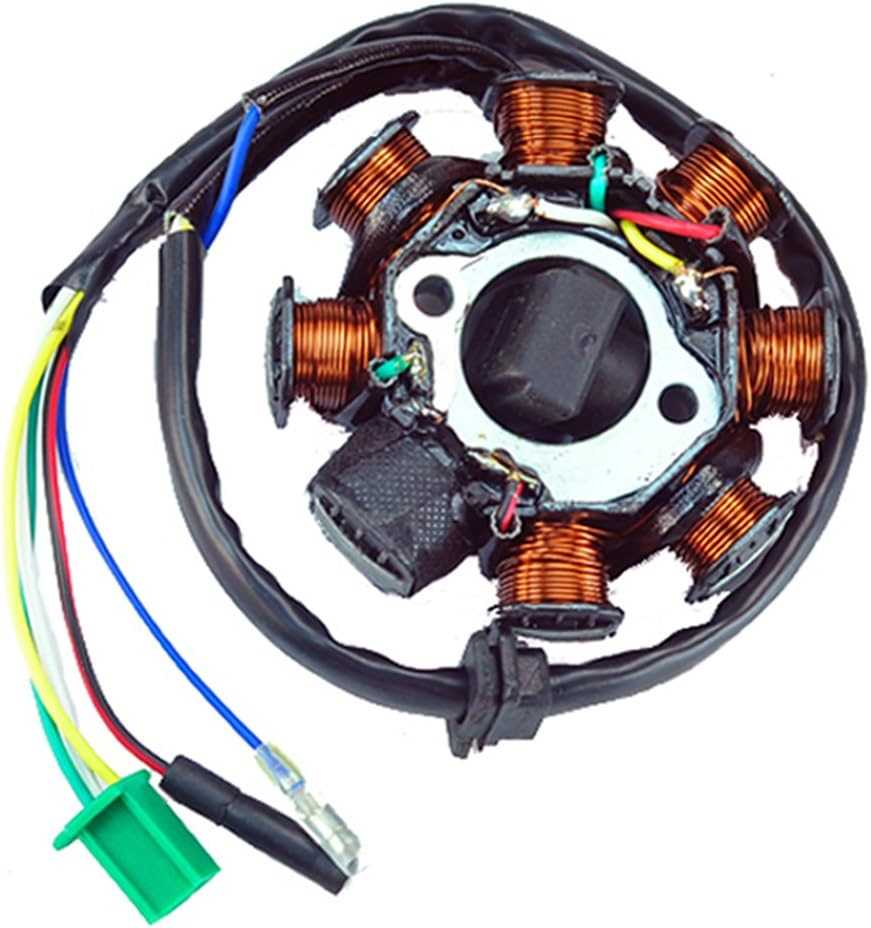
Identify each lead from the engine generator assembly before connecting it to the regulator and ignition unit. A typical five-lead alternator coil group used in small motorcycles and ATVs includes two AC output conductors, one trigger lead for the ignition pickup, and two charging coil outputs. Matching these conductors correctly prevents charging failure and unstable ignition timing.
Measure resistance across the coil outputs using a digital multimeter before installation. Charging coil terminals usually show 0.2–1.0 Ω between the AC pair, while the pickup sensor line often measures 90–150 Ω relative to ground. Values outside these ranges may indicate damaged windings or insulation breakdown.
Route the charging pair to the regulator rectifier module, which converts alternating current from the rotating generator assembly into DC voltage for the battery. In most small engine systems this module stabilizes output near 13.5–14.5 V during operation above 3000 RPM.
The trigger lead connects to the ignition control module. This signal originates from a magnetic pickup coil positioned near the flywheel. As the rotor magnet passes the pickup, a short voltage pulse signals the ignition module to fire the spark plug at the correct crankshaft position.
Correct routing of each conductor, proper grounding, and secure connectors allow the charging system and ignition unit to operate without voltage drop or signal loss during engine operation.
5 Wire Stator Wiring Diagram With Coil Leads and Regulator Connections
Connect the alternating current outputs from the engine generator assembly directly to the regulator rectifier module. Most five-lead alternator coil packs used in small motorcycles, scooters, and ATVs provide separate conductors for charging output, ignition trigger, and ground reference.
Typical lead functions
Manufacturers often use consistent color patterns for identification. A common configuration includes:
- Yellow lead – AC charging output to regulator rectifier
- White lead – second AC charging output
- Blue with white stripe – ignition pickup signal
- Green – ground return
- Black with red stripe – ignition power feed
The yellow and white conductors carry alternating current produced by the rotating magnetic field of the flywheel. These lines connect to the rectifier module, where diode bridges convert AC to direct current for battery charging and electrical loads.
Regulator connection layout
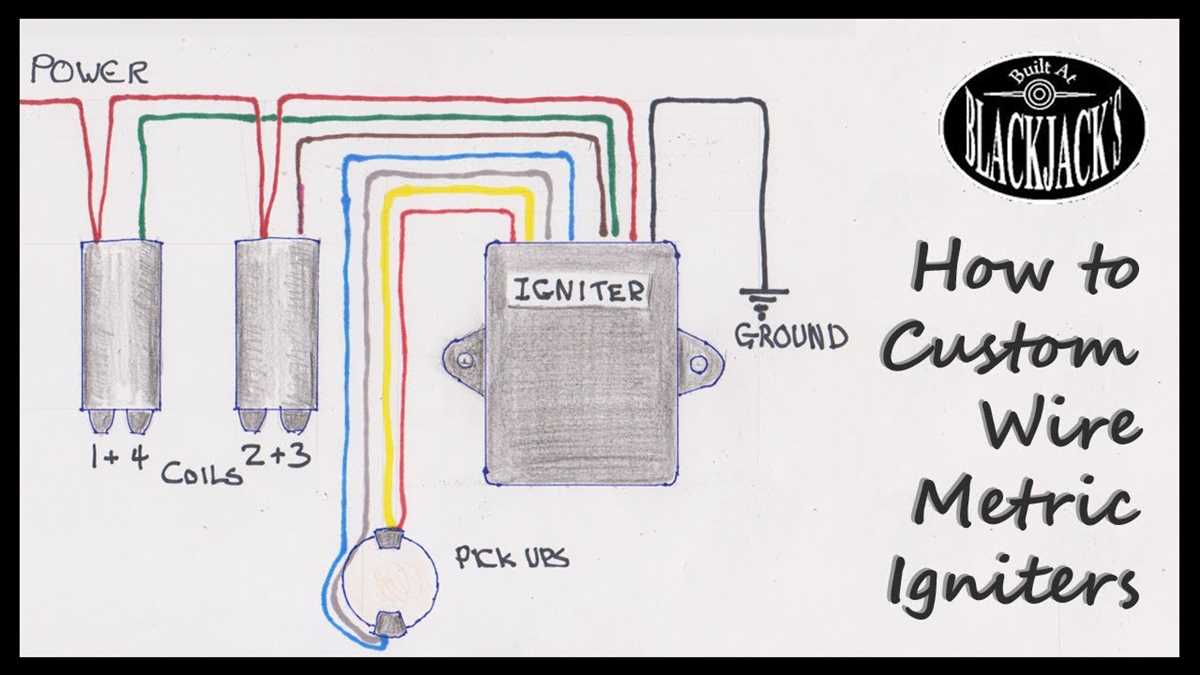
The regulator rectifier usually includes terminals arranged as follows:
- Two AC input terminals receiving the yellow and white conductors
- One positive DC output leading to the battery
- One ground connection attached to the frame
During engine operation at around 3000–5000 RPM, the charging output typically ranges from 20–70 V AC before rectification. After conversion and voltage regulation, the system maintains about 13.8–14.5 V DC across the battery terminals.
Secure connectors, intact insulation, and solid frame grounding keep the charging and ignition systems stable. Loose contacts increase resistance and heat buildup, which may lead to voltage drop or unstable spark timing.
Color Codes and Functions of the Five Wires in a Stator Assembly
Identify each conductor by color before connecting the generator assembly to the charging and ignition modules. Most five-lead alternator units used in motorcycles, scooters, and small ATVs follow a predictable color scheme that separates charging output, trigger signal, and grounding paths.
The charging section normally uses yellow and white conductors. These lines carry alternating current produced by the rotating magnetic field of the flywheel. During engine operation around 4000 RPM, these outputs may reach 20–70 volts AC before entering the rectifier regulator module.
The ignition trigger signal usually travels through a blue conductor with a white stripe. This lead connects to the ignition control unit and carries a short voltage pulse generated by the pickup coil each time a rotor magnet passes the sensor. The pulse timing determines spark delivery relative to crankshaft rotation.
A green conductor commonly serves as the grounding path. It connects the generator assembly and ignition components to the engine frame, forming the return path for current flow. Proper grounding prevents unstable voltage readings and ignition misfires.
The remaining lead often appears as black with a red stripe. This line supplies power from the generator coil group to the ignition module. The module uses this energy to charge the internal capacitor used for spark generation.
Verify each conductor using a multimeter before final connection. Charging outputs usually show very low resistance between them, while the pickup coil lead measures roughly 90–150 ohms relative to ground. Confirming these values helps detect damaged windings or insulation faults before installation.