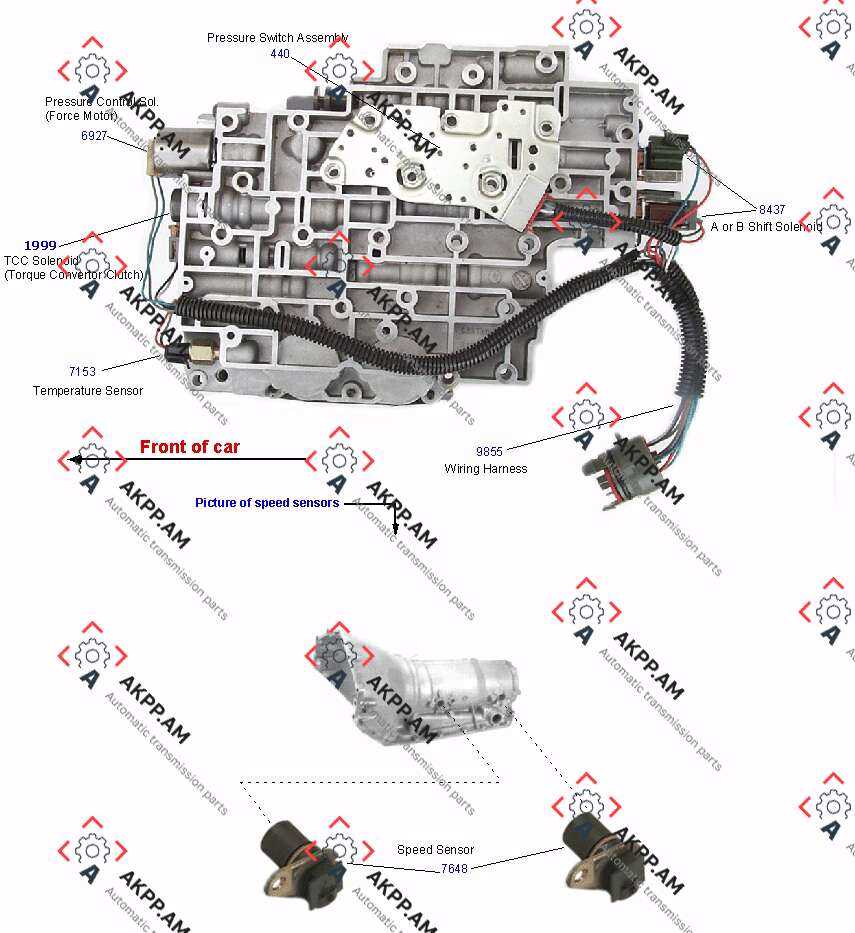
Check the transmission harness connectors before diagnosing shifting or vehicle motion data faults. Two rotation detectors mounted on the gearbox provide shaft rotation signals to the control module. One unit reads turbine shaft rotation near the front of the transmission, while the second unit measures output shaft rotation near the tail housing. Both components generate an AC pulse signal that increases in frequency as shaft rotation rises.
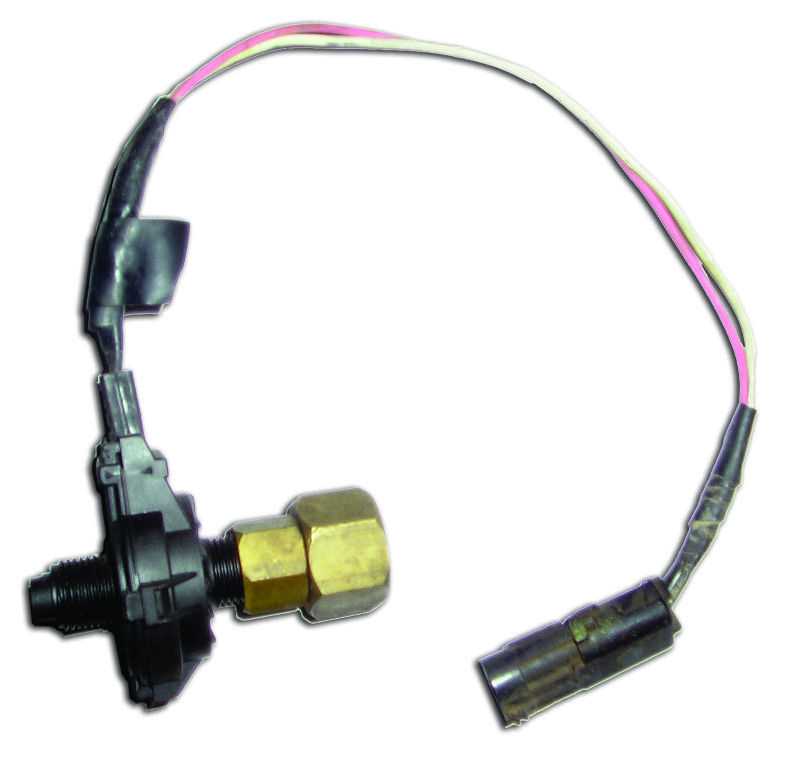
Verify connector pin locations at the transmission case harness. Each rotation detector normally uses a two-wire circuit that routes the signal directly to the powertrain control module. These conductors often appear as twisted pairs to reduce electrical noise from nearby ignition and charging components. Measuring resistance across the terminals with the ignition off usually shows values between 500 and 1500 ohms, depending on the manufacturer revision.
Inspect the harness path between the gearbox and the engine control module. Heat from the exhaust system, vibration, and fluid contamination frequently damage insulation or connector seals. Any break in the signal path can prevent the control module from calculating gear ratio and vehicle movement data, which leads to harsh shifts or transmission fault codes.
Use a scan tool while driving to confirm signal activity from both shaft rotation detectors. Live data should display turbine RPM and output shaft RPM values that change smoothly during acceleration. Sudden drops to zero or erratic readings usually indicate connector corrosion, damaged conductors, or internal failure of the pickup unit.
Trace each conductor from the transmission case connector to the control module plug using a pin reference layout. Matching conductor shades and terminal numbers helps confirm that both signal lines reach the correct control unit pins without splices or incorrect connections.
4L80E speed sensor wiring diagram with input output sensor pinout and signal lines
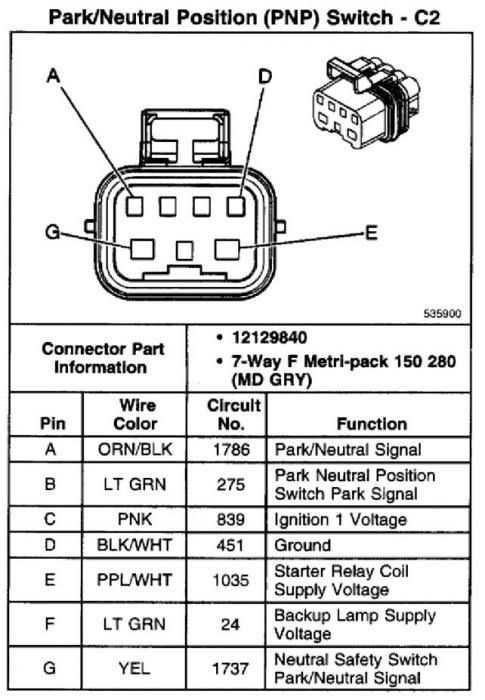
Inspect the transmission case connectors before checking electrical signals. This gearbox uses two shaft rotation pickup units: one mounted near the front pump that reads turbine shaft rotation and another installed in the tail housing that monitors output shaft rotation. Both units send pulse signals to the powertrain control module through a dedicated harness.
Locate the transmission external connector and identify the conductors that carry rotation signals. Each pickup unit normally uses a two-conductor circuit. The control module reads alternating voltage pulses generated as the internal reluctor wheel passes the magnetic pickup.
Typical signal path between the transmission and control module includes:
- Front shaft pickup → transmission harness
- Harness connector at transmission case
- Main engine harness routing along bellhousing
- Powertrain control module input pins
Check conductor pairing inside the harness. Manufacturers commonly twist the two leads together to reduce electromagnetic interference from ignition coils and alternator output. Twisted conductors maintain stable pulse signals that allow the control module to calculate shaft rotation frequency accurately.
Typical characteristics measured at the pickup connector include:
- Resistance between terminals: 500–1500 ohms
- AC voltage during shaft rotation: 0.5–5 volts depending on RPM
- No direct ground connection on either lead
Trace the conductor route if diagnostic trouble codes indicate missing turbine or output shaft data. The harness often runs close to the exhaust and transmission crossmember. Heat exposure and road debris frequently damage insulation near these areas.
Check connector pin alignment at the transmission case plug. Bent terminals or fluid contamination inside the connector shell can interrupt the pulse signal. Cleaning contacts and reseating the plug often restores stable communication between the gearbox and the control module.
Monitor live data with a scan tool during road testing. The control module should display turbine shaft RPM and output shaft RPM values that increase smoothly during acceleration and decrease during deceleration. A flat reading or sudden drop to zero usually points to a broken conductor, connector fault, or failed pickup unit.
4L80E input and output speed sensor wiring diagram with connector pin identification
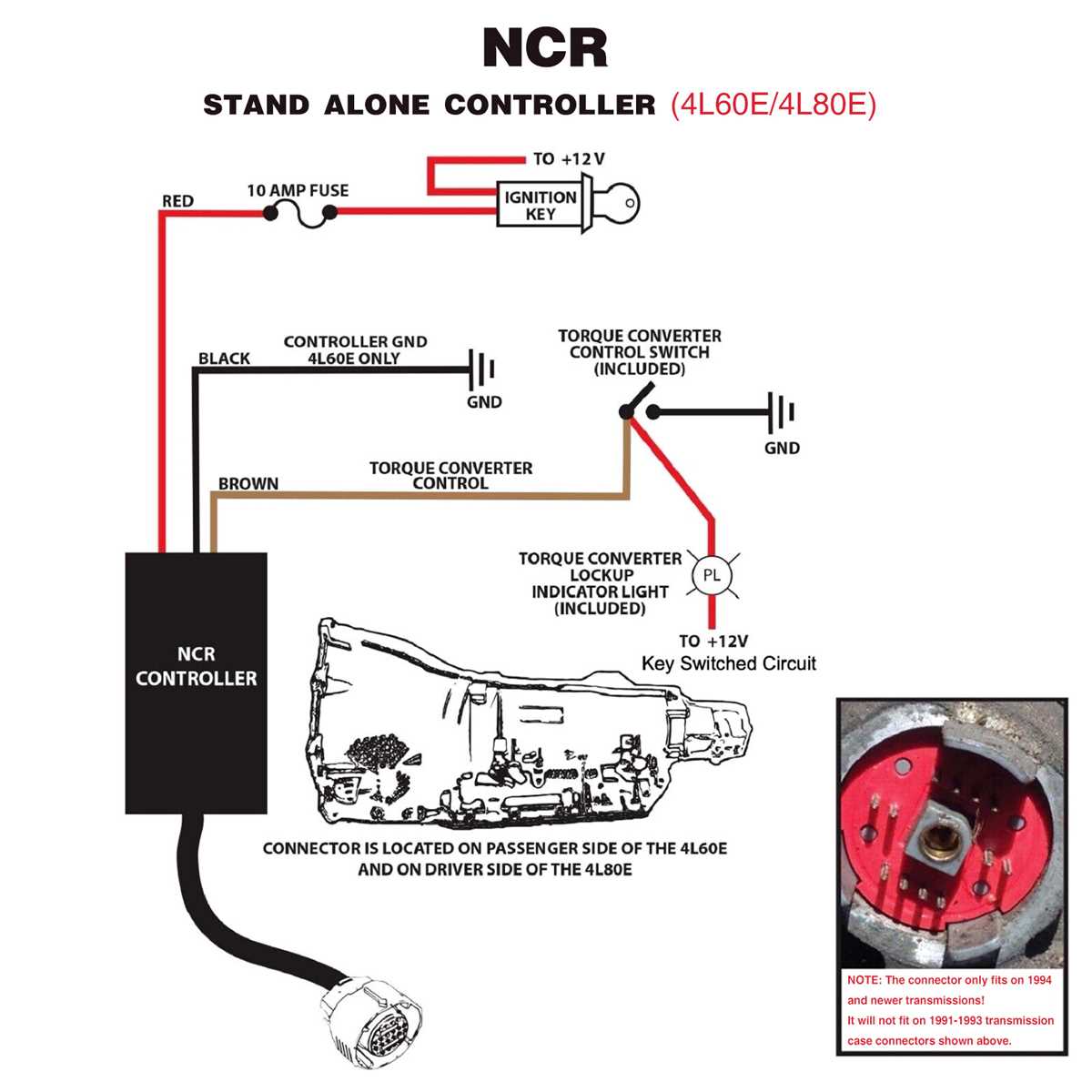
Locate the transmission case connector before tracing the signal circuit. The heavy-duty GM automatic gearbox uses two magnetic pickup units mounted directly on the transmission housing. One reads turbine shaft rotation near the pump assembly, while the second tracks output shaft rotation at the rear extension housing.
Identify the connector that links these pickup units to the main vehicle harness. The transmission case plug normally carries multiple circuits, including shift solenoids and pressure control lines. Two separate two-conductor paths transmit shaft rotation signals to the powertrain control module.
Check the terminal layout on the transmission case connector. Each pickup unit uses two dedicated pins that lead directly to the control module without grounding through the transmission body. This configuration allows the module to measure alternating voltage pulses generated by the magnetic pickup as the internal reluctor wheel rotates.
Typical signal path follows this sequence. The magnetic pickup produces an AC pulse, which travels through the short transmission lead to the case connector. From that point the circuit enters the engine harness and continues to the powertrain control module located in the engine bay or under the dashboard.
Inspect conductor insulation tones during tracing. Manufacturers often use paired leads with similar shades or stripe markings to identify signal circuits. These conductors may appear twisted together along the harness length to reduce electromagnetic interference produced by ignition components and charging system output.
Measure resistance across the pickup terminals with the ignition switched off. Most magnetic pickup units used with this transmission show readings between 500 and 1500 ohms. A reading outside this range often indicates an internal coil fault or broken conductor inside the harness.
Inspect connector pins carefully while the plug is disconnected. Bent terminals, corrosion, or transmission fluid intrusion inside the connector housing frequently interrupt signal transmission. Cleaning the terminals and applying dielectric grease helps restore stable contact.
Confirm operation using live data from a diagnostic scanner during a road test. The control module should display turbine shaft RPM and output shaft RPM values that increase smoothly during acceleration. Missing or unstable readings usually point to damaged conductors, connector faults, or failure of the magnetic pickup unit.