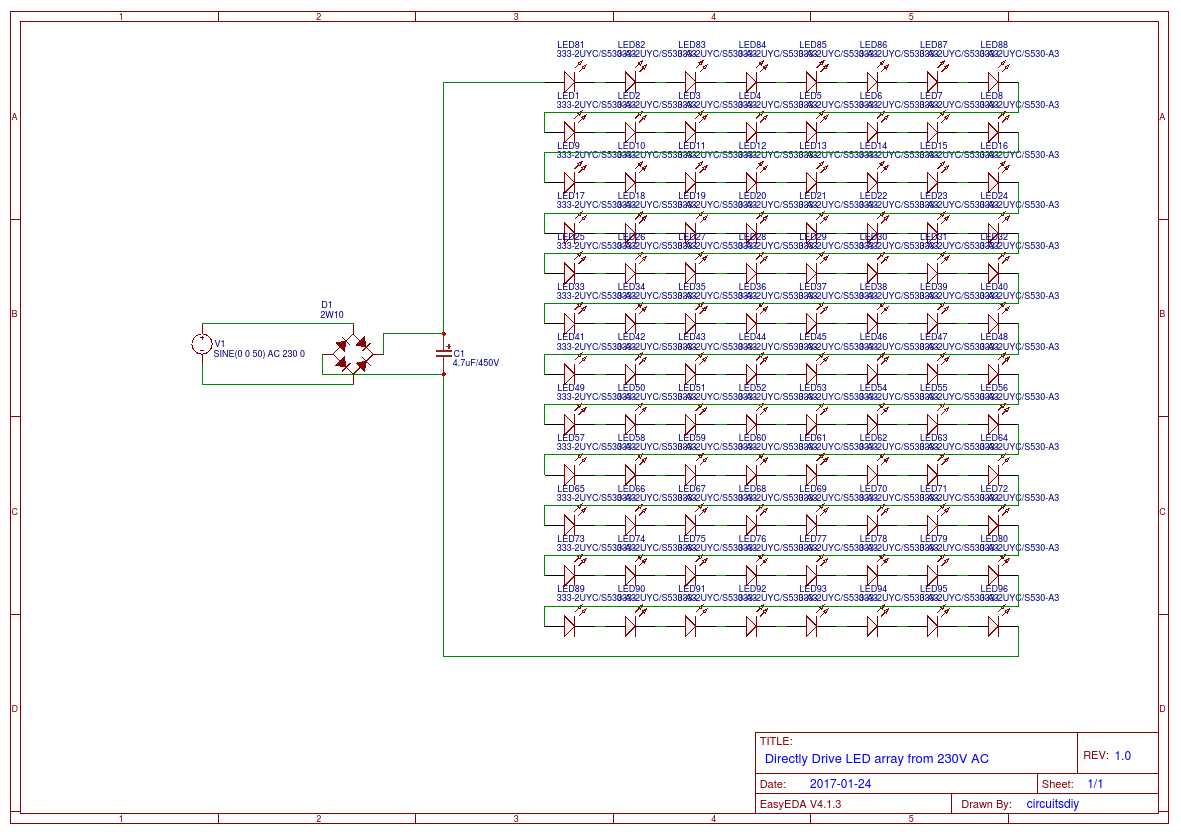
Connect the lighting module to a current-regulated power stage that converts high-voltage AC mains into stable low-voltage DC. A typical household supply near 220–240 volts AC must first pass through a rectifier bridge and smoothing capacitor before reaching the light-emitting semiconductor array.
The conversion stage usually includes four rectifier diodes arranged in a bridge configuration, followed by an electrolytic capacitor rated around 400V. This component smooths the pulsating DC produced by the rectifier. After smoothing, a current-limiting stage regulates the flow toward the light elements, preventing overheating and brightness fluctuation.
Constant current control protects the light source. Many designs rely on a small integrated controller or a resistor-based limiter combined with a switching transistor. Typical operating currents range between 250 mA and 700 mA depending on the power rating of the illumination module.
Install surge protection and a fuse at the mains input line. Voltage spikes from the power grid can damage semiconductor components if no protection is present. Place a metal-oxide varistor across the input terminals and mount components on a heat-resistant board with adequate spacing between high-voltage traces.
230V LED Driver Circuit with Rectifier Capacitor and Current Control Layout
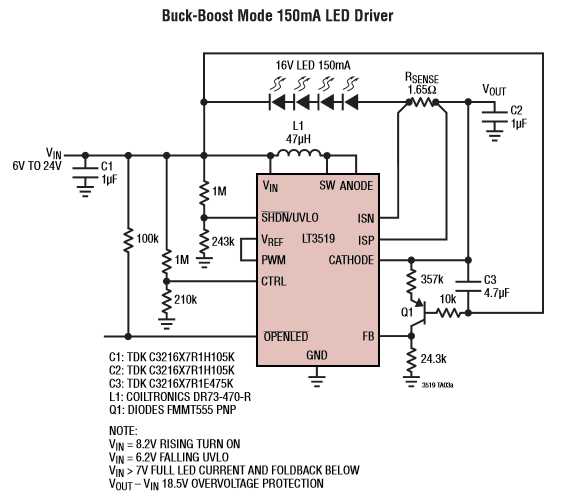
Connect the high-voltage AC input directly to a bridge rectifier composed of four diodes rated above 400V to convert alternating current into pulsating direct current. Position a smoothing capacitor immediately after the rectifier to stabilize voltage fluctuations and reduce ripple, ensuring consistent operation of the light-emitting array.
Current regulation is critical to prevent thermal damage. Use a constant-current control module or series transistor combined with a sensing resistor to maintain a steady current, typically between 300 mA and 700 mA depending on the module’s power rating. This also extends the lifespan of the illumination elements.
Integrate surge protection components such as a metal-oxide varistor across the AC input to absorb voltage spikes. Include a fast-blow fuse in series with the input line to protect against short circuits. Ensure all high-voltage traces are spaced adequately on the PCB to prevent arcing.
Heat dissipation is a major factor in compact designs. Mount the transistor or control IC on a small heatsink or a thermally conductive section of the board. Keep the smoothing capacitor and rectifier diodes away from high-temperature zones to avoid early failure and maintain stable current regulation.
For monitoring and testing, measure the DC output across the light array using a multimeter before connecting the full load. Confirm that the current-limiting stage is functioning properly and that the output voltage remains within safe limits, usually between 30V and 40V DC for a single string of high-power diodes.
230V LED Driver Bridge Rectifier Capacitor and DC Output Stage
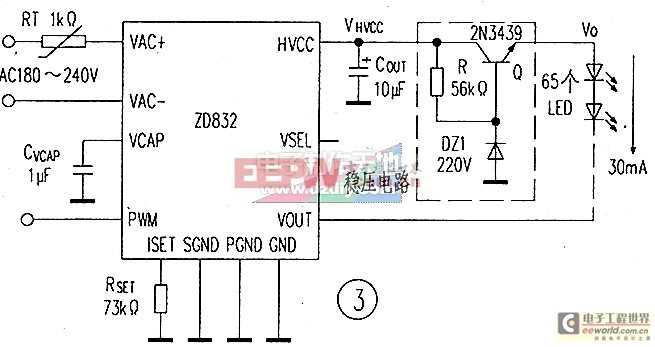
Connect the AC mains directly to a bridge composed of four diodes rated above 400V to convert alternating current into pulsating direct current. Place a smoothing capacitor immediately after the rectifier to minimize voltage ripple and maintain a stable DC level, targeting a 30V to 40V output depending on the load configuration.
Integrate a series current-limiting resistor or a control transistor at the output stage to prevent overcurrent stress on the light-emitting array. Monitor the voltage drop across a sensing resistor to regulate the output current precisely between 300 mA and 700 mA. This setup ensures long-term reliability and prevents overheating of the semiconductor elements.
Include protective components on the AC side such as a fast-blow fuse and a metal-oxide varistor. Ensure proper spacing of high-voltage traces on the board to avoid arcing. Test the DC output with a multimeter before connecting the full load, confirming that the voltage remains within safe limits and the current-limiting stage functions correctly under operating conditions.