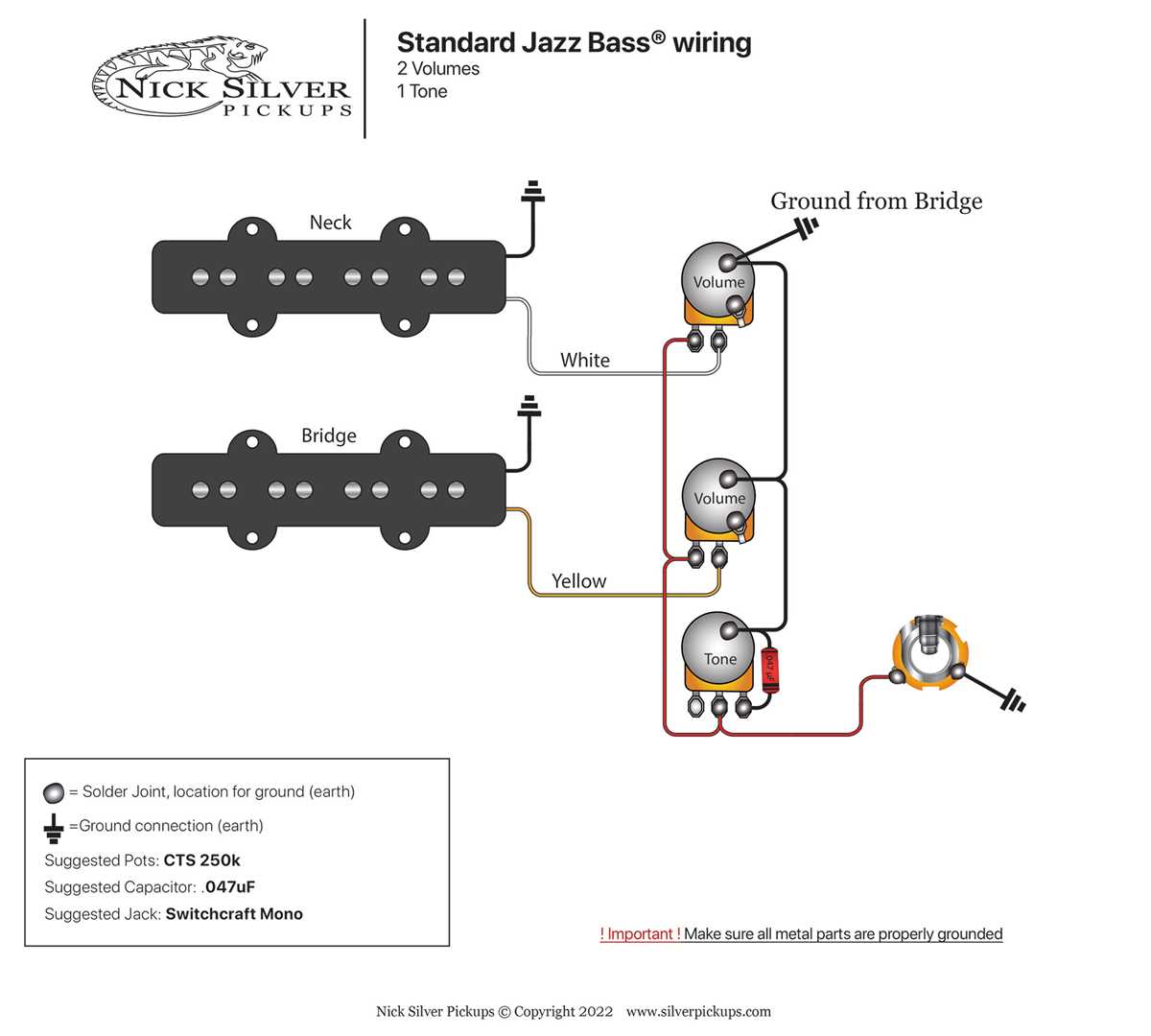
Use two dual-coil guitar pickups connected to a three-way selector and route the combined signal through a single level control and a single high-frequency roll-off control before the output jack. This configuration is common in many electric guitars because it keeps the control layout simple while still allowing neck, bridge, or combined pickup selection.
Most dual-coil pickups measure between 7 kΩ and 16 kΩ DC resistance and work well with 500 kΩ potentiometers. A higher resistance control maintains brightness from the pickups and avoids excessive loss of treble frequencies. The signal from the selector switch feeds the center lug of the main level pot, and the output from that control continues to the output jack.
The high-frequency roll-off control normally uses a 0.022 µF capacitor connected between the pot lug and ground. Rotating the control increases the amount of high frequencies sent to ground, producing a darker sound. Many builders prefer polyester or polypropylene capacitors because they remain stable across temperature changes.
All pickup ground leads, shielding foil, and control casing surfaces connect to a common ground point. This reduces hum and prevents unwanted noise from entering the audio path. A short shielded cable often links the main control output to the ¼ inch mono jack, where the tip carries the signal and the sleeve connects to ground.
Two Humbucker One Volume One Tone Wiring Diagram With Pickup Selector Connections
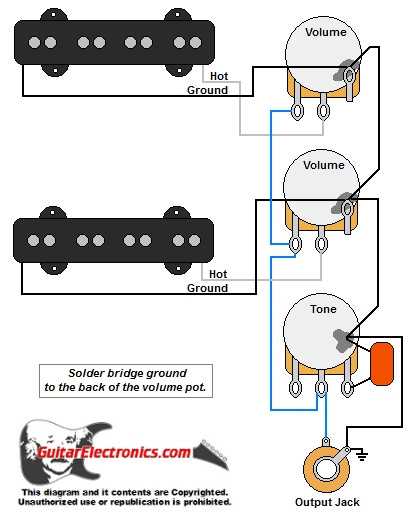
Connect the neck and bridge dual-coil pickups to a three-way toggle selector and route the combined signal through a single level control and a single high-frequency roll-off control before the output jack. This layout keeps the signal path short and reduces the number of components inside the guitar cavity.
The three-way toggle routes pickup signals in three positions:
- Position 1 – bridge pickup active
- Position 2 – bridge and neck pickups active together
- Position 3 – neck pickup active
Each pickup usually contains two coils connected in series and often measures between 8 kΩ and 15 kΩ DC resistance. The hot lead from each pickup attaches to one side of the selector switch. The center output terminal of the selector then sends the signal toward the main level control.
Recommended control component values include:
- 500 kΩ audio taper potentiometer for the master level control
- 500 kΩ potentiometer for the high-frequency roll-off control
- 0.022 µF capacitor connected between the roll-off control and ground
The signal path follows a simple order. Pickup outputs go to the selector, the selector feeds the input lug of the main level control, and the output lug connects to the guitar output jack tip terminal. The sleeve terminal of the jack connects to the common ground network.
Ground connections normally include:
- Pickup ground leads
- Metal casing of both potentiometers
- Bridge ground wire
- Shielding foil or conductive paint inside the control cavity
Use shielded cable between the main control output and the quarter-inch jack if the control cavity is far from the jack location. Keep conductor length short and twist paired signal and ground leads where possible to reduce electromagnetic noise and unwanted hum during amplified playback.
Connecting Two Humbucker Pickups to a Three Way Toggle Selector Switch
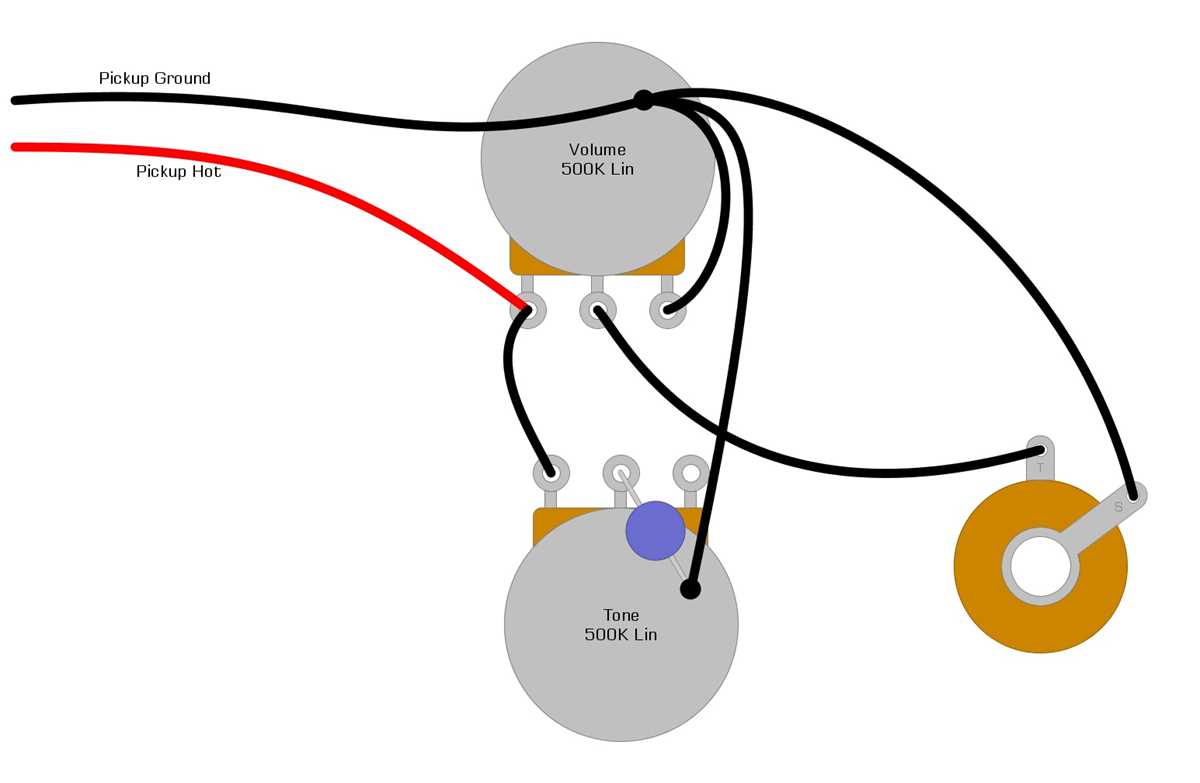
Attach the hot lead from the neck pickup to one outer terminal of the three-position toggle and connect the hot lead from the bridge pickup to the opposite outer terminal. The center lug of the switch carries the combined signal to the main output path. Ground leads from both pickups should be soldered to the back of a potentiometer casing or another common grounding point inside the control cavity.
Selector Switch Terminal Layout
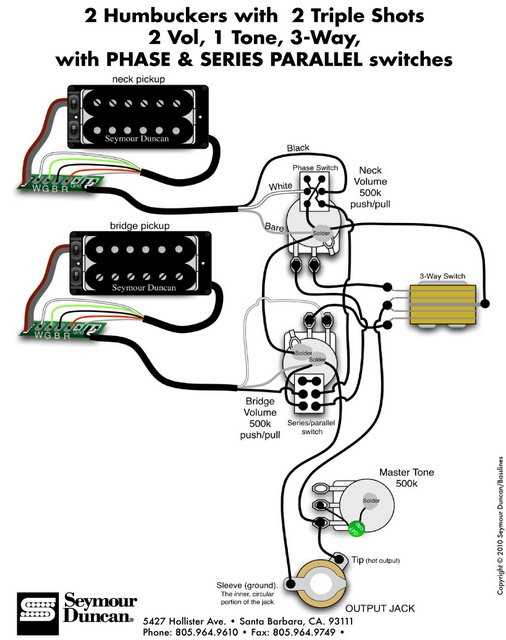
A typical three-position toggle contains three active signal terminals and one ground tab on some models. Use the following arrangement for reliable signal routing:
Terminal layout:
• Left lug – neck pickup hot conductor
• Right lug – bridge pickup hot conductor
• Center lug – output line leading to the master level control input
Signal Path and Ground Network
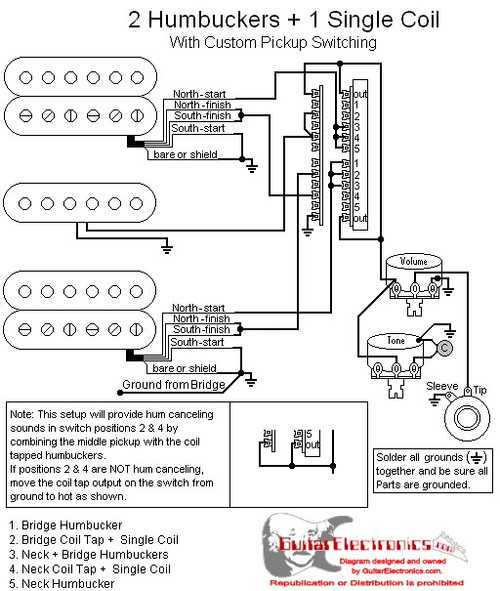
Both dual-coil pickups usually contain four colored conductors plus a bare shield. For standard series operation, join the manufacturer’s series pair together and insulate the joint. The remaining hot conductor travels to the selector switch, while the ground conductor and shielding attach to the common ground point. Maintain short signal leads inside the guitar cavity and avoid routing them directly over potentiometer terminals carrying output signal. This arrangement allows the toggle to select bridge pickup alone, neck pickup alone, or both units simultaneously while sending a single combined signal toward the control stage and output jack.