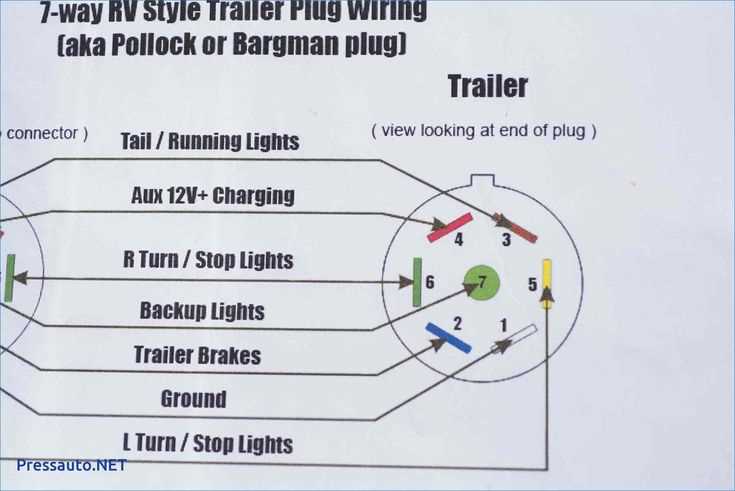
Always verify the amperage rating before connecting your recreational vehicle to a campsite supply. A 30-amp connection uses three wires while a 50-amp connection requires four, including two hot lines, a neutral, and a ground.
Label each wire clearly on both the vehicle and the source side. Use color coding: black and red for hot lines, white for neutral, and green for ground. This prevents accidental cross-connections and reduces the risk of electrical faults.
Check for corrosion or damage on all contacts and terminals before making any connections. Clean metal surfaces with a wire brush and apply dielectric grease to improve conductivity and protect against moisture.
Test the circuit using a multimeter to confirm correct voltage and continuity. Ensure the breaker on the campsite panel is switched off while connecting, then power on and recheck voltage to confirm a safe setup.
Secure the cable to prevent stress on terminals. Use clamps or cable ties to keep lines straight and avoid sharp bends, which can lead to insulation wear or loose connections over time.
RV Power Connector Guide
Connect each conductor carefully according to its function to prevent short circuits or equipment damage. For a 50-amp setup, attach two hot lines (black and red) to the corresponding terminals, the white neutral to its slot, and the green ground to the grounding screw. Ensure all screws are tightened to 20–25 in-lbs to maintain a stable connection. Use a continuity tester to verify each line before energizing the circuit.
- Inspect contacts for wear or oxidation and clean with a non-abrasive brush.
- Use heat-resistant cable ties to prevent strain on terminals.
- Label all lines clearly with colored tags for future reference.
- Confirm the voltage with a multimeter: 120V between hot and neutral, 240V between hot lines on a 50-amp setup.
This approach reduces the risk of electrical faults, improves safety, and ensures reliable operation of onboard systems during camping trips.
Identifying Each Pin and Its Function in RV Connectors
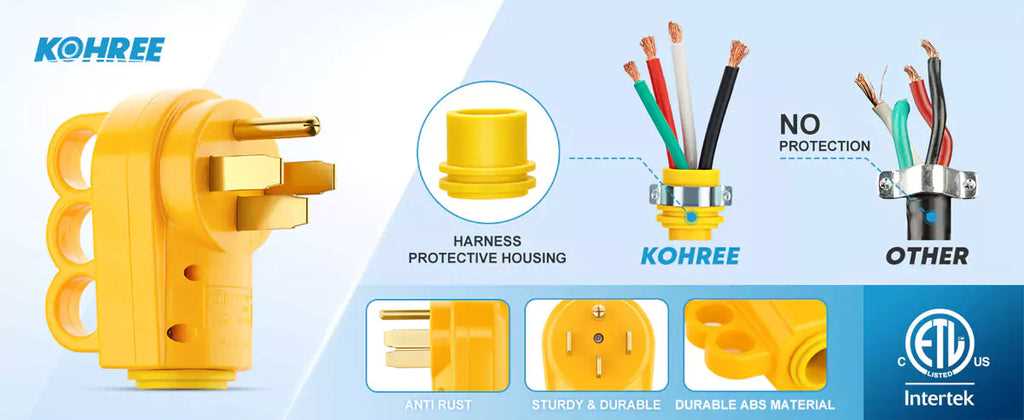
Start by locating the ground terminal on your RV connector. It is usually marked with green or a grounding symbol. Connect this line first to reduce the risk of accidental shocks during installation.
Next, identify the neutral line, commonly colored white. This conductor completes the circuit back to the source and must be secured tightly to its terminal to maintain stable voltage levels for all onboard devices.
The hot lines carry current from the source to the RV. In a 30-amp setup, a single black wire is used, while a 50-amp configuration has two hot lines, typically black and red. Verify each terminal with a multimeter before finalizing connections.
Color Coding and Pin Arrangement
Match the cable colors with terminal designations. Black and red go to hot terminals, white to neutral, and green to ground. This standard prevents cross-connections and ensures appliances receive the correct voltage.
Check the shape and spacing of pins on the connector. Rectangular and round prongs are positioned differently to prevent inserting a 30-amp line into a 50-amp receptacle. Never force connections as this can bend or break pins.
Testing and Verification
After connecting each line, perform a continuity test on all terminals. Ensure no short circuits exist and each line returns the correct reading. This step confirms that each pin performs its intended function reliably.
Inspect for loose screws or oxidized terminals. Apply a small amount of dielectric grease to prevent corrosion and improve conductivity. Tight connections maintain consistent current flow and prevent overheating.
Label each terminal with permanent markers or colored tags. This makes future maintenance easier and reduces errors when connecting shore power at different campsites.