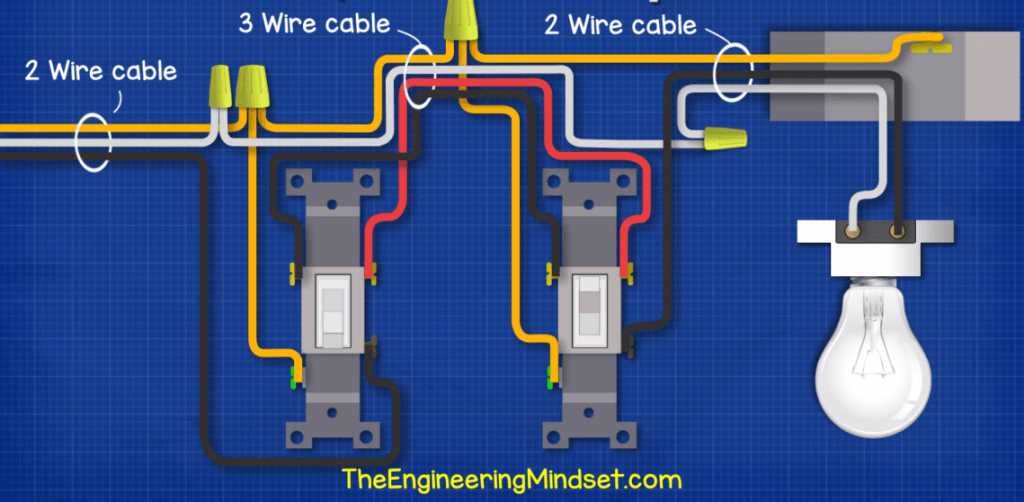
Start by turning off the power at the breaker before working with any electrical setup. Properly connecting two control points to a single fixture requires precise identification of the terminals and connections. You’ll need to connect two special traveler wires between two controlling points and a common terminal on both sides.
Use a three-way switch at both ends of the circuit. The first terminal of the first switch connects to the power source, while the second switch connects to the fixture. The two traveler wires connect the switches, enabling control from either location.
One common mistake when wiring is improper attachment of the traveler wires. Ensure both switches have their traveler terminals connected to each other without short circuits. Additionally, double-check all connections at the fixture for secure placement to prevent any malfunction.
Wiring Diagram of a 3 Way Light Switch
To properly connect two control points to a single fixture, begin by identifying the correct terminals for each of the three connectors. You’ll need two traveler wires and one common wire to complete the circuit. At the first control point, connect the power source to the common terminal. From there, connect one traveler wire to the first traveler terminal and the other to the second. This ensures you can control the light from either point.
Key Components of the Setup
- Power Source: The incoming power is connected to the common terminal of the first control point.
- Traveler Wires: Two wires link the traveler terminals of both control points, ensuring the light is operable from either location.
- Fixture Connection: The common terminal on the second control point is connected to the fixture, completing the circuit.
Once all connections are made, double-check for any potential short circuits or loose terminals. A common error is misidentifying the traveler and common terminals, which will result in an incomplete circuit. Properly secure each wire to avoid potential electrical issues.
Testing the Circuit
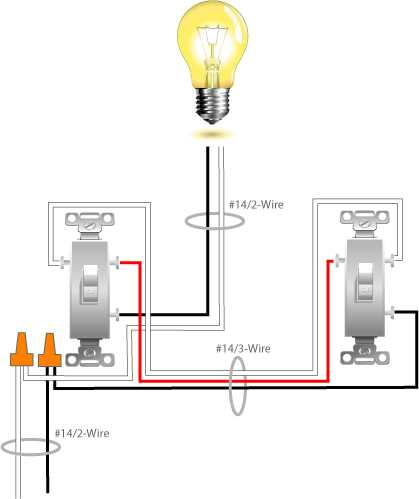
After connecting all wires and ensuring they are secure, turn the power back on and test the functionality of the system. Both control points should now operate the fixture independently. If any issue arises, double-check the traveler wires for proper placement, as improper connections here are the most frequent cause of malfunction.
How to Identify the Correct Wires for a 3 Way Switch
To ensure proper installation, it is crucial to accurately identify each wire before beginning any connections. Typically, you will encounter three types of wires: the common, the traveler wires, and the ground wire. The common wire is the most important because it carries the live current and connects to the fixture. It will often be marked with a darker color or have a black or red coating.
The traveler wires are responsible for connecting the two control points, allowing the fixture to be turned on or off from both locations. These wires are usually the same color, often white or sometimes red, but make sure to trace them from each control point to confirm their roles. They will always be connected to the traveler terminals at both ends.
Identifying the Common Terminal
The common terminal can usually be found on one side of the control point and is marked differently from the other two terminals. The wire connected to this terminal will either come from the power source or go to the fixture. It’s important not to confuse the common terminal with the traveler terminals, as mixing them up will disrupt the entire system.
At the fixture end, the common terminal is where the light fixture is connected. The second control point will also feature a common terminal, which is usually wired directly to the fixture through the traveler wires. If you mistakenly connect the wrong wire to the common terminal, the system will not function correctly.
Ensuring the Ground Wire Is Properly Connected
The ground wire, typically green or bare copper, is an important safety feature and should be securely attached to the grounding screw on the control points and the fixture. This wire does not carry any current but provides a safe path for any electrical fault, preventing potential shock hazards.
When identifying the correct wires, always verify that the ground wire is securely connected and that no other wire is incorrectly attached to the grounding terminal. This can sometimes happen when multiple wires are jumbled during installation, especially in older homes where wiring may not be as organized.
After confirming the traveler wires, common wire, and ground are properly connected, test the system by turning the power back on. Both control points should allow you to operate the fixture without any issues. If there is a problem, recheck each wire’s placement to ensure no errors in their connections.