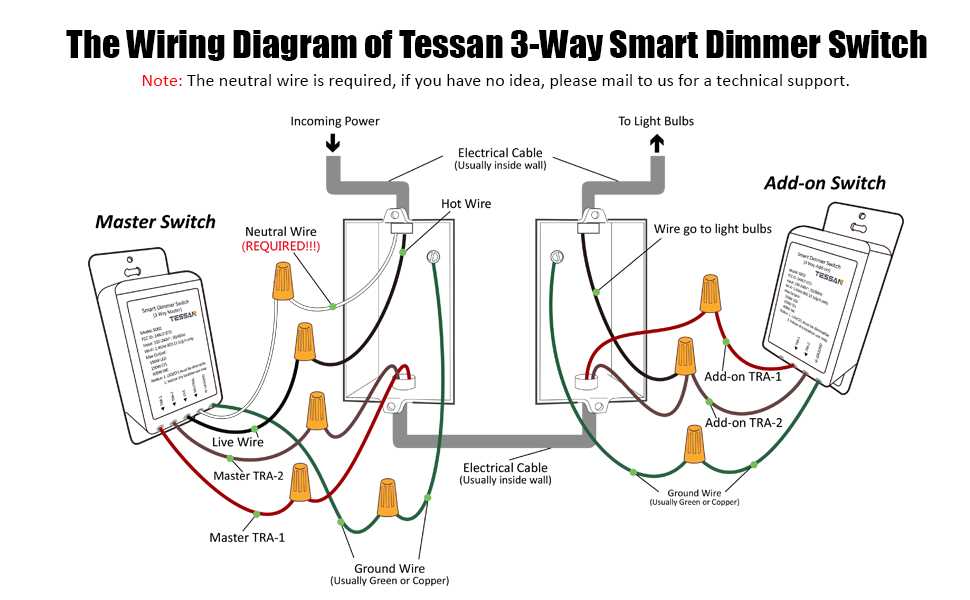
Connect the incoming hot conductor to the common terminal of the light-level control unit installed in the first wall box, then route two traveler conductors between both control points. This layout allows brightness adjustment and lamp activation from separate locations such as the top and bottom of a staircase or opposite ends of a hallway.
A typical installation uses a three-terminal light control module paired with a standard three-terminal wall control device. Inside the first box, the line conductor from the electrical panel attaches to the common screw of the light-level controller. Two traveler conductors run through a 14/3 or 12/3 cable between the two wall boxes, linking the brass traveler terminals on both devices. The load conductor that feeds the lamp connects to the common terminal of the second control unit.
Neutral conductors usually remain tied together inside the fixture box rather than attaching to the wall controls. Ground conductors from each cable must connect to the green grounding screw on every device and to the metal box if present. Incorrect placement of the common conductor is the most frequent installation error and often results in lights operating only from one location or brightness control failing to respond.
Before mounting the devices into the wall boxes, verify each conductor using a voltage tester. Identify the line feed from the panel, the conductor leading to the lamp, and the two travelers running between control points. Accurate identification prevents cross-connection and ensures stable light level adjustment across both control positions.
Wiring Diagram for a 3 Way Dimmer Switch With Two Switches Controlling One Light
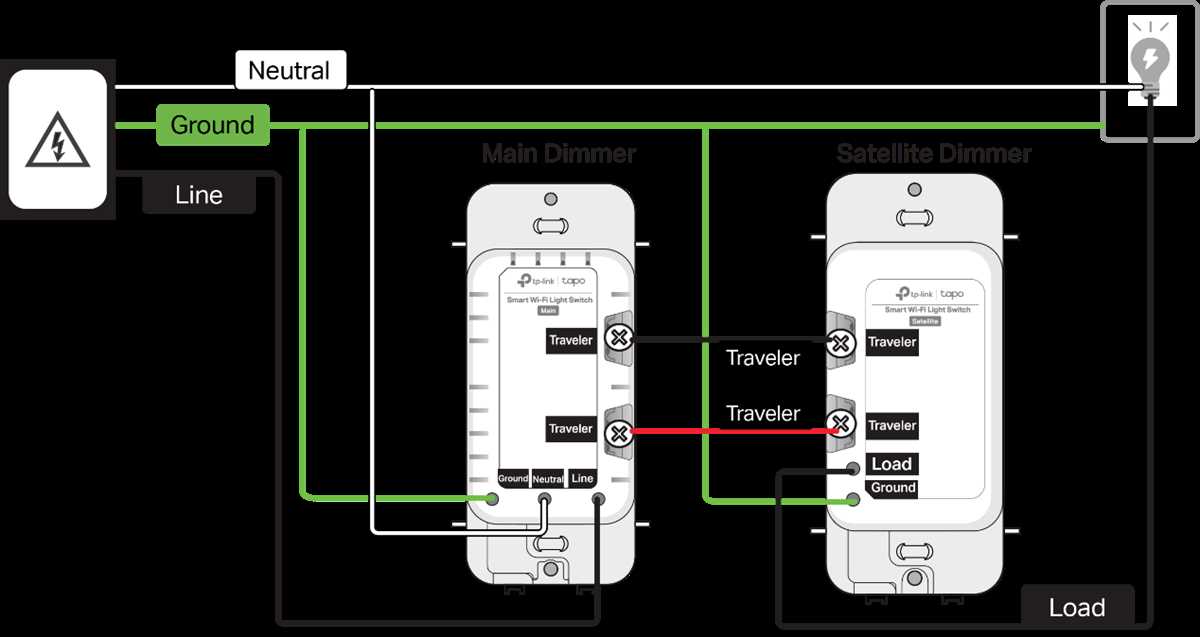
Connect the incoming phase conductor from the electrical panel to the common terminal of the brightness control module placed in the first wall box. From that box, run a three-conductor cable (for example 14/3 or 12/3 with ground) toward the second control point. Two insulated conductors inside this cable act as traveler lines linking the brass terminals on both control devices, while the remaining conductor carries power toward the lamp circuit.
Attach the traveler pair to the two brass screws on the light-level controller and route them to the matching traveler terminals on the second wall control unit. The conductor leading to the ceiling fixture connects to the common screw on the second device. Inside the fixture box, join the load conductor to the lamp holder lead using a listed wire connector. Neutral conductors from the panel and the fixture stay spliced together in that box and do not connect to the control devices unless the selected light-level controller model requires a neutral terminal.
Bond all grounding conductors together and attach them to the green grounding screws on both wall devices and to the metal enclosure when present. Before inserting the devices into the boxes, use a voltage tester to confirm which conductor carries power from the panel. If the line and load conductors are reversed on the common terminals, brightness adjustment may fail or the lamp may operate only from one control location.
Terminals on a 3 Way Dimmer Switch and How Line Load and Traveler Wires Connect
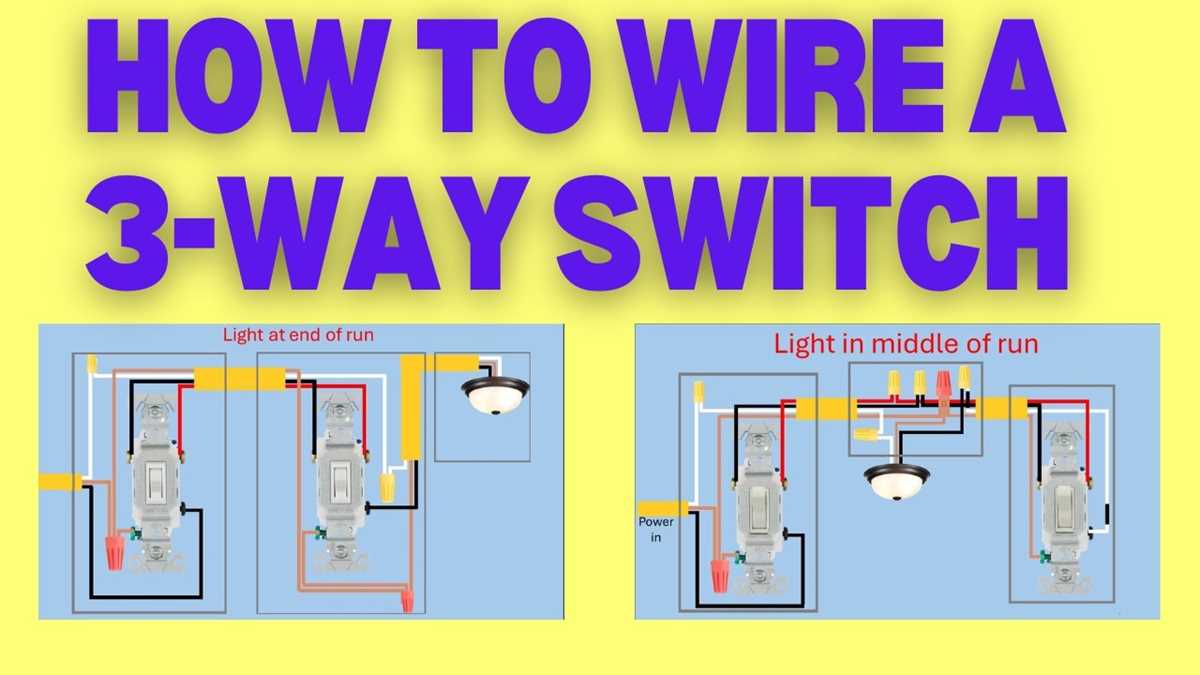
Attach the incoming phase conductor from the electrical panel to the common terminal on the light-level control device. This terminal is usually marked “COM” and often uses a darker screw color such as black. Connecting the supply conductor here ensures that power enters the control circuit before passing through the traveler paths.
Connect the conductor leading toward the lamp circuit to the common terminal on the second wall control unit. This conductor carries current from the control pair to the lighting fixture and must remain isolated from the traveler pair inside the wall box.
Use two traveler conductors between both control points. These connect to the two brass screws on each device. Their function is to alternate the active path that carries current between the line conductor and the lamp feed.
A three-conductor cable such as 14/3 with ground or 12/3 with ground normally links both wall boxes. Inside this cable, the red and black insulated conductors commonly serve as travelers, while the white conductor may carry the feed toward the fixture depending on the installation layout.
Keep neutral conductors tied together inside the fixture enclosure rather than connecting them to the wall devices unless the selected light-level control unit includes a neutral terminal. Many modern electronic models require that extra conductor to power internal circuitry.
Secure grounding conductors to the green terminal on each device and bond them to metal wall boxes where present. A continuous grounding path reduces shock risk and helps protective devices operate correctly during a fault.
Check terminal markings on the control device before attaching conductors. Manufacturers sometimes place the common screw at a different position than standard toggle units, and incorrect placement leads to lighting that operates only from one location.
Use a non-contact voltage tester or multimeter to identify the live conductor from the service panel before making connections. Marking this conductor with electrical tape helps prevent confusion while attaching travelers and the lamp feed inside the box.