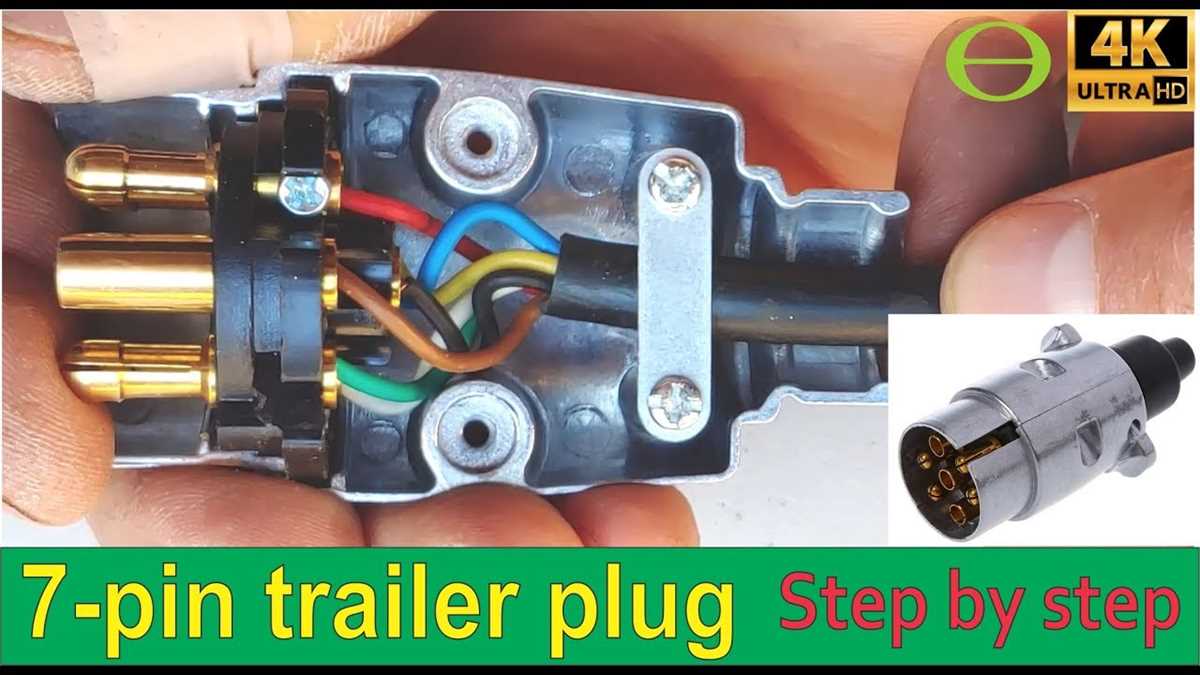
Check each wire color and terminal assignment before starting the installation to prevent short circuits and ensure proper signal transmission. Use a multimeter to confirm continuity and correct voltage on each lead.
Follow a consistent sequence for attaching the conductors to the round connector, matching brake lights, indicators, and auxiliary feeds to the correct positions. Label each wire if needed to avoid confusion during assembly.
Secure all fastenings and insulate exposed conductors to reduce the risk of corrosion and accidental disconnection. Ensure the locking mechanism of the coupling engages fully for stable electrical contact during towing.
Test all functions individually after connection, including indicators, brake signals, tail lights, and reverse lamps, to confirm proper operation before putting the setup into service.
Connecting a 7 Contact Tow Plug
Confirm the color code and terminal layout before attaching any conductor to avoid misrouting signals. Use a reference chart specific to your vehicle model for accuracy.
Strip the insulation carefully without damaging the copper strands. Short or uneven strands can cause poor contact and intermittent failures during operation.
Secure the leads in this order:
- White for ground connection
- Brown for tail lights
- Yellow for left indicator
- Green for right indicator
- Blue for brake lights
- Purple for reversing lamps
- Red for auxiliary power or fog light
Use heat shrink tubing or electrical tape to cover exposed metal after crimping. This prevents corrosion and accidental shorts in wet or dusty environments.
Fasten the coupling firmly into the mount, ensuring no movement occurs when pulling or turning. Loose fittings can cause flickering lights or signal loss.
Check each function separately. Turn on the ignition and operate the brake, indicators, and reverse lights. Observe any flicker or non-responsive signals and correct immediately.
Inspect the wires for strain relief to avoid pulling on terminals when connecting or disconnecting. Use cable ties to keep the harness neatly routed and away from moving parts.
After full assembly, take the vehicle for a short drive and monitor the lights on the towed unit. Confirm stable illumination under vibration and during turns before regular use.
Identifying Each Contact and Its Function
Start by labeling each lead according to its assigned role to prevent confusion during assembly. Standard color codes simplify identifying ground, tail, and indicator circuits.
White wire typically serves as the main ground. Ensure it connects securely to the vehicle chassis for stable current return paths and to prevent flickering lights.
Brown is commonly assigned to rear position lamps. Test it by switching on the lights and observing illumination at the connected unit.
Yellow and green wires control left and right indicators respectively. Activate the turn signals separately and verify correct flashing patterns on each side.
Brake and Auxiliary Connections
Blue wire generally carries the stop lamp signal. Press the brake pedal while checking the corresponding lights for consistent brightness.
Purple is used for reverse lamps. Engage reverse gear and confirm that backup lights respond instantly and remain steady under load.
Red wire often supplies auxiliary power or fog lights. Measure voltage at the terminal and ensure it matches the rated supply for the attached equipment.
Final Verification
After labeling and connecting each conductor, conduct a full test sequence. Operate all lamps and auxiliary functions simultaneously to ensure each circuit performs without interference or shorting.