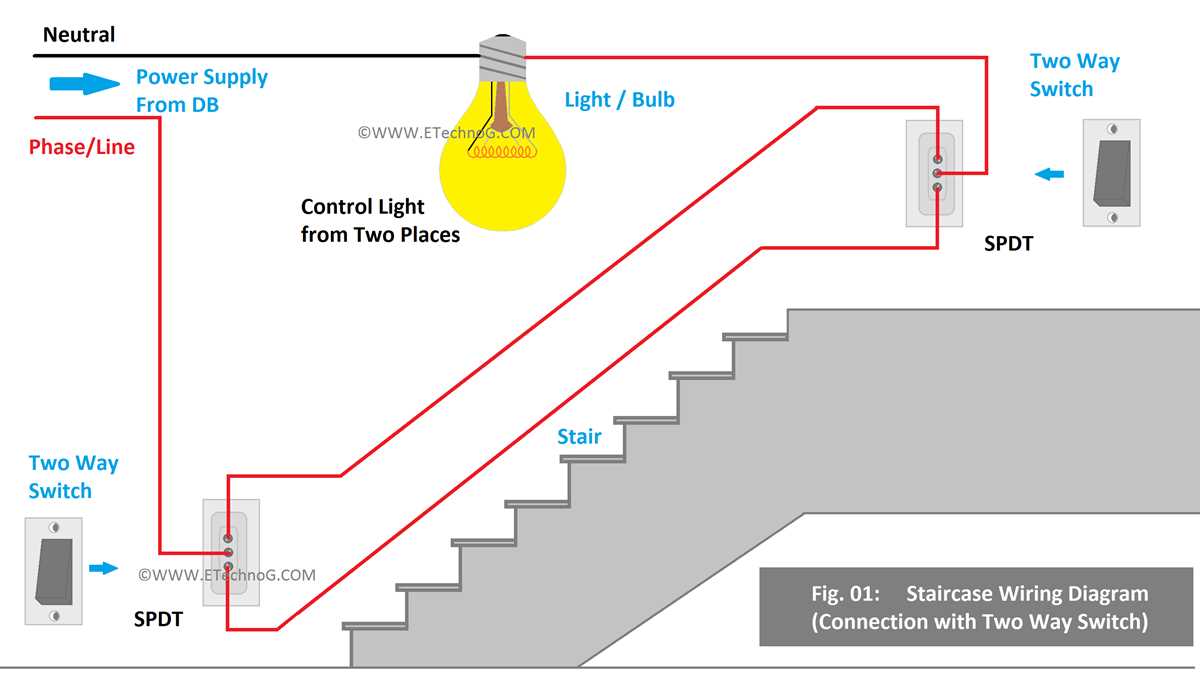
Connect the traveler cables directly between the two control units to ensure consistent operation. Use insulated copper conductors rated for 15-amp circuits, and verify that all terminals are tightened securely to prevent arcing or intermittent performance.
Label each wire at both endpoints to maintain clarity during installation and future maintenance. Assign a dedicated color scheme: black for the primary feed, red for the traveler connections, and white for the neutral return, reducing the risk of miswiring.
Position the ground wires carefully and attach them to the designated screws on each mechanism. Ensure that grounding continuity is preserved across all junction points to enhance safety and comply with electrical codes.
Test the system incrementally after connecting each cable. Flip each actuator independently to confirm the lighting toggles correctly from both locations, preventing surprises after the full setup is completed.
Keep junction boxes accessible for future inspections or modifications. Avoid overcrowding cables inside enclosures, and use cable clamps to prevent strain on the terminals over time, ensuring reliable operation for years.
Connecting a Dual Control Light Setup
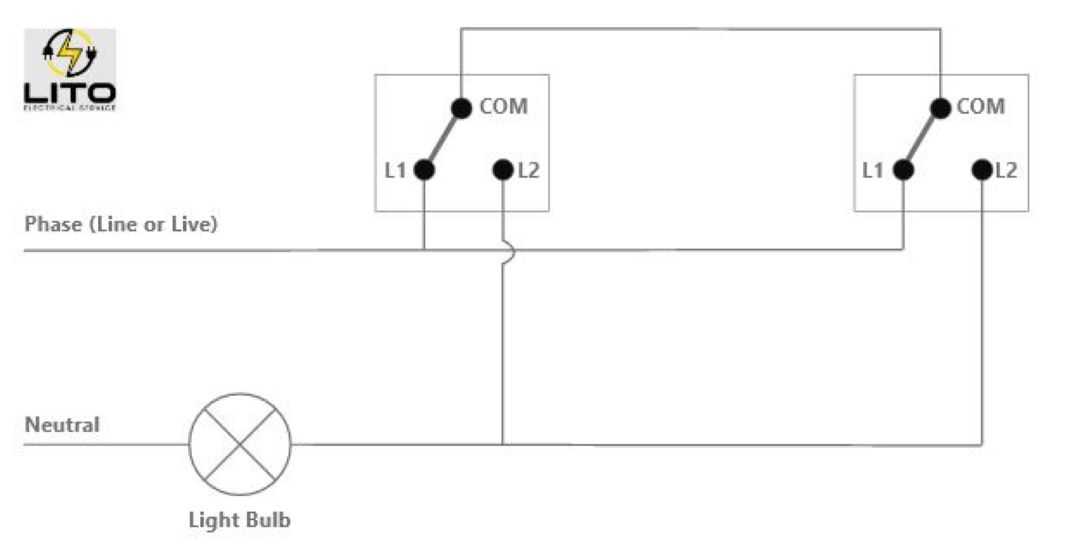
Ensure that the power feed enters the first control device at the designated input terminal, typically marked with a line symbol. Use a cable rated for household voltage and check that insulation is intact.
Link the two controlling units using a three-core conductor. Each core should be securely fastened under its respective terminal screw, avoiding bare wire exposure beyond 5 mm.
Identify the traveler terminals on both units; these are usually labeled L1 and L2. Connect the corresponding cores between the devices in parallel, maintaining consistent color coding to prevent confusion during troubleshooting.
- Connect the neutral from the supply directly to the lamp holder.
- Run the live return from the second control device to the lamp.
- Double-check all screw connections for tightness.
Use a small length of sleeving on exposed conductor ends to avoid accidental contact. Ground the metal boxes if present to reduce the risk of electric shock.
Testing and Verification
After connections are complete, switch the circuit breaker on and operate each controller independently. The load should illuminate from either position without flicker or delay.
- Turn on the first device, observe the lamp.
- Turn off the first and operate the second, confirm consistent operation.
- Test rapid toggling to ensure contacts are clean and reliable.
Label each conductor inside the junction box to simplify future maintenance. Keep the diagram for reference in case modifications are required. Avoid overloading the circuit by verifying the lamp rating matches the supply.
If the lamp does not respond, disconnect power and inspect connections for cross-wiring or loose terminals. Replace any defective devices before restoring full operation.
Consider using screws with thread-locking compound in high-vibration areas to prevent loosening. Always verify continuity with a tester before final enclosure closure.
Final installation should leave no exposed copper except at terminal points. Ensure that all covers fit snugly to maintain safety and prevent accidental contact.
Identifying Live, Neutral, and Traveler Wires
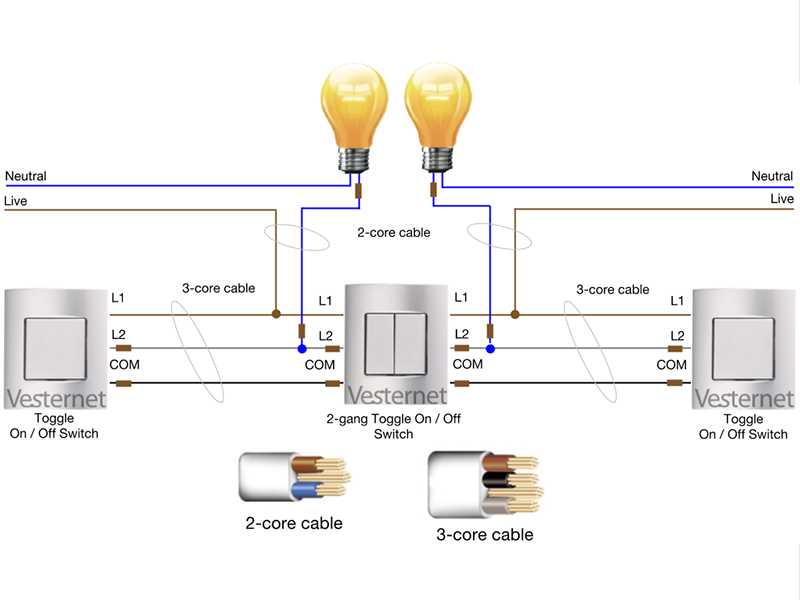
Always shut off the main breaker before touching any conductors. Use a non-contact voltage tester to verify which wire carries current.
Live conductors are usually black or red in color and should trigger a voltage detector when the power is on. Avoid assuming color codes are always standard, as older installations may vary.
Neutral wires commonly appear white or gray. They rarely show voltage on a tester unless there is a fault or backfeed in the circuit.
Traveler conductors, linking two control points, often use red or black insulation. Labeling each end with tape prevents confusion during reconnection.
When measuring with a multimeter, the live wire will read full line voltage against the neutral. Traveler wires will display voltage only when one control point is activated.
Secure connections with proper terminal screws or push-in slots. Loose attachments can cause flickering or intermittent operation and pose a fire risk.
Always separate wires with different functions using wire nuts or dedicated channels. Mixing neutral and live conductors creates shorts and can damage devices.
Test the circuit after reconnecting by toggling both control points. Confirm that the traveler paths correctly alternate power without generating sparks or unexpected voltage readings.