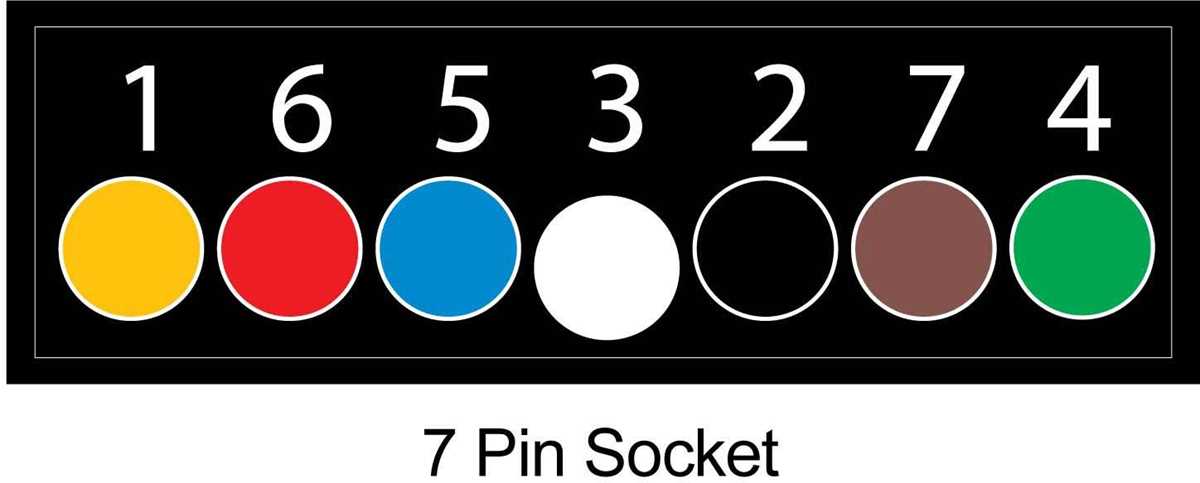
Match each contact in the round towing connector with its correct function before attaching any cable. This connector type links the towing vehicle to the towed unit and carries signals for stop lamps, turn indicators, running lights, electric brake control, ground return, and auxiliary power supply.
Most North American setups use a seven-contact round connector mounted near the hitch receiver. Each terminal inside the socket connects to a separate conductor running through the harness. Standard color coding helps identify these lines: white for ground, brown for running lamps, yellow for left indicator, green for right indicator, blue for brake control, black for 12-volt auxiliary feed, and purple or red for reverse lights.
Connect the ground conductor directly to the vehicle frame. A weak chassis bond often causes dim lights or irregular brake response on the towed unit. The ground line usually uses a white cable attached to a clean metal point with a bolt or self-tapping screw.
The auxiliary 12-volt supply feeds interior lights, battery charging systems, or breakaway brake modules on larger cargo units. This power line typically runs through a fuse rated around 30–40 amps inside the towing vehicle’s electrical distribution box to prevent overload.
Signal lines for indicators and stop lamps route through the vehicle lighting system and activate the rear lamps on the towed platform at the same time. Correct conductor placement inside the circular connector body ensures that every light function mirrors the signals produced by the towing vehicle.
Seven Pin Trailer Plug Wiring Diagram With Pin Layout for Lights Brakes and Power
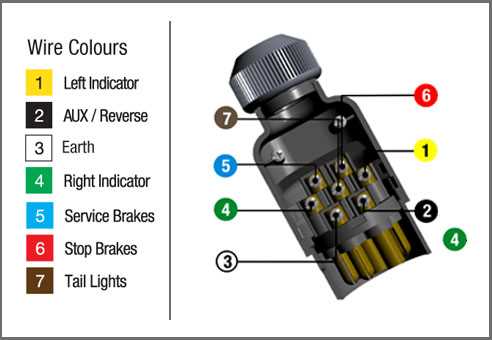
Identify each terminal inside the round towing connector before attaching conductors. The circular socket mounted near the hitch distributes electrical signals from the tow vehicle to the towed unit. Each contact supports a specific task such as tail lamps, indicator signals, brake control, reverse lights, auxiliary 12-volt supply, and chassis ground.
The ground return line connects directly to the metal frame of the tow vehicle. This conductor usually uses white insulation and must attach to clean metal without paint or corrosion. Poor contact in this point leads to dim lamps, flickering indicators, or unstable brake controller signals.
Running light power travels through the brown conductor and feeds marker lamps along the sides and rear of the towed platform. This line activates together with the vehicle headlamps and supplies low-intensity illumination for night travel.
Indicator and stop lamp signals travel through two separate conductors. Yellow carries the left turn signal and green carries the right signal. When the brake pedal is pressed, both lines receive voltage simultaneously, activating rear stop lamps on the towed unit.
The brake control lead normally uses blue insulation. This line transfers variable current from the in-cab brake controller to electromagnets inside drum brake assemblies on larger cargo units. Output voltage rises with pedal pressure, which increases braking force on the towed axle.
The auxiliary power conductor, often black or red, supplies constant 12-volt energy from the vehicle battery. This feed supports interior lighting, battery charging modules, or breakaway brake systems installed on heavier tow platforms.
Seven Pin Trailer Plug Pin Functions for Brake Lights Turn Signals Ground and Auxiliary Power
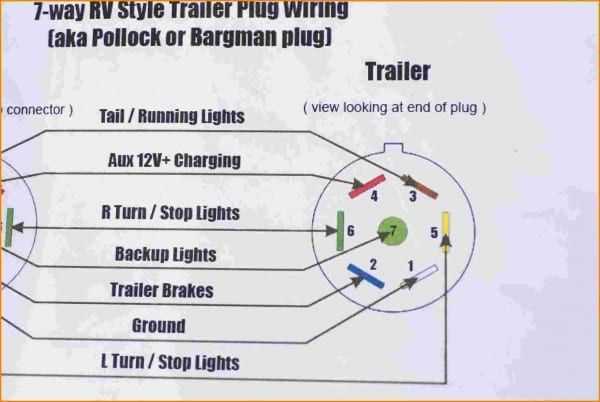
Match each terminal in the round towing connector to its correct lighting or power function before connecting any conductor. Each contact routes a separate signal between the tow vehicle and the towed unit, allowing lighting, braking, and auxiliary systems to operate at the same time.
Lighting and Ground Functions
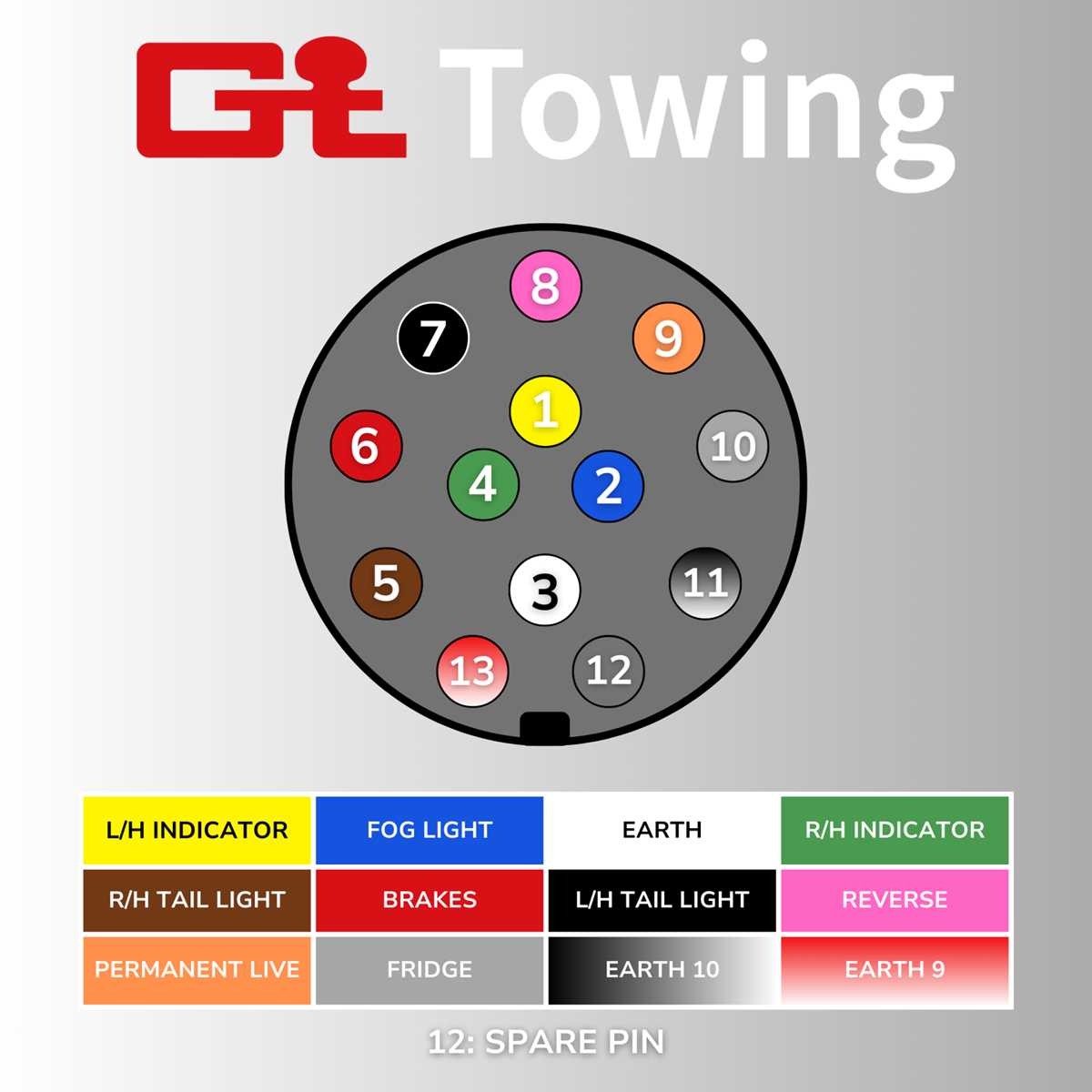
- White conductor connects to chassis ground and completes the return path for all lamps
- Brown conductor powers running and marker lamps along the sides and rear
- Yellow conductor carries the left turn signal and left brake lamp signal
- Green conductor carries the right turn signal and right brake lamp signal
Brake Control and Auxiliary Power
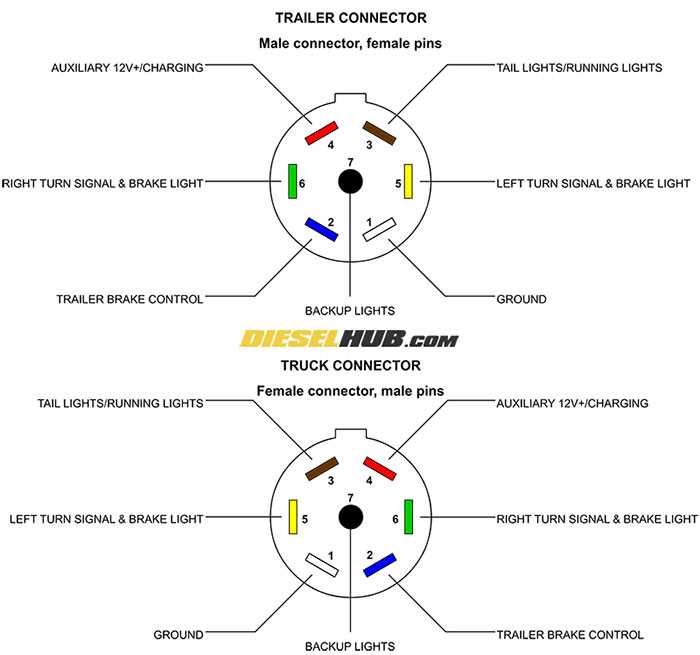
- Blue conductor transfers brake controller output to the brake magnets on the towed axle
- Black or red conductor supplies constant 12-volt power from the tow vehicle battery
- Purple or reverse-light conductor activates backup lamps during reverse gear
Verify voltage on each terminal using a multimeter before attaching the harness. Tail lamp contact should show power only when vehicle lights are active, while the auxiliary feed typically carries constant battery voltage. Correct signal placement ensures that braking, indicators, and lighting operate exactly as intended.