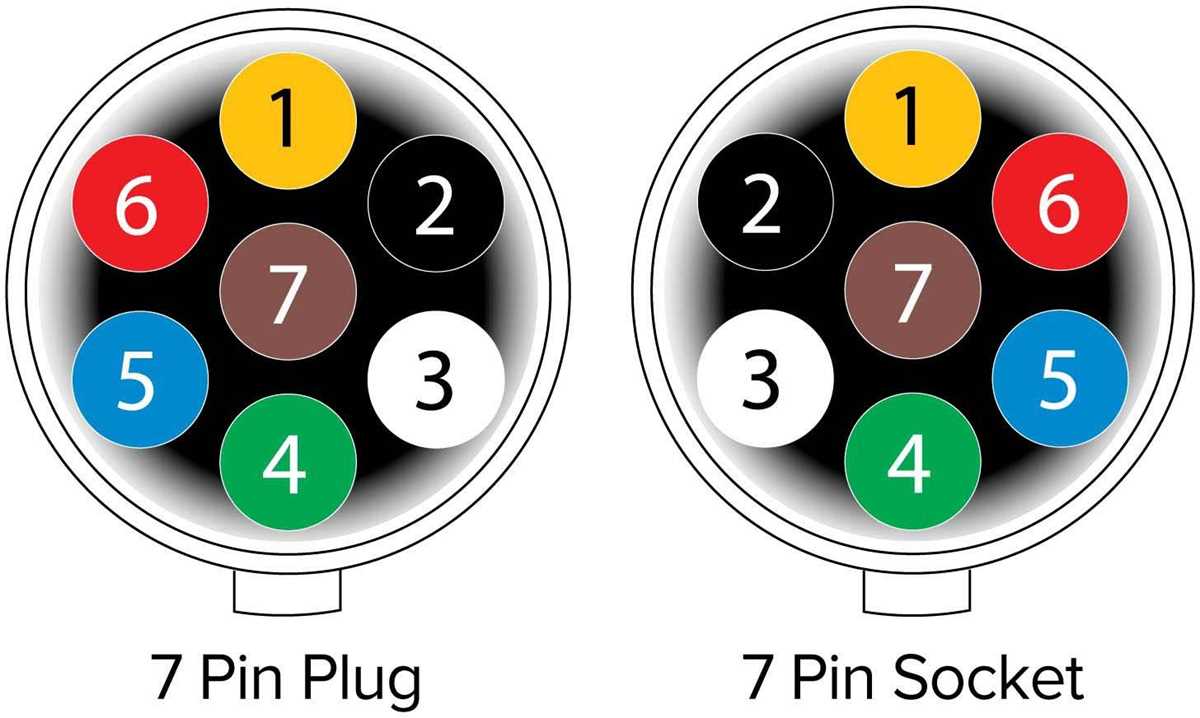
Use a 7-pin RV connector if the towed camper requires electric brakes, reverse lights, and a 12-volt auxiliary line. This round connector supports lighting circuits, brake control signal, ground return, and a constant power feed from the tow vehicle. Standard voltage on the auxiliary line is 12–14 V supplied through a fused line rated around 30 A.
Each terminal inside the round connector performs a specific function. The ground return usually uses a white conductor connected directly to vehicle chassis. Brown carries tail and marker lamps, yellow controls the left turn and stop lamp, and green handles the right turn and stop lamp. A blue conductor links to the brake controller output, while a black lead carries constant battery power to charge onboard equipment in the camper.
Four-pin flat connectors appear on light-duty towing setups that only require signal lamps and tail lamps. This format contains four conductors: ground, tail lights, left turn with brake, and right turn with brake. Current draw for lighting circuits usually stays below 10 amps, which allows the use of 16–18 AWG cable depending on length.
Always verify each conductor with a multimeter or test light before attaching terminals. Turn on the vehicle lights and check voltage on the marker lamp line, then activate turn signals and brake pedal to confirm correct signal leads. Secure the cable harness along the vehicle frame using clamps every 30–40 cm to prevent abrasion and maintain stable electrical contact during towing.
RV Trailer Plug Wiring Diagram with 4 Pin 6 Pin and 7 Pin Connector Layout Guide
Use a 7-pin RV connector when the towed camper requires brake control, reverse lamps, and auxiliary power. This round interface supports seven separate terminals carrying signals for tail lamps, turn indicators, electric brake control, and constant 12-volt supply. The auxiliary power line normally passes through a 30-amp fused connection from the vehicle battery.
The terminal arrangement follows a common layout used on most North American tow vehicles. The white lead connects to chassis ground, while brown carries tail and marker lamps. Yellow handles left turn and stop light, and green handles right turn and stop light. A blue conductor transfers the brake controller signal, while black delivers constant 12-volt power for interior lights or charging equipment inside the camper.
A 6-pin round connector appears on older towing setups or medium-size campers. This interface usually includes ground, tail lamps, left signal, right signal, brake control, and auxiliary 12-volt power. Reverse light support may be absent depending on the vehicle configuration.
Light-duty towing setups commonly use a 4-flat connector. This compact format supports only lighting functions. Four conductors manage ground return, tail lamps, left stop and turn, and right stop and turn. Typical current for these circuits remains under 10 amps, allowing cable sizes around 16–18 AWG.
Route the harness along the vehicle frame using insulated clamps spaced about 30–40 cm. Keep the cable away from exhaust pipes, suspension parts, and sharp metal edges. Apply dielectric grease inside connector contacts to reduce corrosion caused by moisture and road salt.
Confirm each conductor using a multimeter or test lamp. Activate tail lights, turn indicators, and brake pedal while checking voltage at the connector terminals. Ground continuity between the tow vehicle frame and the camper frame should measure below 0.2 ohms, which prevents lighting flicker and brake control faults.
7 Pin RV Trailer Plug Wiring Diagram Pin Functions for Brakes Lights and Power
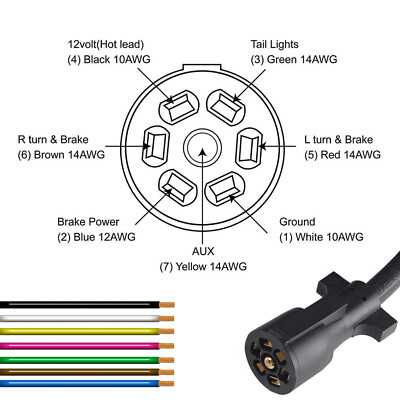
Use the 7-terminal RV connector when a towed camper requires brake control, reverse lamps, and auxiliary 12-volt supply. This round interface supports multiple circuits through separate terminals arranged in a standard layout. The system carries lighting signals, brake controller output, ground return, and continuous power from the tow vehicle electrical system.
Standard Terminal Functions
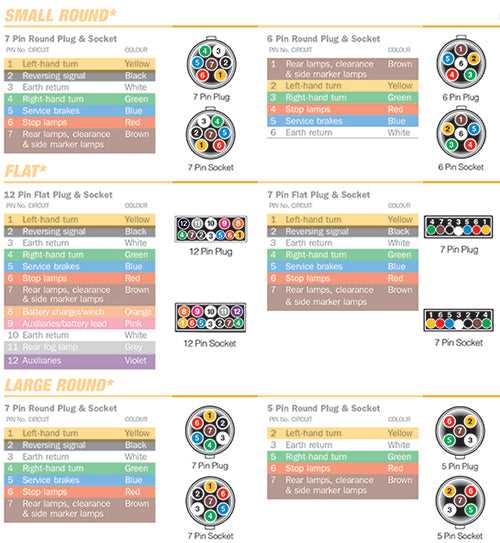
Typical pin assignments in the seven-terminal RV connector include the following conductors:
- White – ground return connected to vehicle chassis
- Brown – tail and marker lamps
- Yellow – left turn signal and stop lamp
- Green – right turn signal and stop lamp
- Blue – electric brake controller output
- Black – constant 12 V auxiliary supply
- Purple or yellow/black – reverse lamps or backup signal
The auxiliary power conductor normally links directly to the tow vehicle battery through a 30–40 amp fuse. This line supplies energy for interior lighting, refrigerator electronics, or onboard battery charging in the camper. Cable size often ranges from 10 AWG to 12 AWG to handle higher current without overheating.
Electric Brake Signal Operation
The brake controller inside the vehicle sends a variable voltage through the blue conductor. Output usually ranges from 0 to about 12 volts depending on brake pedal pressure and controller settings. This signal activates electromagnetic brake assemblies on the camper axle. Stable ground connection through the white conductor keeps brake response consistent.
Verify terminal signals using a multimeter or test lamp. Activate tail lights, turn indicators, brake pedal, and reverse gear while measuring voltage at each contact. Correct readings include approximately 12–14 V on lighting lines and auxiliary supply, while the brake control line changes voltage gradually as the controller output increases.