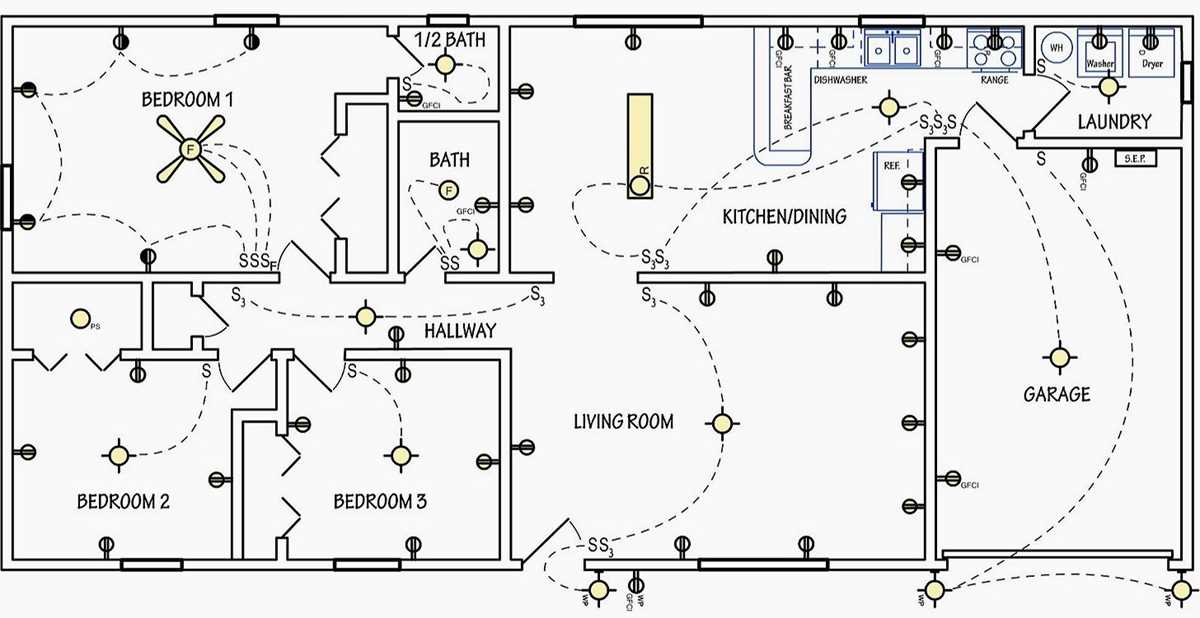
Begin by carefully planning the layout of your electrical system. Identify the main power supply source and how electricity will flow through different rooms. Use a clear layout that shows connections between key components like circuit breakers, outlets, switches, and light fixtures.
For safety and compliance, ensure the correct wire gauge is chosen for each circuit, based on the expected load. A typical home setup requires different gauges for lighting, power outlets, and heavy appliances, so be precise in your calculations.
Label each connection point on the drawing. This includes marking where switches, sockets, and other electrical devices are placed, and how they are wired into the system. A clear, well-documented map makes troubleshooting and future upgrades much easier.
Planning and Designing an Electrical Layout
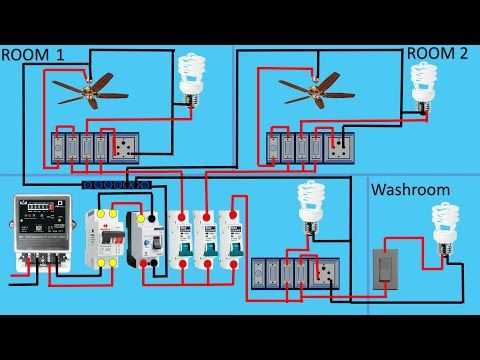
When planning an electrical layout, start by mapping out the flow of electricity from the main service panel to the individual rooms. Ensure that the power is distributed evenly across circuits to prevent overloads. Each room should be connected to its own dedicated circuit or share a circuit with low-power devices like lighting.
The layout should specify the placement of key components, such as outlets, light switches, and appliances. It’s important to consider both the distance between components and their accessibility. For safety, keep outlets away from water sources and ensure that switches are easily reachable near doors.
Choosing the Right Components
Select the appropriate components based on the electrical load each circuit will handle. For light fixtures, a 15-amp circuit may be sufficient, while high-power appliances like ovens and dryers will require a 20- or 30-amp circuit. Choose wiring that meets the load requirements and ensures safe operation over time.
Additionally, use breakers that match the specifications of the wires. A 15-amp breaker should be paired with 14-gauge wire, and a 20-amp breaker with 12-gauge wire. This ensures that the circuit will trip in case of a short circuit or overload, protecting the home from potential fire hazards.
Placement of Electrical Boxes and Fixtures
Place electrical boxes at standard heights to maintain consistency and safety. For example, outlets are commonly installed 12–18 inches from the floor, while light switches should be placed around 48 inches from the ground. This standardization helps maintain functionality and provides easier access for future repairs or upgrades.
- Outlets should be spaced according to room size, with a maximum distance of 12 feet between outlets in living areas.
- In kitchens and bathrooms, GFCI outlets are required for safety due to moisture risks.
- Ensure that light fixtures are mounted securely, with appropriate clearances for airflow and maintenance.
Consider the use of junction boxes where multiple wires meet. This ensures that connections are safe and can be easily accessed for maintenance or troubleshooting. Proper grounding should also be maintained throughout the system to prevent electrical shock or damage to appliances.
Finally, always document the layout with clear labels for each wire, switch, and outlet. A well-documented plan can help with future troubleshooting and upgrades, as it allows anyone working on the system to understand its structure quickly and avoid mistakes.
Step-by-Step Guide to Creating a Residential Wiring Layout
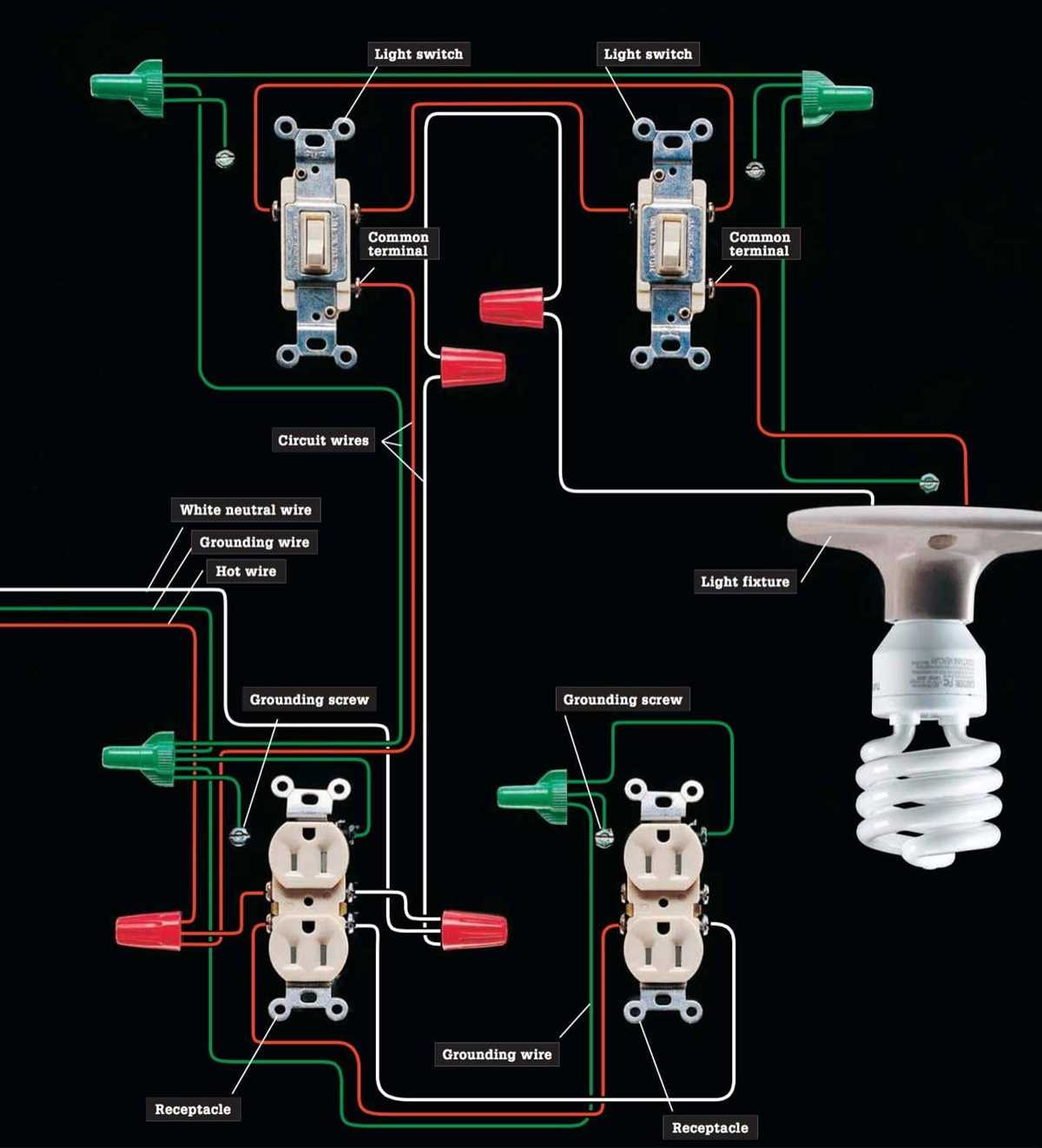
Begin by creating a floor plan of the building, marking the locations of all rooms, doors, and windows. Identify where major electrical components like appliances, lighting, and switches will be placed. This will help determine the routing of electrical lines and ensure all areas have access to power where needed.
Next, establish the location of the main electrical panel. This is where all circuits will connect, and it should be placed in an easily accessible area, typically near the entrance or in a utility room. From there, draw lines to each room, indicating how electricity will flow to outlets, switches, and light fixtures.
Determine the number of circuits required based on the expected load in each area. For example, living rooms may need fewer circuits, while kitchens and bathrooms require dedicated circuits due to the higher power demand. Label each circuit and calculate the appropriate wire size to ensure safety and prevent overloading.
Once the layout is complete, ensure that all connections are marked clearly. Use color-coding or labels to differentiate between different circuits. This will make troubleshooting and future upgrades much easier. Finally, check the plan for compliance with local electrical codes to ensure safety and avoid any issues during inspections.