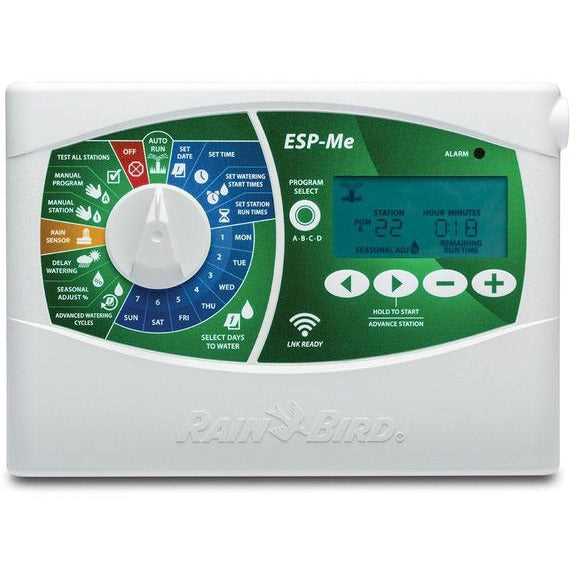
Connect the common conductor from every irrigation valve solenoid to the terminal marked C on the irrigation timer unit, then route a separate zone conductor from each valve to its numbered terminal. This layout allows the timer module to energize individual valves through low-voltage signals, usually 24 volts AC.
Use multi-core sprinkler cable rated for underground installation, typically 18 AWG. Each colored conductor corresponds to one watering zone. Keep the common conductor consistent across all valves; installers often select white for this shared return path. Incorrect grouping of zone wires causes multiple valves to open at once.
Mount the irrigation timer unit near a protected wall outlet and connect the power adapter supplied with the system. The adapter converts household mains voltage to low-voltage AC used by the valve solenoids. Route valve conductors through a sealed conduit entering the bottom of the housing to prevent moisture entry.
Before final installation, verify conductor paths with a multimeter. Measure resistance between the zone conductor and the shared return line at the timer terminals; a typical valve coil reads 20–60 ohms. A reading near zero indicates a short, while infinite resistance suggests a broken cable or disconnected solenoid.
Label each zone conductor at the terminal strip using durable tags. Identification prevents confusion during maintenance and allows quick isolation of faulty valves. Clear labeling also simplifies seasonal adjustments such as adding drip lines or reassigning watering zones.
Rainbird Controller Wiring Diagram With Terminal Layout and Irrigation Valve Connections
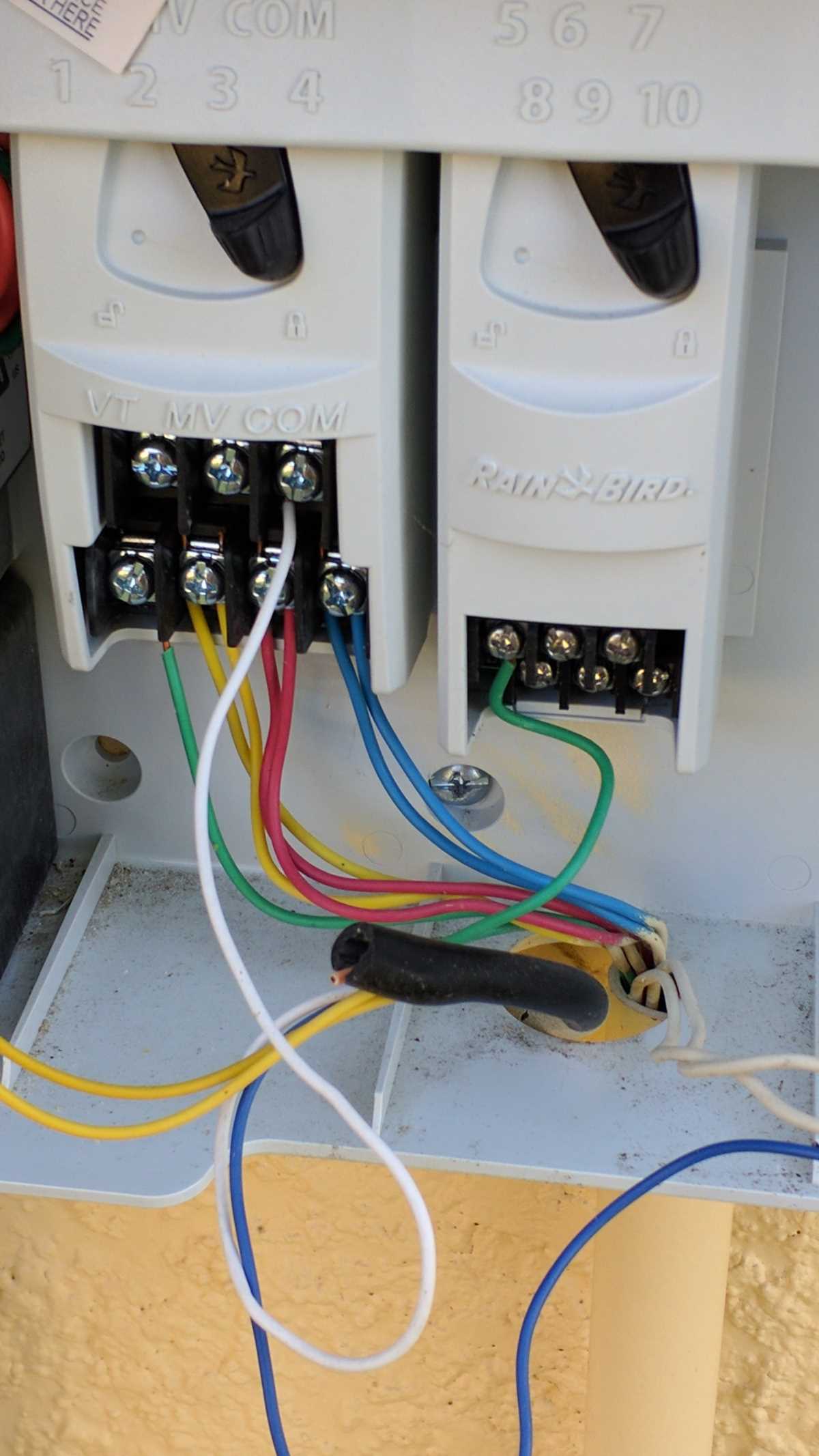
Connect the shared return conductor from every irrigation valve solenoid to the terminal labeled C on the irrigation timer unit. Each zone valve receives a separate colored conductor routed to numbered terminals such as 1, 2, 3, or higher depending on zone count. When the timer module activates a zone, it sends 24-volt AC from the selected terminal through the valve solenoid and back through the shared return path, opening the valve.
Route underground sprinkler cable from the timer housing to the valve manifold using 18 AWG multi-strand copper conductors. Strip insulation only inside sealed junction boxes and join conductors with waterproof connectors rated for burial. A typical valve coil measures 20–60 ohms; check resistance between the zone conductor and the shared return at the terminal strip before closing the housing. Readings near zero indicate a shorted line, while very high resistance signals a broken conductor or disconnected solenoid.
Connecting Rainbird Controller Terminals to Irrigation Zone Valves and Common Wire
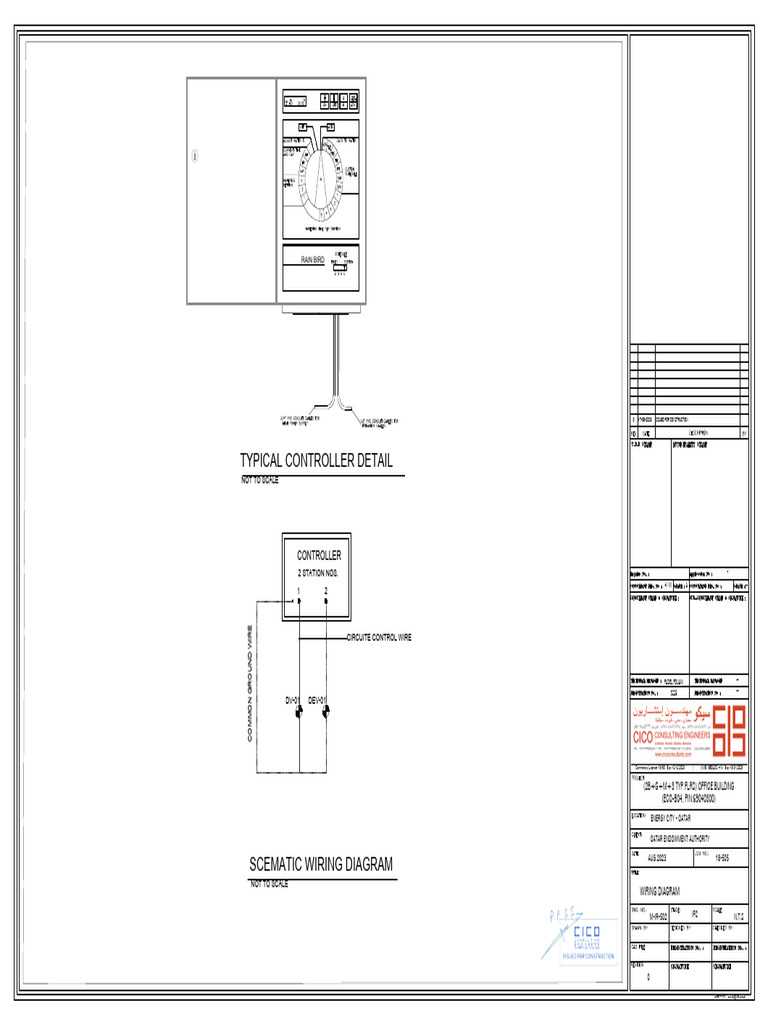
Attach the shared return conductor from all valve solenoids to the terminal marked C on the irrigation timer unit. Each zone valve requires a separate conductor that runs from the solenoid lead back to a numbered terminal on the timer panel. When the unit activates a zone, it applies 24-volt AC between the selected terminal and the shared return line, energizing only that valve.
Use multi-core sprinkler cable rated for burial, typically 18 AWG copper. Assign one color to the shared return line and keep that color consistent from the timer housing to every valve box. The remaining conductors correspond to irrigation zones. Strip insulation inside the valve box, connect each colored conductor to one solenoid lead, and join the other solenoid leads together with the shared return using waterproof connectors.
Verify each zone path before programming the timer unit. Measure resistance between a numbered terminal and the shared return terminal; a typical solenoid reads 20–60 ohms. Values near zero suggest conductor contact, while very high resistance points to a broken cable or disconnected valve coil.