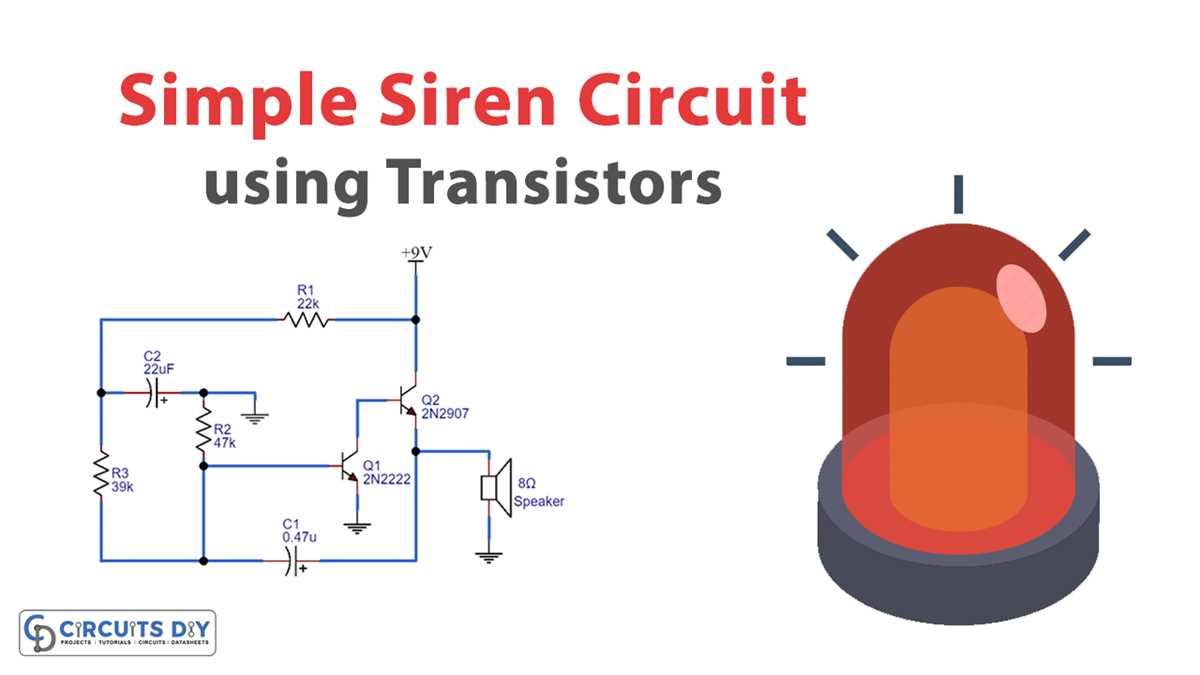
Use a 555 timer IC configured in astable mode to generate alternating audio tones between roughly 500 Hz and 1.5 kHz. This frequency sweep creates the recognizable emergency alarm sound. A second oscillator or a slowly varying control signal modulates the primary tone generator, causing the pitch to rise and fall repeatedly.
Power the sound generator from a 9V–12V DC supply and connect the output through a small transistor driver such as 2N2222 or BC547. The driver stage boosts current so that an 8-ohm speaker can produce a loud warning signal. Without a transistor stage, the timer IC output cannot deliver enough current for strong acoustic output.
Typical component values for the tone generator include resistors between 4.7 kΩ and 100 kΩ and timing capacitors between 1 µF and 10 µF. Changing these values alters the sweep speed and pitch range. A larger capacitor slows the rise and fall of the tone, while smaller resistance values increase oscillation frequency.
Arrange components on a small prototyping board with short connections between the timer IC, resistors, capacitors, and driver transistor. Keep the speaker leads separated from timing components to reduce noise injection into the oscillator stage. A stable layout allows the audio generator to produce clear alternating tones without distortion.
Police Siren Circuit Diagram Using 555 Timer IC and Audio Amplifier Connection
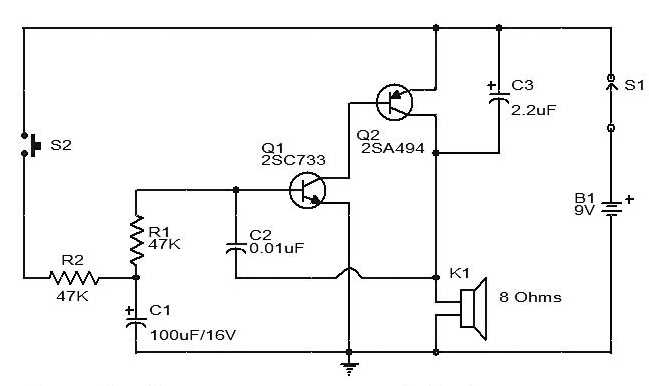
Configure the 555 timer IC in astable operation to generate a repeating tone between 600 Hz and 1.2 kHz. Use a resistor pair such as 10 kΩ and 47 kΩ with a timing capacitor around 4.7 µF. Connect the timer output pin through a coupling capacitor (100 nF–1 µF) to the input of an audio amplifier stage. This stage increases signal power so a small 8-ohm loudspeaker can produce a strong warning sound.
Create the rising and falling pitch effect by adding a second 555 timer configured as a slow oscillator operating around 0.5–2 Hz. Feed its output to the control voltage pin of the tone generator IC. This slowly shifts the oscillator frequency up and down, producing the characteristic alternating alarm pattern. Typical resistor values for the low-frequency stage range between 68 kΩ and 220 kΩ with capacitors between 10 µF and 47 µF.
Route the audio signal from the oscillator stage to an amplifier such as LM386 or a small transistor driver like 2N2222. The amplifier output connects directly to the speaker through short conductors. Use a 9V–12V DC supply with a decoupling capacitor of 100 µF across the power rails to stabilize voltage and prevent oscillation noise from entering the tone generator stage.
555 Timer Police Siren Circuit Diagram with Dual Oscillator Frequency Modulation
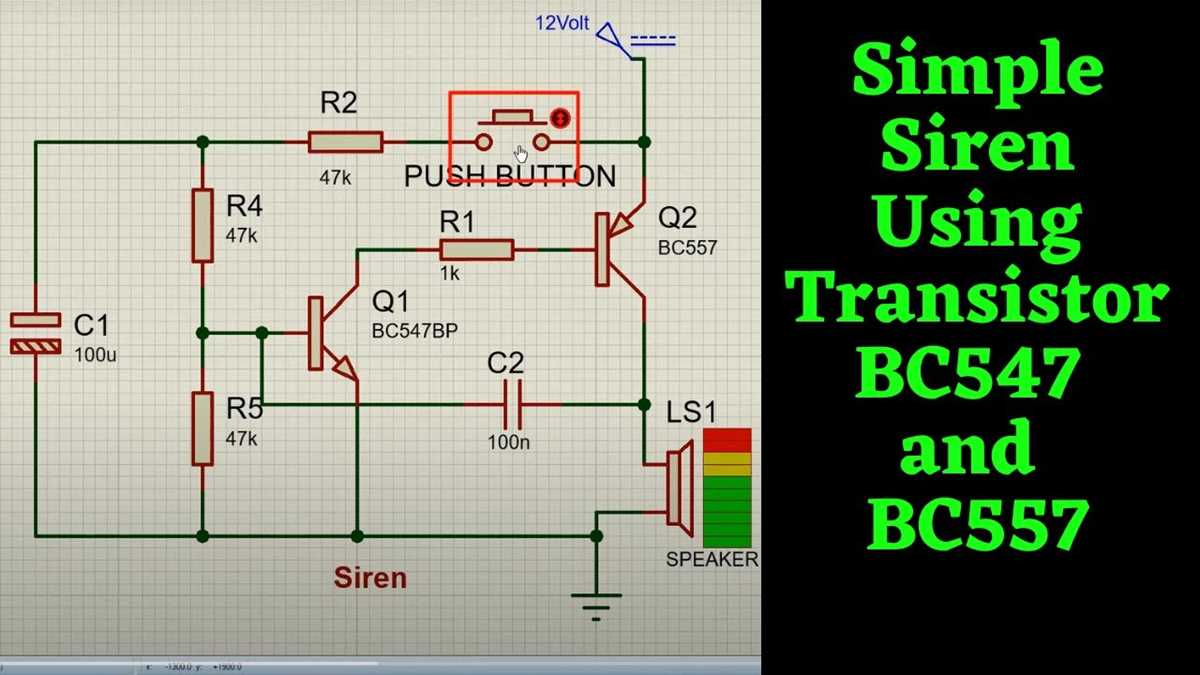
Use two 555 timer ICs to generate the alternating emergency alarm tone. Configure the first timer as a high-frequency audio generator and the second timer as a slow oscillator that shifts the pitch of the first stage. The interaction between these two oscillators produces the familiar rising and falling acoustic pattern.
Configure the primary tone generator in astable operation with resistor values around 10 kΩ and 56 kΩ and a timing capacitor between 2.2 µF and 4.7 µF. This configuration produces a base audio signal near 700–1200 Hz. The output appears on pin 3 of the timer IC and forms the sound source sent to the amplification stage.
The second timer operates at a much lower rate, typically between 0.5 Hz and 1.5 Hz. Use resistors around 100 kΩ–220 kΩ and a capacitor between 22 µF and 47 µF. Its output connects to the control voltage pin of the primary oscillator, slowly altering the frequency of the tone generator.
This modulation stage causes the pitch to increase gradually and then decrease, producing the sweeping alarm effect. Changing the capacitor in the low-frequency stage modifies the sweep speed, while adjusting resistor values alters how quickly the pitch rises and falls.
Route the output from the tone generator through a coupling capacitor around 100 nF into a driver stage. A small transistor such as BC547 or 2N2222 can amplify current before sending the signal to an 8-ohm speaker. This arrangement increases sound output compared with a direct connection from the timer IC.
Provide a 9V–12V DC supply with filtering capacitors placed close to both timer ICs. Add a 100 µF electrolytic capacitor across the supply rails and a 100 nF ceramic capacitor near each IC power pin. These components stabilize voltage and reduce interference between the oscillators.
Keep connections between timing resistors, capacitors, and timer pins short on the prototyping board. Longer leads may introduce stray capacitance that shifts oscillator frequency. A compact component layout maintains stable pitch modulation and clear alternating tones from the speaker.