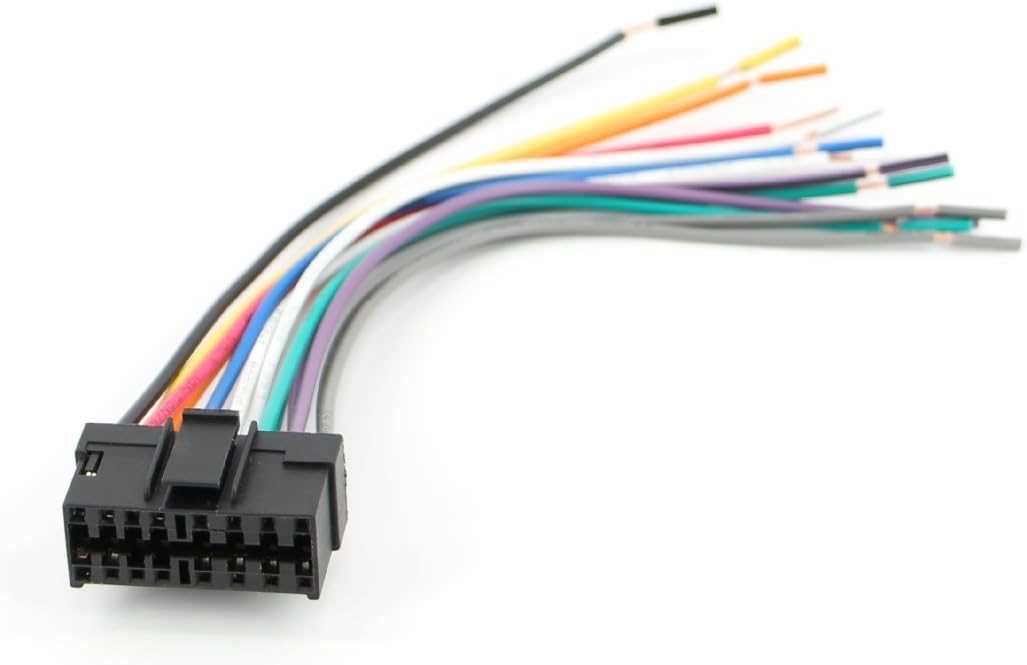
Match each color-coded lead from the aftermarket head unit connector to the vehicle audio system conductors before applying power. Yellow normally carries constant 12-volt supply from the battery, red connects to ignition-controlled voltage, and black links to chassis ground. Correct pairing prevents blown fuses and protects the internal amplifier stage.
Speaker outputs appear as paired conductors with a solid color and the same shade marked by a black stripe. White and white-black serve the front left channel, gray and gray-black control the front right channel, green and green-black feed the rear left speaker, while purple and purple-black drive the rear right channel. These pairs carry amplified signals from the head unit directly to vehicle speakers.
Accessory control lines manage external equipment. A blue or blue-white lead sends a 12-volt trigger to power antennas or external amplifiers when the stereo unit turns on. An orange or orange-white lead connects to the dashboard illumination circuit, allowing the display brightness to change with vehicle lighting.
Use a vehicle-specific adapter connector rather than cutting factory conductors. This plastic interface converts the automobile plug into standard aftermarket leads, reducing installation errors and simplifying future removal. Crimp connectors or solder joints followed by heat-shrink tubing provide reliable electrical contact.
Before mounting the head unit, confirm each connection with a multimeter. Measure constant battery voltage on the yellow supply lead, verify ignition voltage on the red conductor with the key in ACC position, and check ground continuity between the black lead and the metal chassis. Testing at this stage prevents troubleshooting after dashboard reassembly.
Color Codes and Speaker Connections in Aftermarket Car Stereo Connector Layout
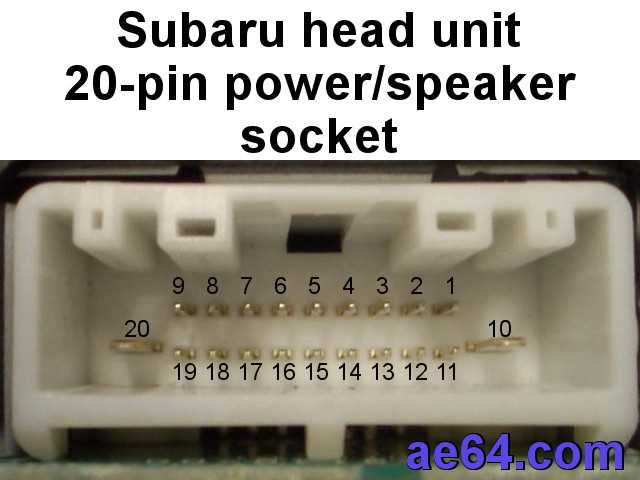
Match each colored lead from the head unit connector to the correct vehicle audio line before applying power. The yellow conductor usually links to constant 12-volt battery supply, red connects to ignition-controlled voltage, and black attaches to chassis ground. Incorrect pairing often causes blown fuses or memory reset after the key is removed.
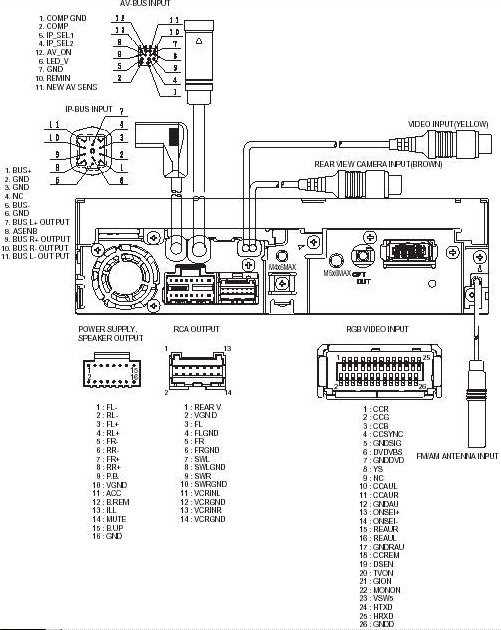
Speaker outputs appear as four color pairs. Each pair contains a solid shade and the same shade with a black stripe, marking positive and negative channels. Correct polarity keeps speaker cones moving in the same direction and prevents weak bass.
Front audio channels normally follow this arrangement: white for front left positive and white with a black stripe for front left negative, gray for front right positive and gray with a black stripe for front right negative. These conductors route amplified signal directly from the stereo receiver to the door speakers.
Rear Speaker Output Identification
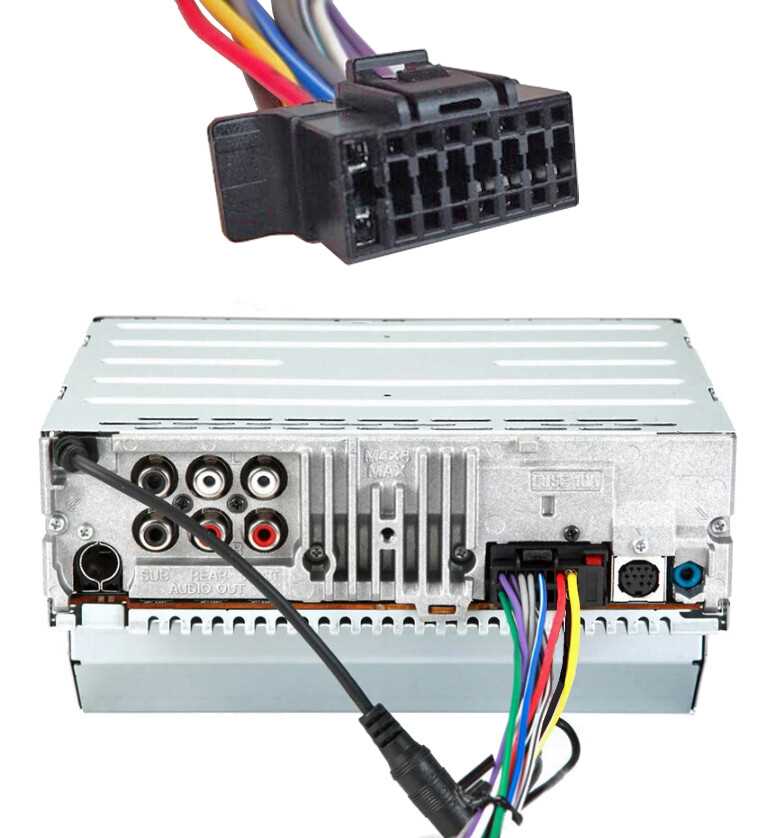
Rear channels use green and purple pairs. Green serves the rear left positive terminal while green with a black stripe handles the negative side. Purple connects to rear right positive, and purple with a black stripe carries the negative signal return. Maintain these pairs without crossing channels to avoid reversed stereo imaging.
Auxiliary control leads appear alongside speaker outputs. A blue or blue-white conductor sends a 12-volt trigger for an external amplifier or motorized antenna. An orange or orange-white lead ties into dashboard illumination so the display dims when vehicle lights activate.
Confirm each connection with a multimeter before inserting the stereo receiver into the dashboard opening. Measure constant battery voltage on the yellow lead, check ignition power on the red conductor, and test continuity between the black ground wire and metal body structure.
Color Codes for Power Ground and Ignition Leads in Aftermarket Car Stereo Connector

Connect the yellow lead to a constant 12-volt battery supply so the head unit memory retains settings and clock data. This conductor stays energized regardless of key position and usually links to a fused battery feed in the vehicle electrical system.
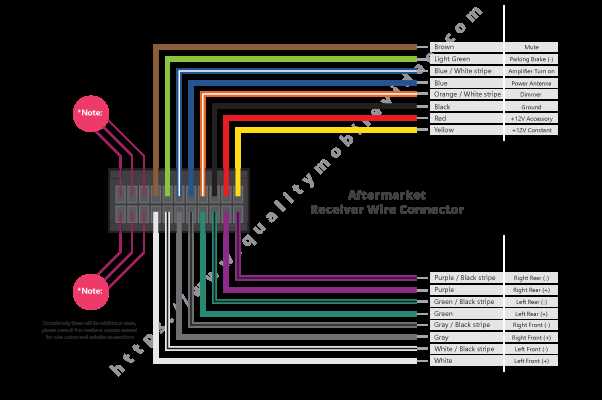
The ignition-controlled supply uses a red lead that becomes active only when the key is in ACC or ON position. This connection allows the stereo receiver to power down automatically when the vehicle is turned off, preventing battery drain during long parking periods.
Ground must attach to the vehicle chassis through the black conductor. A solid metal contact point behind the dashboard works best. Remove paint from the mounting location and secure the ground terminal using a bolt or factory screw to maintain low resistance.
- Yellow – constant battery 12V supply for memory and internal settings
- Red – ignition or accessory voltage that turns the unit on with the key
- Black – chassis ground connection to vehicle body metal
- Blue or blue-white – control signal for external amplifier or powered antenna
- Orange or orange-white – dashboard illumination input that dims the display when vehicle lights activate