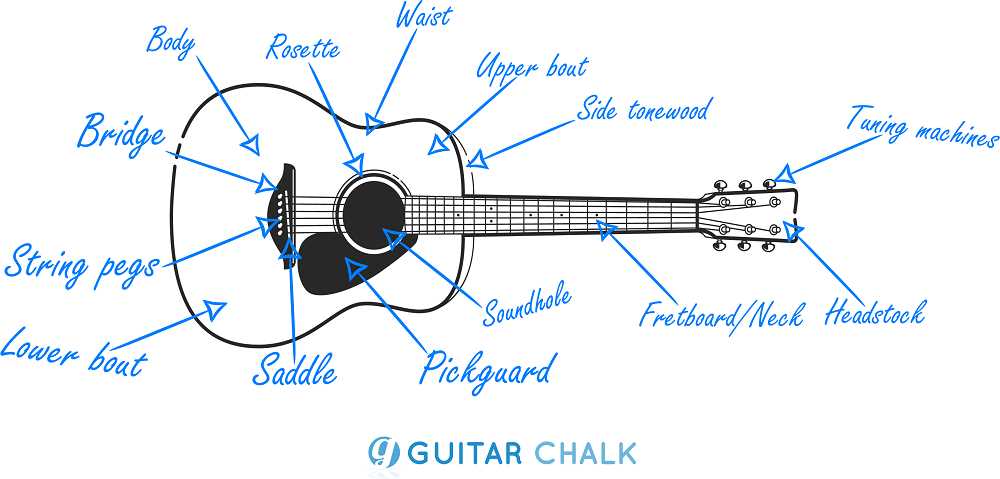
For proper maintenance, understanding the individual sections of your instrument is vital. Whether tuning, replacing strings, or adjusting action, knowing the names and functions of key components helps you avoid costly repairs or mistakes.
Start by identifying the neck, headstock, and body components, as these form the backbone of setup and care. The fretboard holds the frets that control pitch, while the bridge supports the strings and transfers vibrations to the soundboard for tone production. Each component plays a distinct role in creating your instrument’s sound and playability.
Once familiar with these sections, you can confidently make adjustments like truss rod tightening, string height changes, and even custom modifications. A well-maintained instrument not only sounds better but also provides a more comfortable playing experience.
Understanding the Key Sections of Your Instrument
To maintain and repair your instrument efficiently, it’s critical to know the key sections that make it function. Focus first on identifying the neck, headstock, and body, as these are foundational to sound production and playability.
The headstock holds the tuning pegs, allowing you to adjust string tension. The neck, which contains the fretboard, is responsible for pitch control as your fingers press down the strings. Moving towards the body, the bridge holds the strings in place and transfers their vibrations to the soundboard, amplifying sound.
Familiarizing yourself with these sections makes it easier to perform tasks like adjusting string height, truss rod settings, or replacing worn-out components. Mastering their functions will improve both your playing and maintenance skills.
Identifying Key Components for Maintenance
Start by inspecting the tuning pegs, located on the headstock. These small but critical components control string tension and ensure your instrument stays in tune. If they become stiff or loose, consider cleaning or replacing them.
Next, examine the neck for any warping or damage. The truss rod inside adjusts the curvature of the neck, so check for any inconsistencies in string action or frets buzzing. If adjustments are needed, use a proper wrench to tweak the truss rod or consult a specialist for more complex issues.
Pay attention to the bridge and saddle, where strings rest. These components directly affect sound quality. If they wear down over time, replacing them with new ones will restore tonal quality and prevent string slippage.
Lastly, assess the body for cracks or any structural weaknesses, particularly around the soundboard. Regularly check the strings and replace them if they show signs of wear or rust. Keeping everything in top condition ensures longevity and optimal performance.
How to Use the Component Map for Setup and Adjustment
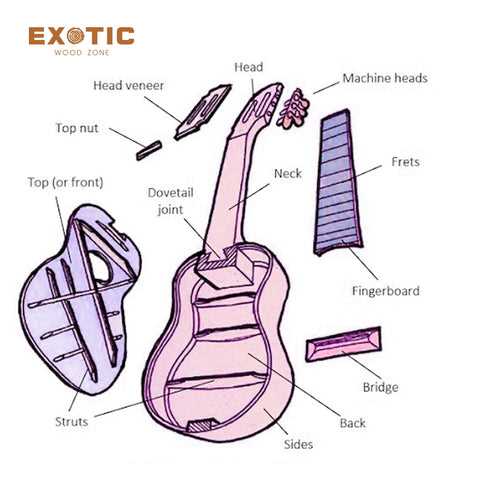
Start with the bridge and saddle to adjust string height. Use the map to identify the precise location where strings rest. If the action is too high or low, adjust the saddle’s height accordingly. This ensures proper tension and clarity.
Next, focus on the truss rod, located along the neck. Use the diagram to locate the rod’s adjustment nut. Tighten or loosen it to correct any neck curvature issues, ensuring the strings sit evenly across the frets for smooth playability.
Check the nut for string alignment. If necessary, use the guide to determine where to file the grooves for a precise fit. This will help prevent buzzing and improve tuning stability.
Finally, examine the tuning pegs and their alignment. Refer to the diagram to see their positions relative to other components. If any pegs are stiff or loose, adjust or lubricate them to maintain consistent tuning during use.