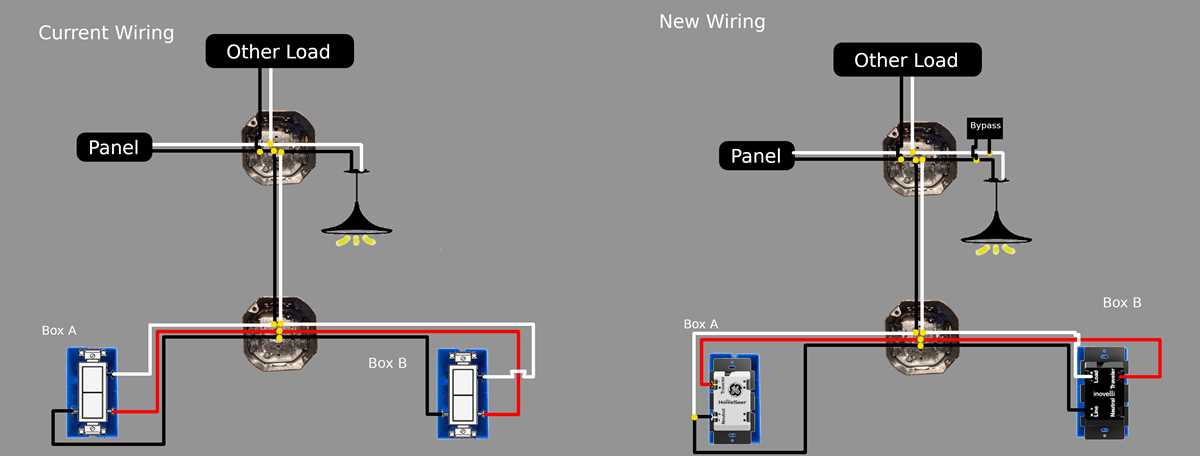
Use a continuous conductor path that returns to the source after each fixture connection; this approach reduces cable consumption and keeps voltage drop predictable across multiple lamps. In a typical residential 120-volt installation, connect the supply phase to the first luminaire terminal, route the same phase onward to the next unit, and maintain a neutral return line that follows the identical route. This arrangement forms a closed electrical path where every fixture taps into the same pair of conductors.
For stable operation across several luminaires, keep branch spacing under 8–10 meters of cable between connection points when using 1.5 mm² copper wire. Larger distances increase resistance and may lower brightness at the final fixture. Place junction points inside accessible boxes and secure connections with screw terminals or spring clamps rated for at least 10–16 A. Avoid twisting bare conductors without mechanical connectors; oxidation increases contact resistance.
The layout drawing usually shows the phase conductor entering the first luminaire, continuing through each terminal block, and returning toward the distribution panel through the neutral line. Switch placement should interrupt only the phase conductor, never the neutral return. This keeps lamp holders de-energized when the switch is off and lowers shock risk during maintenance.
When planning the wiring scheme, mark every junction, switch position, and luminaire connection on the blueprint before pulling cables. Electricians often label conductors with color codes: brown or black for phase, blue for neutral, and green-yellow for grounding. Clear labeling and consistent routing reduce troubleshooting time if a fixture stops working or if additional luminaires must be added later.
Feed-Through Lamp Wiring Plan: Practical Guide to Layout and Connection
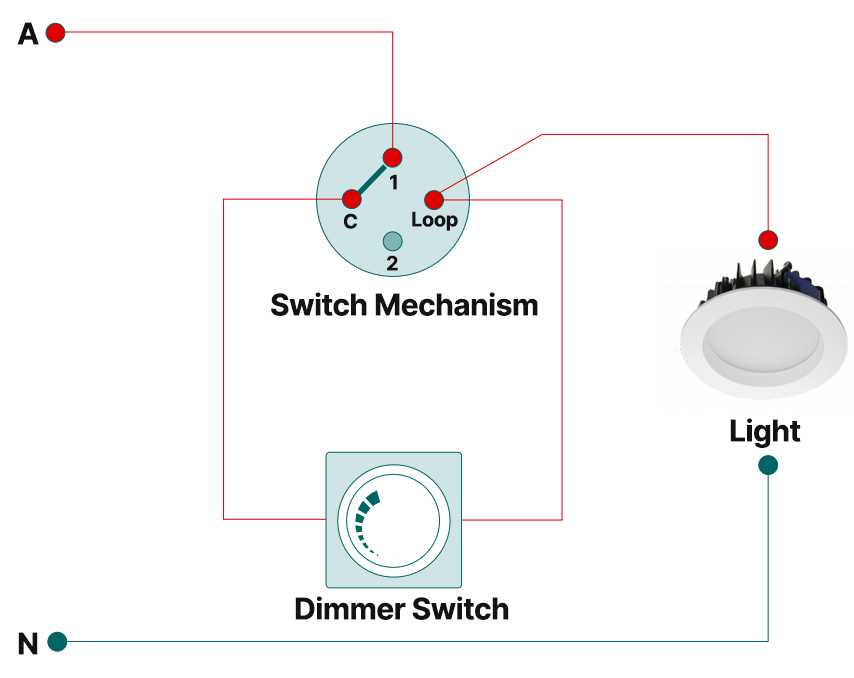
Place the supply cable at the first ceiling rose and distribute power through each fixture point sequentially; this arrangement reduces wall switch boxes filled with splices and keeps most connections above the ceiling. Use 14/2 NM cable on a 15-amp branch or 12/2 on a 20-amp branch. The incoming hot conductor should pass through each fixture box using wirenuts or push connectors while a separate switched conductor returns from the wall control to the lamp holder. Neutral conductors remain continuous through all ceiling points, and the equipment grounding conductor must be bonded to every metal enclosure.
Recommended Wiring Order
- Bring the supply line to the first ceiling junction box.
- Send a two-conductor cable from that box to the wall control.
- Return a switched hot from the control back to the first fixture.
- Continue the permanent hot and neutral conductors to the next fixture point.
- Repeat the pass-through connection for each additional luminaire.
Inside the first ceiling enclosure, join three hot conductors: incoming power, outgoing feed to the next fixture, and the conductor going toward the switch. Cap them together with a connector rated for the wire gauge. The returning switched conductor connects only to the lamp holder terminal. This arrangement keeps the switch carrying only the load current rather than the full distribution path.
Spacing between ceiling boxes usually ranges from 2.4 m to 3 m in residential rooms. Keep cable runs at least 32 mm from framing edges or install steel nail plates. Each junction enclosure must remain accessible; avoid burying them under drywall without a removable cover.
Layout Tips for Clean Installation
- Mount ceiling enclosures before pulling cable so alignment stays straight.
- Label the switched conductor with red tape at both ends.
- Limit conductor fill to the cubic-inch rating stamped inside the box.
- Use deep 20 cu in boxes where three or more cables meet.
- Secure cable within 300 mm of each enclosure with staples.
Voltage drop rarely becomes a problem in small homes, yet runs longer than 30 m benefit from thicker conductors. A 14-gauge copper line carrying 5 A across 40 m can lose roughly 1.3 V. Upgrading to 12-gauge reduces that loss and keeps lamp brightness uniform across multiple fixtures.
During testing, verify continuity of the neutral chain before installing lamps. With power disconnected, measure resistance between the first and last fixture neutral terminals; a near-zero reading confirms proper pass-through connections. After energizing the branch, confirm that the wall control interrupts only the switched conductor while permanent hot remains present at the ceiling junction.