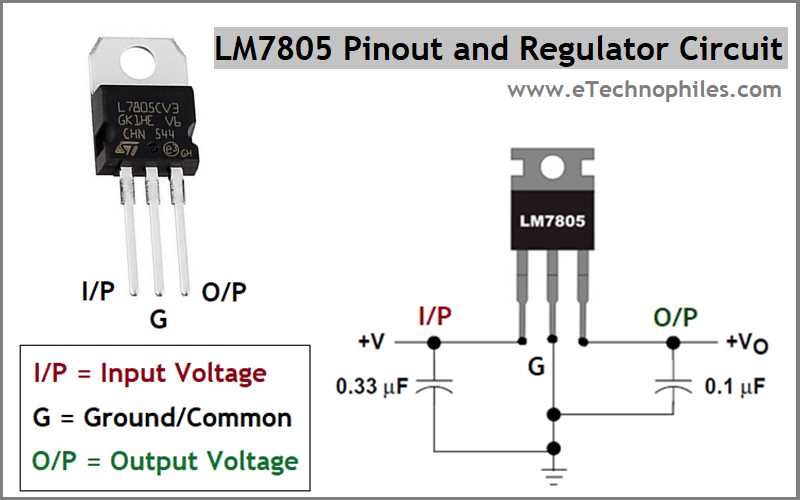
Use a clean 7V to 20V DC source to feed the three-terminal stabilizer. Attach a 0.33µF capacitor to the input and a 0.1µF capacitor to the output to reduce noise and prevent voltage spikes.
Connect the input lead to the positive rail, the ground lead to the common line, and the output lead to your load for a stable 5V supply. Ensure the heat sink is properly mounted if the load exceeds 500mA to avoid thermal shutdown.
Measure the output with a precision multimeter before connecting sensitive devices. Check for voltage drop under load and confirm that ripple remains below 50mV for reliable operation.
Voltage Stabilizer Setup and Connection Guide
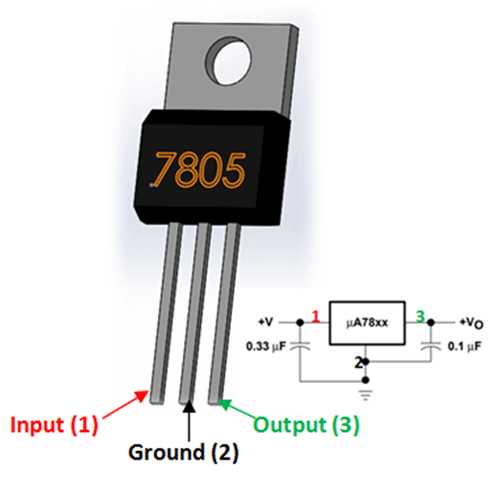
Provide a DC input between 7V and 20V to the three-pin stabilizer to achieve a reliable 5V output. Connect a 0.33µF ceramic capacitor across the input to smooth fluctuations and protect against voltage spikes.
Attach a 0.1µF capacitor to the output terminal to minimize high-frequency noise. Ensure the load is connected correctly, with the positive line linked to the output and the negative line tied to the common ground.
Mount a heat sink on the component if the current exceeds 500mA, as excessive temperature can trigger thermal shutdown. Proper thermal management maintains continuous 5V output under higher loads.
Verify connections with a multimeter before applying power to sensitive devices. Measure both the no-load and full-load conditions to confirm output stability and detect any unexpected voltage drops.
For longer wires between the power source and stabilizer, increase the input capacitor slightly to 1µF to counteract inductive voltage spikes. Keep output lines short to reduce signal loss and maintain stable power delivery.
Regularly inspect solder joints and terminals for corrosion or looseness. Maintaining secure connections ensures minimal resistance, reduces heat buildup, and preserves consistent 5V output for downstream components.
Selecting Correct Input Power and Capacitor Values
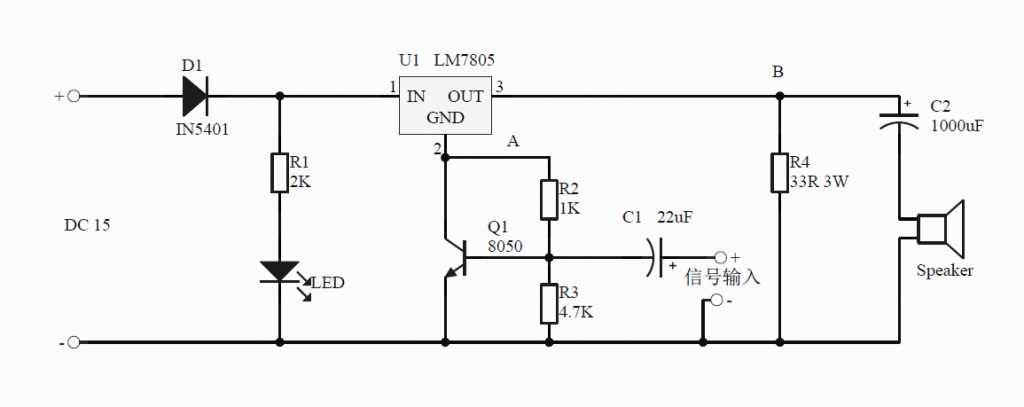
Provide a stable DC input between 7V and 20V to achieve a reliable 5V output. Avoid exceeding 20V to prevent overheating or triggering internal protection mechanisms.
Use a 0.33µF ceramic capacitor across the input terminals to reduce voltage fluctuations and transient spikes from the power source. Place it as close as possible to the component for optimal performance.
Attach a 0.1µF capacitor on the output side to suppress high-frequency noise. This ensures smooth current delivery to connected devices and prevents erratic behavior under rapid load changes.
For longer input cables or noisy power supplies, consider increasing the input capacitor to 1µF or using a low-ESR electrolytic type. This helps maintain steady voltage and minimizes voltage drop along the line.
Check the load current against component ratings. If the load approaches 1A, add a larger output capacitor of 10µF or more to maintain stability and avoid voltage dips during sudden load surges.
Confirm capacitor polarity for electrolytic types. Incorrect orientation can damage the capacitor and lead to unstable output, so carefully follow positive and negative markings for safe operation.
Periodically inspect capacitor condition in high-temperature environments. Replace any that show swelling, leakage, or reduced capacitance to sustain reliable 5V delivery and extend component life.