If you’re setting up a simple lighting solution, using a resistor to limit current is one of the best ways to avoid damage. Choose the correct resistor value based on the desired current flow and the LED’s voltage rating. For example, for a typical red LED with a forward voltage of 2V and a current requirement of 20mA, a resistor of around 500 ohms will work perfectly with a 12V power supply.
When connecting multiple LEDs, you can either arrange them in series or parallel, depending on how you want to distribute the voltage and current. In a series setup, the voltage across each LED adds up, and you need to adjust the resistor accordingly. In a parallel setup, each LED receives the same voltage, and resistors are required for each individual LED to prevent excess current flow.
To power these configurations, you’ll need a stable power source. A 12V adapter or battery is typically used for this purpose. Make sure the power supply can handle the total current drawn by the LEDs, as using an undersized power source could lead to overheating or failure. Ensure that your wiring and components are rated for the necessary current to maintain safety and longevity.
How to Create a 12V Lighting Setup with Proper Wiring
Start by selecting the right power source for your project. A 12V adapter or battery is ideal for powering these types of setups. Ensure the power source is capable of supplying enough current to support the number of lights you want to run. A common mistake is using an undersized power supply, which can cause overheating or unreliable performance.
For a basic configuration, connect your components in series or parallel. In a series setup, the voltage adds up across each component. This is useful when you need to create a longer chain of lights. However, each additional component requires careful consideration of the resistor value to manage current flow effectively.
In a parallel connection, each light receives the same voltage from the power supply. However, you must use a separate current-limiting resistor for each unit. This ensures that each light operates independently and safely without drawing excessive current. For example, a 100-ohm resistor may be appropriate for each unit depending on its power rating.
When designing the system, consider the power rating of each component. If using multiple lights, make sure the total current draw does not exceed the power supply’s rating. A common practice is to calculate the total current required for all lights and choose a power source that offers at least 10-20% more current than needed to ensure reliability.
- Choose a power supply with a voltage rating that matches your setup (12V).
- Ensure the power supply can handle the total current draw of all connected units.
- Use appropriate resistors to limit current and protect components from excess power.
Lastly, when connecting everything, ensure your wiring is capable of handling the current. Use wires with appropriate thickness, typically 20-24 gauge, depending on the total load. Thin wires may overheat or cause voltage drop, affecting the performance of the setup. Always check the wiring specifications to match the expected current load for safety.
How to Design a Simple 12V LED Setup with Resistor
Start by calculating the correct value for the current-limiting resistor. Use Ohm’s law to determine the resistance needed: R = (V_supply – V_LED) / I_LED, where V_supply is the supply voltage (12V), V_LED is the forward voltage of the light source (typically 2V for red LEDs), and I_LED is the desired current (usually around 20mA). For a 12V supply and a 2V LED running at 20mA, the resistor value would be 500 ohms.
Choosing the Right Resistor
The resistor’s power rating is also crucial. Calculate the power dissipated by the resistor using the formula: P = I² * R. For the previous example, with a 20mA current and a 500-ohm resistor, the power dissipated is 0.2W. A 0.25W or 0.5W resistor is a safe choice to prevent overheating.
Building the Simple Setup
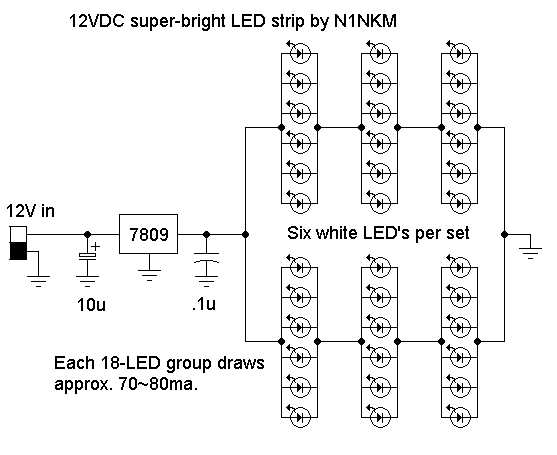
Connect the resistor in series with the LED and power supply. This ensures that the current is limited, preventing damage to the components. The longer leg of the LED (the anode) should be connected to the positive terminal of the power source, while the shorter leg (the cathode) should go to the resistor, which then connects to the negative terminal of the power supply.