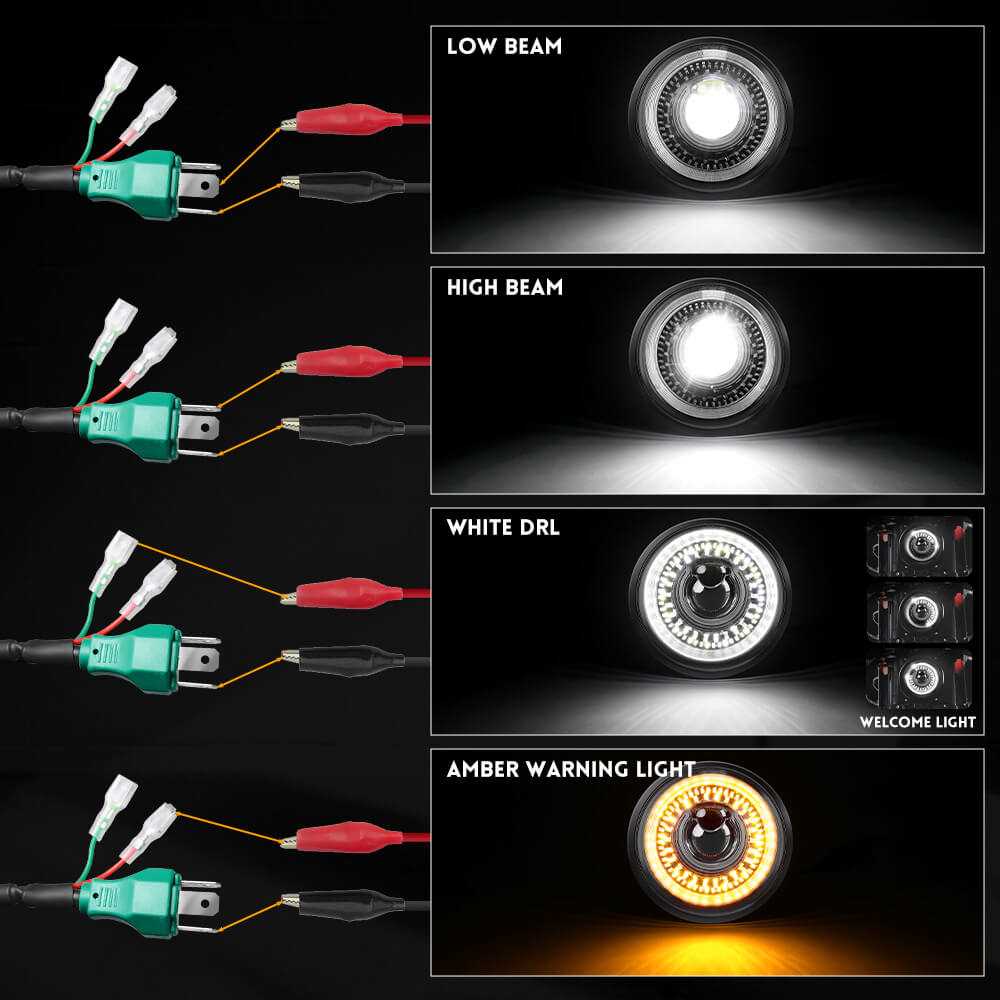
Connect the front vehicle lamps through a relay powered directly from the battery. This method prevents voltage drop through the factory switch circuit and allows the lighting modules to receive a stable 12–14 V supply. A typical setup includes a fused power line from the battery, a relay triggered by the original lamp switch, and separate conductors leading to low and high beam inputs.
Use conductors with suitable gauge for the current draw of the light units. Many modern semiconductor-based lighting assemblies consume 20–40 watts per lamp, which usually requires 16 AWG or 14 AWG copper conductors. Thinner conductors can cause heat buildup or dim output during long nighttime driving.
Follow a clear circuit layout connecting battery power, fuse, relay, switch signal, and ground return. The relay coil receives the signal from the vehicle control circuit, while the relay contacts deliver battery power to the lighting modules. This separation protects the factory switch from higher current and stabilizes brightness during engine operation.
Attach the ground conductor directly to the vehicle chassis using a clean metal contact point. Rust, paint, or loose bolts increase resistance and reduce brightness. Proper grounding and short conductor paths maintain stable current flow and prevent flickering during vibration or uneven road surfaces.
LED Headlight Wiring Diagram with Relay Fuse and High Low Beam Connections
Install a relay between the battery and the front vehicle light units so that the original switch only triggers the relay coil. Battery power should pass through a 15–20 A fuse before reaching the relay contact terminal. From the relay output, run separate conductors to the low and high beam inputs of the lamp modules. Ground connections must attach directly to the chassis near each lamp to reduce resistance and maintain stable brightness while the engine alternator produces about 13.5–14.4 V.
Typical Relay Circuit Layout
- Terminal 30 battery positive through fuse
- Terminal 87 output line to lamp power input
- Terminal 85 ground for relay coil
- Terminal 86 trigger signal from vehicle light switch
High and Low Beam Control
Use the factory beam selector to route the trigger signal to separate control lines. Low beam mode energizes the relay supplying power to the low beam input, while high beam mode activates the second control path feeding the high intensity circuit inside the lamp assembly. Cable sizes usually range from 16 AWG to 14 AWG copper depending on the total power draw of the lighting modules.
How to Connect LED Headlights Using Relay Fuse and Battery Power Line
Run a dedicated power conductor from the vehicle battery to a relay contact through a 15–20 amp fuse. Place the fuse holder within 15–20 cm of the battery terminal so the circuit remains protected if the cable insulation becomes damaged. Use copper conductors rated 14 AWG or 16 AWG depending on total lamp power.
Mount the relay near the front lighting area or inside the engine compartment close to the fuse box. A standard automotive relay uses four main terminals. Battery voltage enters terminal 30, output power leaves terminal 87, terminal 85 connects to ground, and terminal 86 receives the control signal from the vehicle light switch.
Use the original vehicle lamp control line only as a trigger signal for the relay coil. This method prevents high current from flowing through the dashboard switch and factory harness. When the switch activates the circuit, the relay closes and allows battery voltage to reach the lighting modules through a short, low resistance path.
Route the power conductor from relay terminal 87 to both front lamp units. Split the conductor near the radiator support using a sealed junction connector so that each lamp receives the same voltage level. Uneven voltage distribution may cause one lamp to appear dimmer than the other.
Attach the ground conductor from each lamp directly to the vehicle chassis. Scrape paint from the contact point and secure the connection using a bolt with a star washer. Clean metal contact keeps resistance low and maintains stable light output during vibration or wet road conditions.
Secure the cable bundle along factory harness routes using clips or nylon ties spaced roughly every 25–30 cm. Avoid areas close to exhaust components or sharp edges. Proper routing reduces insulation wear and prevents short circuits during long-term vehicle operation.