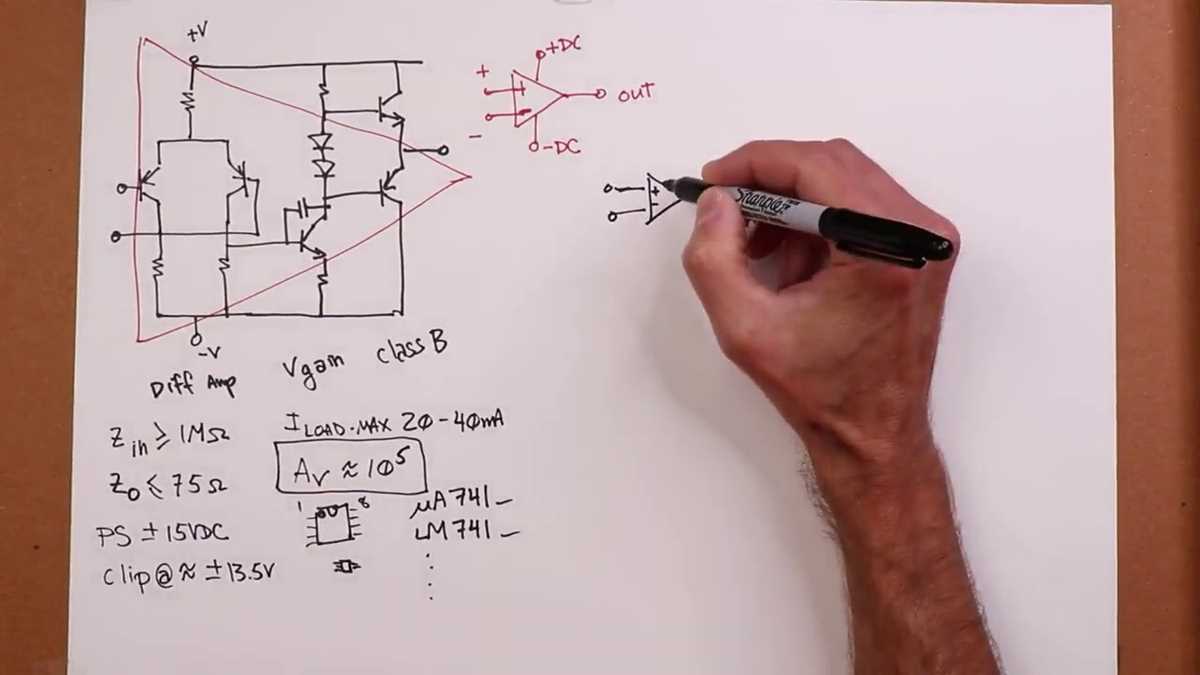
When designing or analyzing a signal processing system, understanding how the main operational block of the device functions is key. The primary components responsible for amplifying signals work together in a carefully structured arrangement. These components include input stages, intermediate transistors, and output stages, each serving a distinct role to ensure stable and linear amplification.
Focus on the input stage, where the differential signal is received and processed. It is here that the core functionality of the amplifier comes to life, with transistors and resistors working to amplify the voltage difference between the two input terminals. The effectiveness of this stage directly affects the overall performance of the entire system.
Following the amplification process, the intermediate stage stabilizes the gain before the signal is sent to the output. The output stage is responsible for driving the load, ensuring that the amplified signal reaches the intended target with sufficient power. Ensuring the proper balance and quality of each stage is necessary for preventing distortion and maintaining high signal integrity.
Understanding the Structure of an Operational Amplifier
The core of an operational signal processor is built on a series of interconnected stages that enable it to amplify voltage differences. The most crucial stage is the differential input, where the device compares the voltages between the two input terminals. This comparison allows the system to identify and amplify the difference in voltage, which is the key to signal processing.
At the heart of the input section, transistors play a major role in handling the incoming signals. The transistor pairs are designed to have high input impedance, which minimizes the loading effect on the signal source. These transistors act as the first amplification stage, providing initial gain.
Next comes the gain control mechanism. This section ensures that the voltage difference between the inputs is amplified without excessive distortion. The gain is typically set by resistors connected to the transistor stages, controlling the flow of current and optimizing the output signal strength.
The intermediate stage of the amplifier handles the signal by providing further amplification and feedback. Feedback loops are critical in maintaining stability and controlling the overall gain. This stage often includes more transistors that help drive the signal with precision, adjusting for any voltage drops and imperfections caused by earlier stages.
The output section is responsible for delivering the processed signal to the next stage of the system. The transistors in this stage drive the load with sufficient power to ensure the signal can be properly interpreted or further processed. Without a solid output stage, even a perfectly amplified signal may fail to reach its destination effectively.
Additionally, capacitors are often included to filter noise and smooth out fluctuations in the output. This ensures that the signal remains clean and consistent, free from unwanted high-frequency components or electrical interference. The quality of the capacitors used can directly affect the performance of the device.
Throughout the design, proper power supply connections are necessary to ensure that each stage functions correctly. A stable voltage supply is critical for the transistors and other components to perform without failure. Any instability in the power supply can lead to malfunction, affecting the overall performance of the device.
- Ensure proper transistor pairing in the input stage for accurate voltage comparison.
- Use high-quality resistors to set the correct gain without introducing noise.
- Design the feedback loop to provide precise control over the amplification process.
- Implement capacitors to filter unwanted frequencies and stabilize the output.
Key Components and Their Functions in an Operational Amplifier
The input stage of a signal amplifier is composed primarily of transistors, which are responsible for receiving and comparing the two input voltages. These transistors have a high input impedance, which prevents the signal source from being loaded down, ensuring that the input voltage is not significantly altered before amplification.
At the core of the amplification process is the differential pair, which amplifies the voltage difference between the two inputs. These transistors work together to increase the voltage differential and provide the necessary gain for signal processing. The strength of the gain is set by surrounding resistors that are carefully chosen to achieve the desired level of amplification.
Next, resistors play a crucial role in controlling the feedback loop. The feedback mechanism regulates the output by comparing it with the input, allowing the system to adjust the gain dynamically. This stage ensures the output remains proportional to the input without distortion, providing linear amplification and stability.
The output stage is composed of power transistors that provide the necessary drive to the load. These transistors are designed to handle larger currents and ensure the signal reaches its destination with sufficient strength. Without this stage, the amplifier would not be able to power external components or drive the output signal with enough force.
Capacitors are often used to filter high-frequency noise from the signal, improving the overall quality of the output. By blocking unwanted frequencies, capacitors ensure that only the desired signal passes through to the output, maintaining the clarity and accuracy of the amplified signal.
Lastly, the power supply section is critical for providing consistent voltage to all components. A stable power supply is necessary to keep the internal transistors and other components functioning properly. Any fluctuations in power can result in instability or distortion in the output signal, affecting the performance of the system.