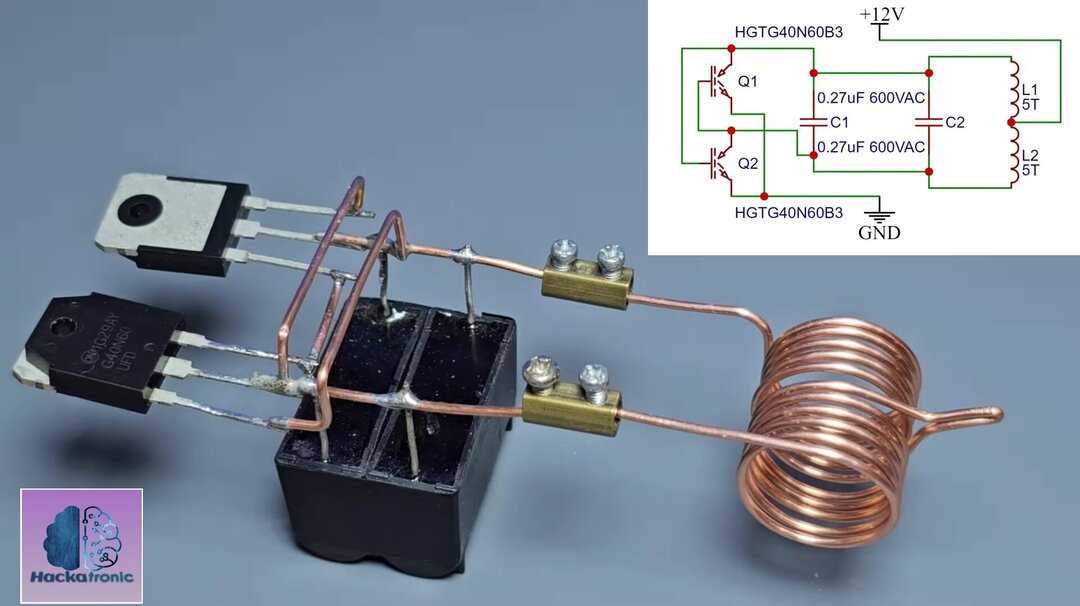
Select a resonant power stage with a work coil tuned between 20 kHz and 100 kHz; this frequency range heats steel and copper parts rapidly while limiting switching losses in MOSFET or IGBT modules. A typical configuration uses a half-bridge or full-bridge inverter connected to a copper spiral that produces a strong alternating magnetic field. Place polypropylene capacitors rated above 400–800 V close to the switching transistors to minimize stray inductance and maintain stable resonance.
The graphical layout of such a system usually contains four functional blocks: a DC supply (rectifier plus smoothing capacitors), a switching stage using high-current transistors, a resonant tank composed of a copper spiral and high-frequency capacitors, and a driver module that generates complementary gate signals. Keep conductor paths between the switching stage and the resonant tank shorter than 10–15 cm; longer traces increase parasitic reactance and reduce heating power.
Thermal load rises quickly once the metal part enters the magnetic field. Install current sensors rated above 50–200 A to monitor coil load and shut down the driver if resonance drifts. Ferrite chokes on the supply input reduce electromagnetic interference, while laminated bus bars or thick copper plates carry large currents with lower resistance.
For workshop builds delivering 1–3 kW, designers commonly choose a 48–60 V supply with switching devices rated for at least 120 V and 200 A peak. Water-cooled copper spirals with tubing diameters of 6–10 mm maintain stable temperature during continuous heating tasks such as brazing, bolt loosening, and localized metal treatment.
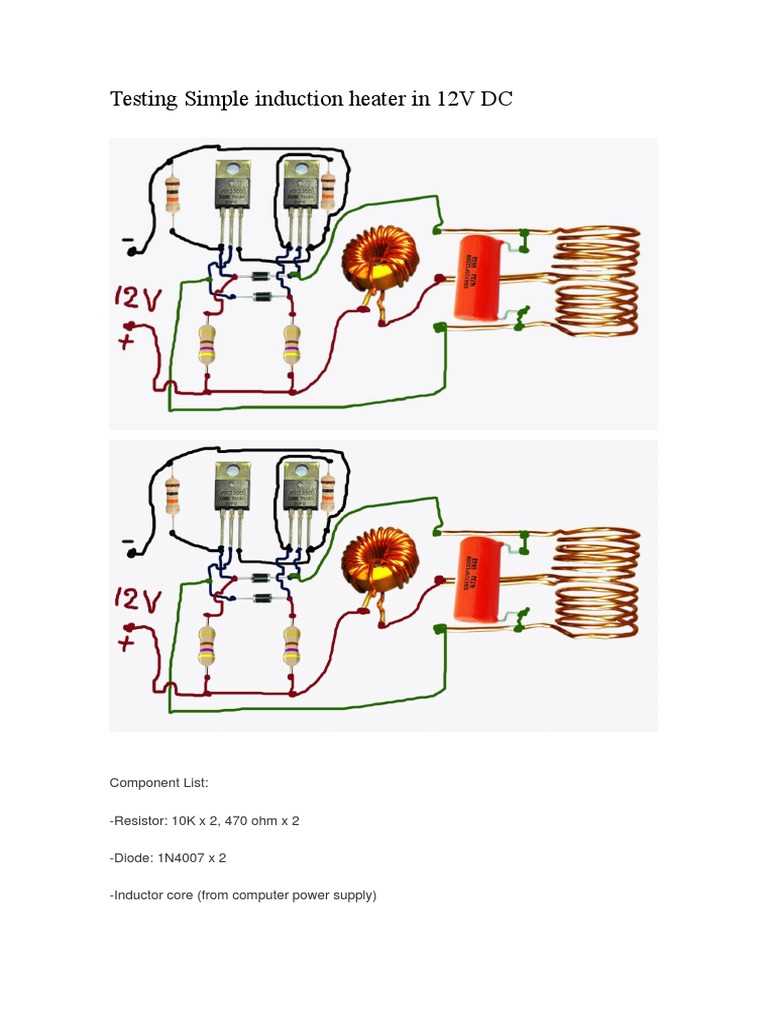
Electromagnetic Coil Heating Wiring Layout
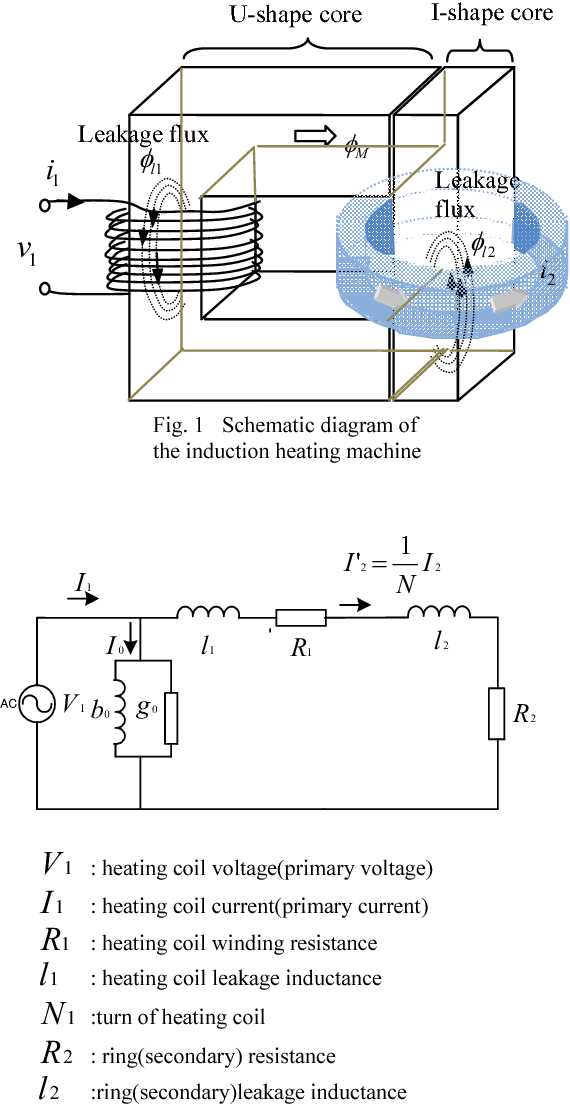
Place the resonant copper coil within 2–5 mm of the metal workpiece and connect it to a high-frequency power stage using Litz wire rated for 200 °C insulation; this spacing limits energy loss and keeps magnetic coupling high. Typical small workshop heaters operate at 20–100 kHz, while power transistors such as MOSFET half-bridge modules handle 400–600 V switching. The copper spiral normally uses tubing with an outer diameter of 4–8 mm so coolant can circulate through the conductor itself.
The power section commonly uses a half-bridge or full-bridge switching stage feeding a resonant LC network. A capacitor bank between 0.33 µF and 2 µF polypropylene units balances the coil inductance, producing resonance where current rises sharply while switching losses drop. Gate drivers must deliver 2–6 A peak current to charge MOSFET gates rapidly. Without fast transitions, transistor heating grows and switching devices fail long before reaching their rated 30–60 A drain capability.
Cooling design affects reliability more than transistor choice. Copper tubing carrying coolant at 1–2 L/min flow keeps the spiral below 70 °C during continuous operation. Heat sinks on switching devices should remain under 80 °C; aluminum extrusions with thermal resistance near 0.6 °C/W work for systems around 1 kW. Temperature sensors mounted on the heat sink can disconnect the driver stage when the threshold exceeds safe limits.
Signal monitoring improves stability: measure oscillation frequency and coil current with a Hall sensor rated for 50–100 A. A microcontroller can adjust switching timing slightly above the LC resonance point, reducing stress on capacitors and semiconductors while maintaining strong magnetic heating of the target metal.
Identifying and Interpreting Core Components in an Induction Circuit Diagram
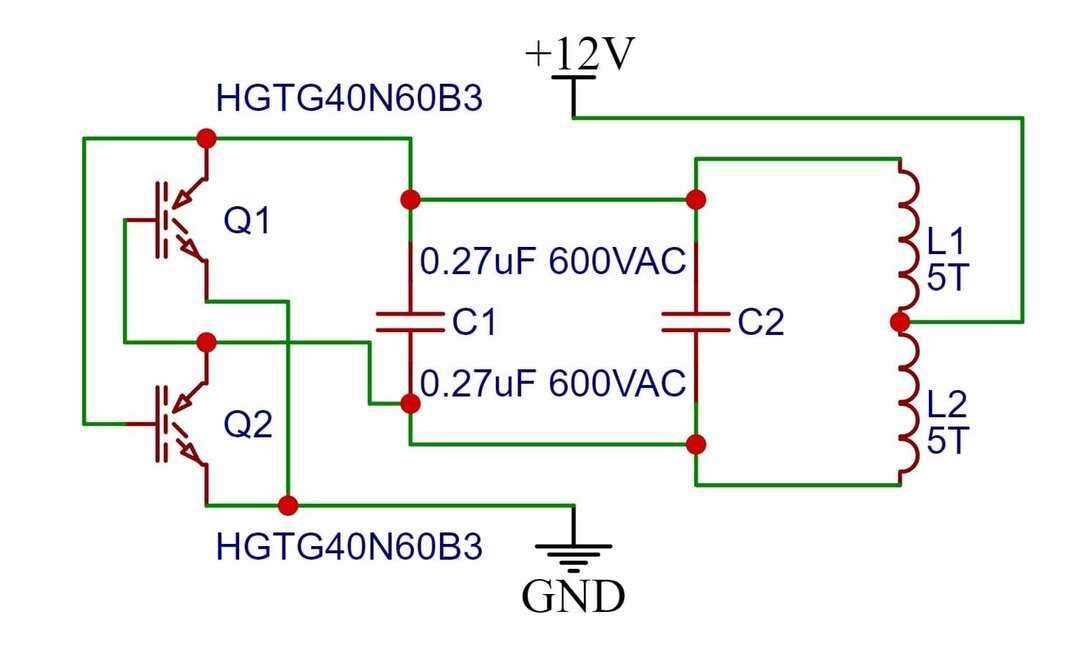
Locate the energy source first and trace the path of current through each symbol on the schematic. A typical alternating-power source is marked with a sine-wave sign and rated values such as 110–240 V at 50–60 Hz. From that point, identify the switching element, often shown as a mechanical contact or semiconductor gate; its placement reveals how the system initiates the magnetic excitation process. Immediately after the switch, inspect the coil symbol with several loops–this element produces the oscillating magnetic field. Check for adjacent capacitors marked with values like 0.1–10 µF, which shape resonance and control frequency behavior.
Recognize magnetic components by their layered line symbols representing ferrite or laminated cores. A transformer section typically shows two windings facing each other; ratios such as 1:5 or 2:3 indicate voltage scaling and coupling strength. Pay attention to polarity dots near windings: aligned dots mean synchronous phase orientation, while opposite placement indicates phase inversion. Resistors labeled from 10 Ω to several kΩ regulate current through control sections, and a rectifying element–often a diode arrow pointing toward a line–directs current flow after oscillation stages.
Examine feedback paths carefully because they determine stability of the electromagnetic process. A small sensing coil connected through a resistor-capacitor network often routes signal back to a transistor base or gate terminal, forming a self-sustaining oscillatory loop. Semiconductor devices such as MOSFETs or bipolar transistors appear as three-terminal symbols; gate or base leads usually connect through resistors between 100 Ω and 10 kΩ to prevent excessive drive current. Heat sinks may be indicated near power switches, signaling high thermal load. Trace ground references–horizontal lines stacked beneath one another–to confirm the return path and verify that measurement points align with the correct reference node when analyzing voltage levels or waveform behavior.