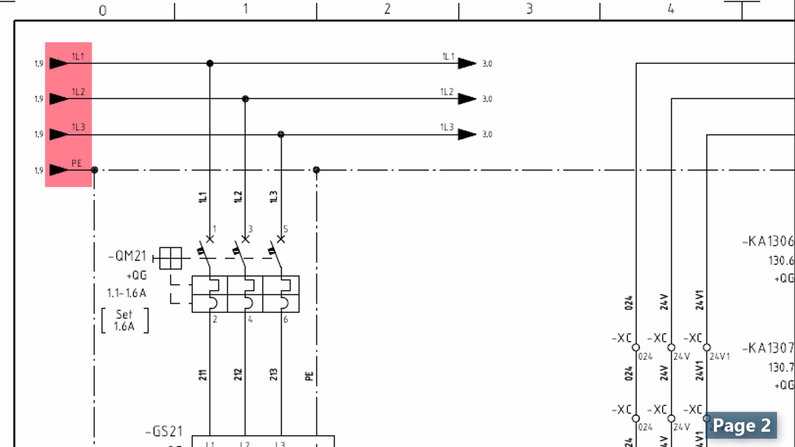
Start by identifying all symbols and their corresponding components. Use the legend provided to match each icon to switches, resistors, LEDs, and connectors to prevent misconnection.
Trace each path from the power source to the end device, confirming polarity and continuity. Measure voltage at key points using a multimeter to verify proper flow.
Check color codes for each lead and confirm they align with component functions. Red wires typically carry positive voltage, black serves as ground, and green or yellow indicate signal paths for accurate troubleshooting.
Interpreting Electrical Schematics
Start by identifying all symbols and their functions. Match each icon to its corresponding component, including resistors, capacitors, LEDs, and switches. Verify pin orientation and polarity to prevent misconnection.
Follow each line from the power source to the output device using these steps:
- Trace positive and ground paths separately to confirm proper flow.
- Check color codes on each lead and match them with component specifications.
- Use a multimeter to test continuity and voltage at critical points before assembly.
- Ensure connectors and terminals are secure and free of corrosion to maintain reliability.
Understanding Electrical Symbols and Their Functions
Identify each symbol on the schematic and link it to the physical component. Common symbols include a zigzag line for resistors, parallel lines for capacitors, and arrows for diodes to ensure proper placement.
Note the orientation of polarized components like LEDs and electrolytic capacitors. The positive terminal must align with the source voltage to prevent damage during assembly.
Recognize switches and relays by their standard symbols. Single-pole single-throw (SPST) switches appear as a break in a line with a pivot, while relays include a coil and contacts for controlling current paths.
Trace lines connecting symbols carefully to determine current flow. Solid lines represent direct connections, while dashed lines may indicate optional or signal paths for accurate interpretation.
Verify that each component’s value or rating matches the specification noted on the schematic. Resistors include ohms, capacitors microfarads, and diodes their voltage and current limits to prevent overload.
Use a multimeter to test physical components against their symbols. Measure resistance, capacitance, and continuity to confirm functional integrity before final installation.