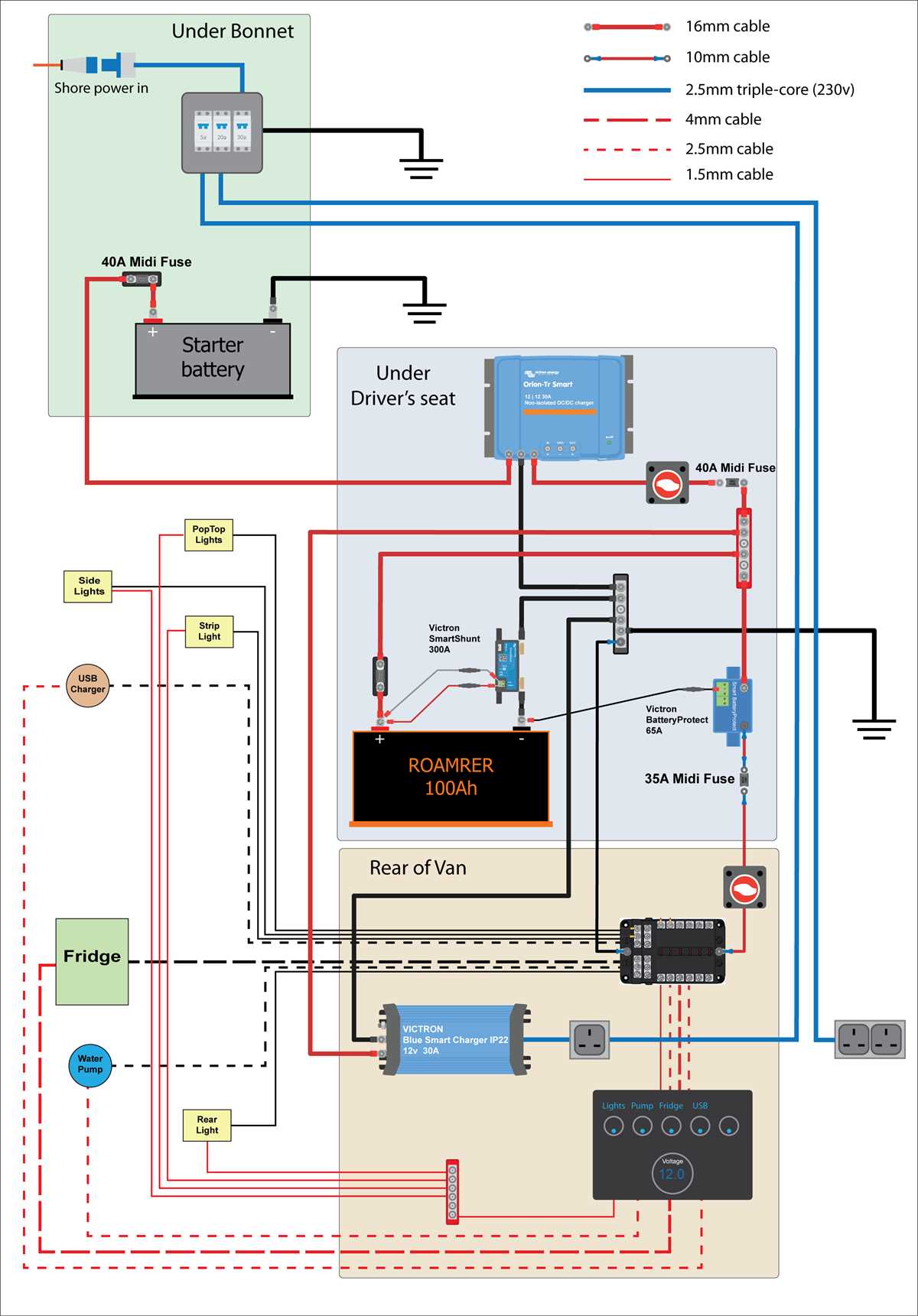
Check the service panel capacity before planning any electrical layout inside a residence. Most modern properties use a 120/240-volt split phase system supplied through a main breaker rated at 100 A, 150 A, or 200 A. Branch circuits leave the panel and distribute power to lighting fixtures, wall receptacles, and fixed appliances. Mapping these circuits on a clear electrical layout helps track load distribution and prevents overloaded breakers.
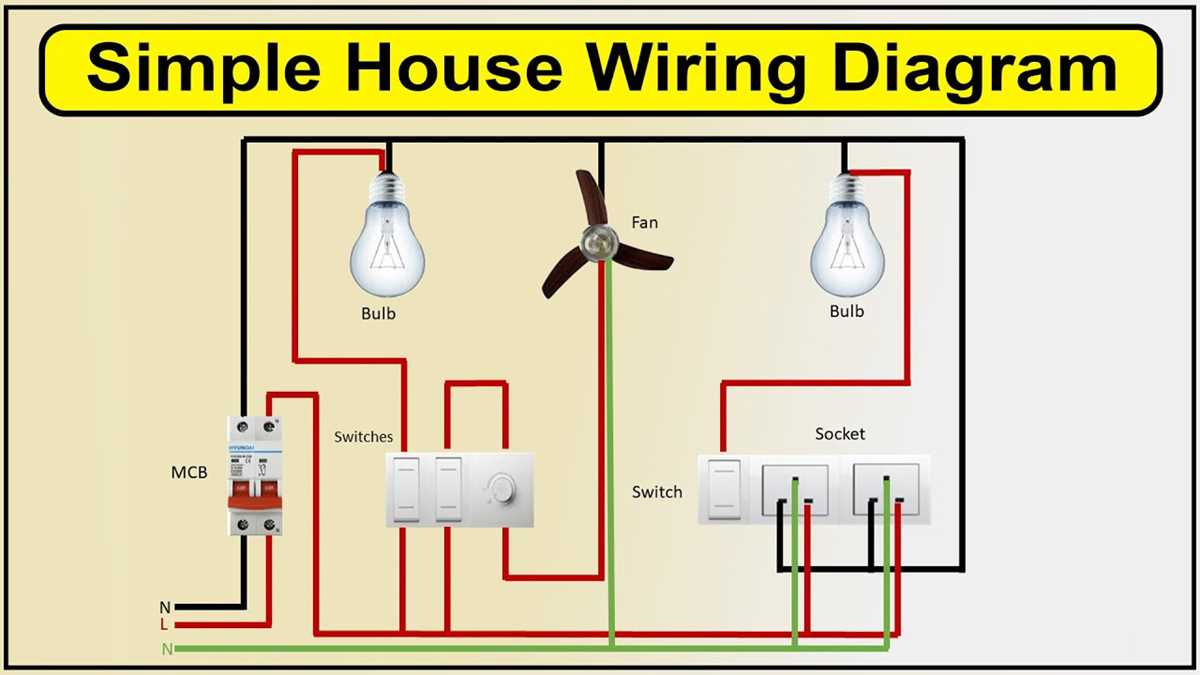
Use dedicated circuits for high-demand equipment. Electric ovens, water heaters, and HVAC systems typically connect to 240-volt lines protected by double-pole breakers rated between 30 A and 50 A. Standard lighting and receptacle circuits normally operate on 120-volt lines with 15 A or 20 A protection. Drawing the conductor routes and connection points helps determine how many outlets or fixtures share the same branch.
Follow common conductor identification inside residential cables. The black or red lead usually carries line voltage from the breaker. The white lead acts as neutral and returns current to the panel. The bare copper or green lead connects to protective grounding. Keeping these conductors correctly matched at switches, receptacles, and junction boxes prevents reverse polarity and grounding faults.
Place junction boxes where multiple conductors meet. Each box should remain accessible and contain cable clamps and proper connectors. A clear electrical layout showing switch loops, lighting runs, and receptacle branches helps locate these connection points later during repair or renovation.
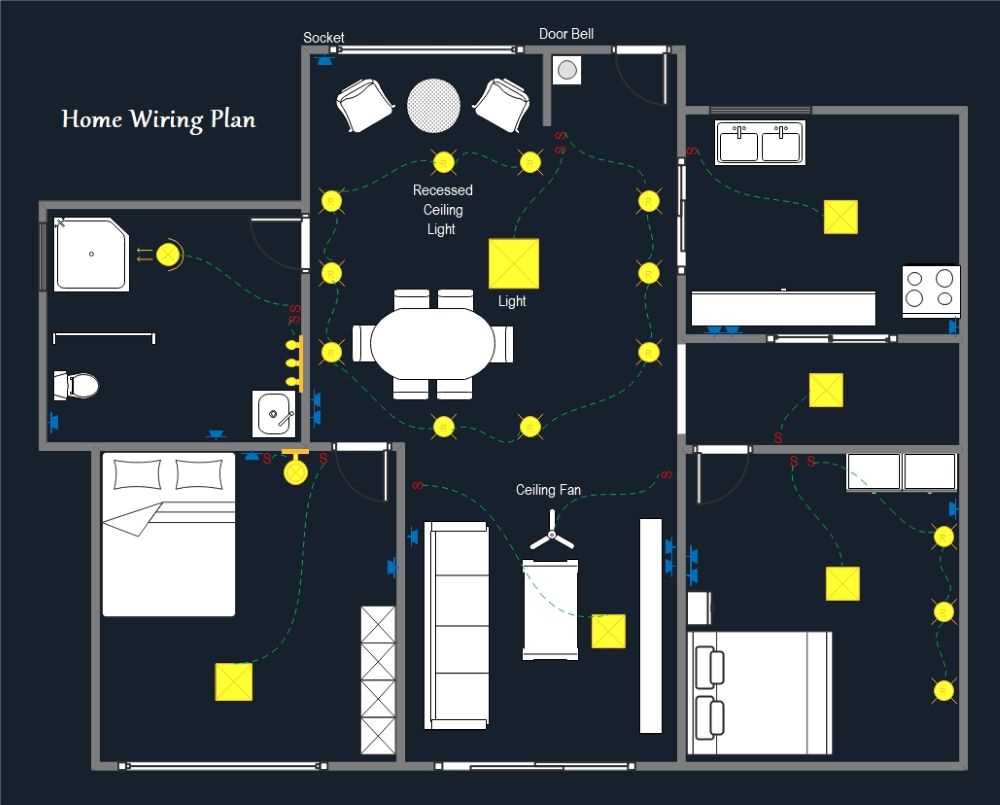
Test every circuit after installation using a multimeter or outlet tester. Voltage between line and neutral should measure about 120 V, while line to ground should show the same value. Recording these values next to the electrical layout provides a quick reference during troubleshooting.