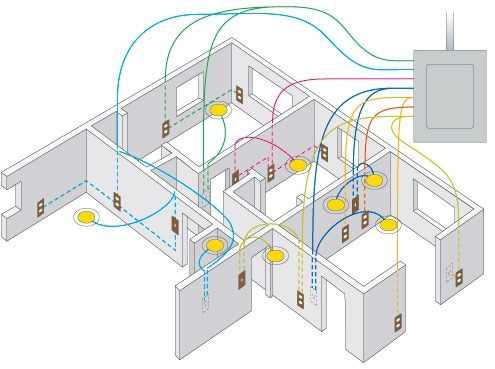
Plan the wiring layout of a dwelling by first mapping every outlet, lighting point, and high-load appliance on a detailed distribution plan. A typical 120-volt branch line in North America supports up to 15 or 20 amperes, which limits the safe load to roughly 1,800–2,400 watts. Kitchen equipment such as microwaves or coffee machines should run on dedicated lines, while lighting groups usually share one protected path controlled by a breaker rated for 15 A.
A clear wiring map helps separate load groups: lighting, receptacles, climate equipment, and heavy appliances. Copper conductors sized 14 AWG normally pair with 15-amp protection, while 12 AWG pairs with 20-amp protection. Bathrooms and kitchens require ground-fault protection devices placed near sinks or moisture sources. Position the distribution panel near the center of the structure to shorten conductor runs and reduce voltage drop below the recommended 3% limit.
Every layout should show conductor paths through walls, ceiling cavities, and service entry points. Mark junction boxes, switches, and protective devices with clear labels so troubleshooting takes minutes rather than hours. Use color-coded insulation: black or red for live conductors, white for neutral return, and green or bare copper for grounding. A properly drafted connection scheme prevents overloaded lines, simplifies maintenance, and supports safe power delivery throughout the building.
Residential Power Layout: Practical Guide to Planning and Reading Home Wiring
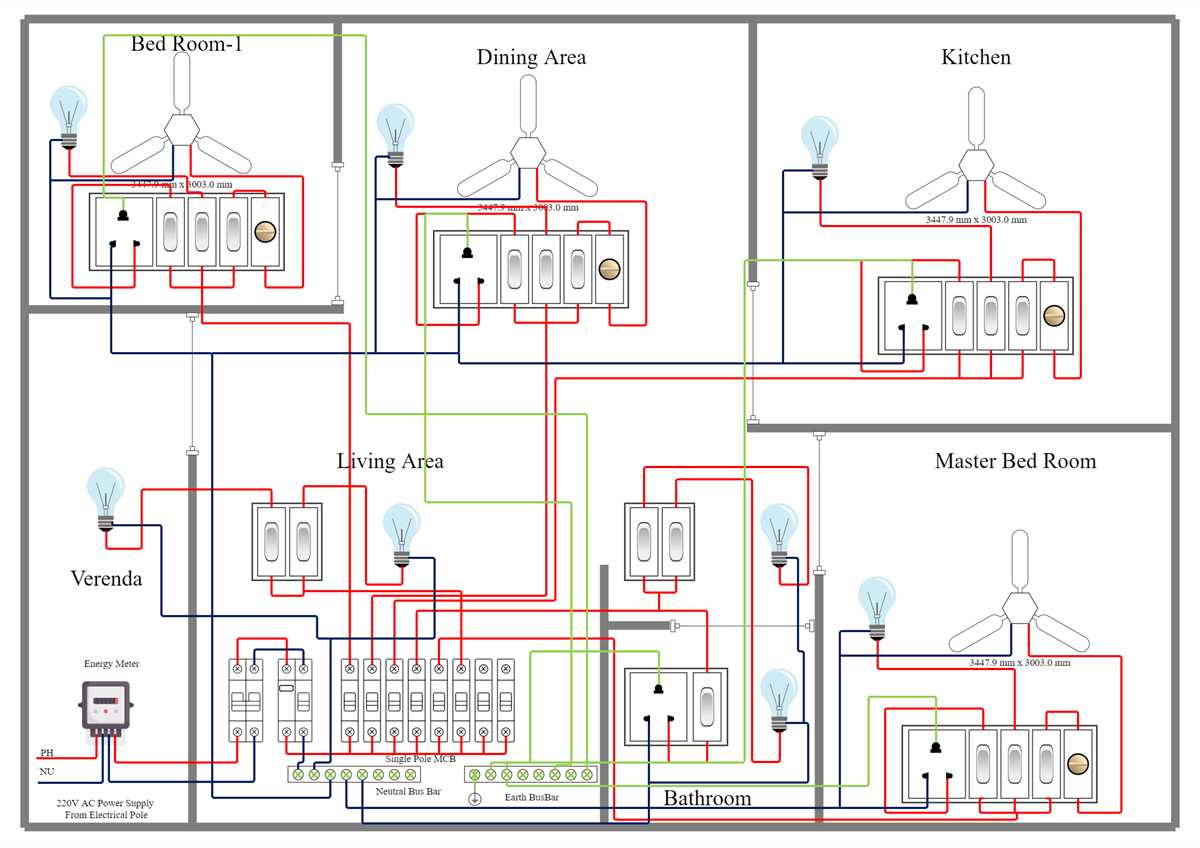
Place the main distribution board near the point where the supply cable enters the building and group conductors by function: lighting lines, socket lines, kitchen appliances, and high-load devices such as ovens or water heaters. Allocate separate protective switches for each group. For example, lighting can operate on 10 A protection with 1.5 mm² copper conductors, while outlets typically require 16 A with 2.5 mm² wiring. Large appliances such as induction cooktops often demand 6 mm² lines protected by 32–40 A breakers. This separation reduces overload risk and simplifies troubleshooting.
Reading a wiring plan requires understanding standard symbols used in residential installations. A single line often represents a conductor path running through walls or ceilings, while a circle with a letter usually marks a lighting fixture. Switch symbols appear as breaks with angled contacts, indicating control points. A double control switch symbol means one lamp can be operated from two locations, commonly installed at staircase ends or long corridors.
Mark conductor routes along structural lines rather than diagonally. Vertical paths typically run 150–200 mm from door frames, and horizontal lines are often positioned about 300 mm below ceilings. Such alignment allows safe drilling or wall modification later because predictable routes reduce the chance of damaging hidden wiring. Junction boxes should be located above switches or outlets at consistent heights so maintenance can occur without dismantling large wall sections.
Load Distribution Strategy
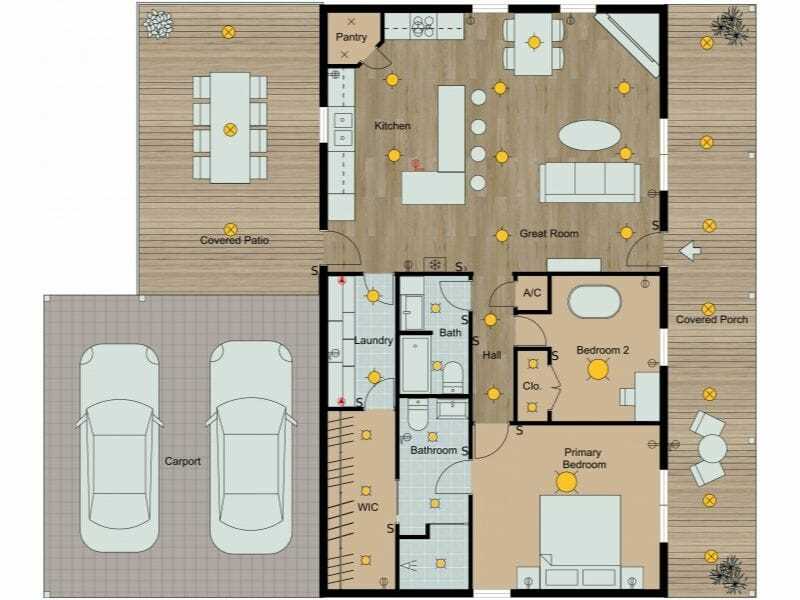
Divide the load between several independent lines. A typical apartment may use one line for lighting in each room, one for general outlets per room pair, and dedicated supply paths for washing machines, dishwashers, and climate systems. For instance, a washing unit drawing 2 kW at 230 V consumes roughly 8.7 A; pairing it with additional kitchen devices on the same breaker can trigger frequent shutdowns. A separate protected line prevents such interruptions.
Interpreting Safety Markings
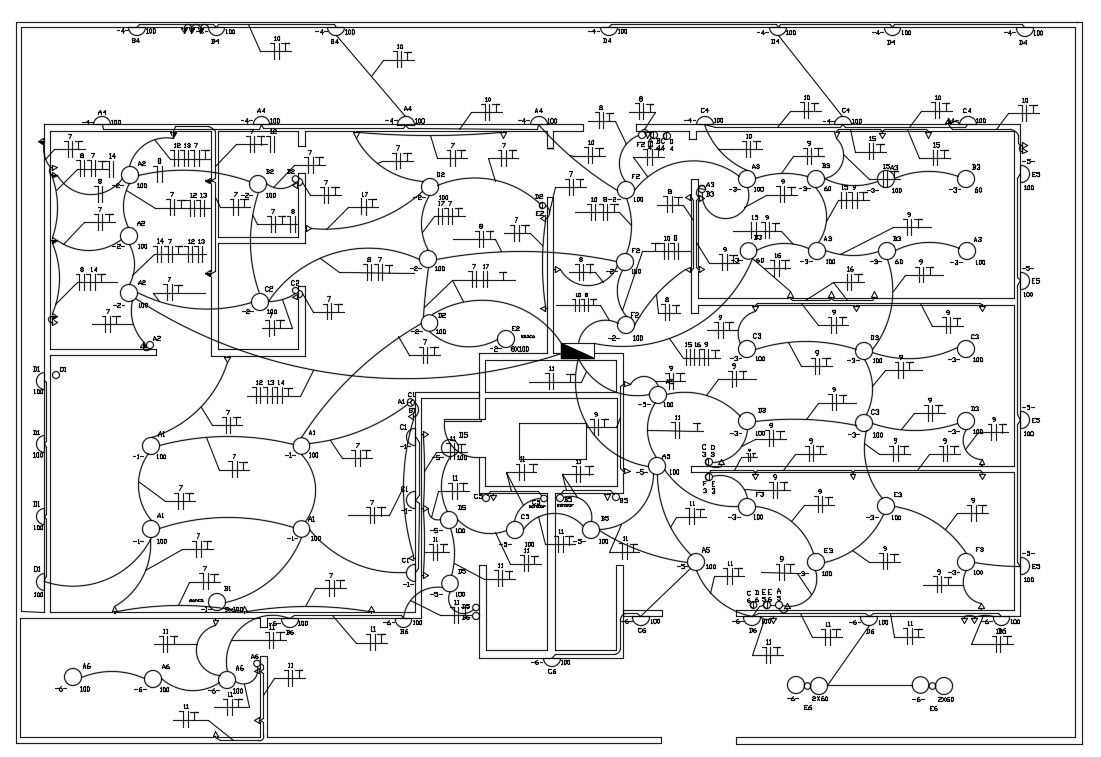
Color coding helps interpret conductor roles: brown or black indicates phase, blue indicates neutral, and yellow-green marks grounding. On planning sheets these roles may appear as labeled abbreviations such as L, N, and PE. Grounding lines should connect every metal chassis appliance and outlet with protective contacts. Where bathrooms or outdoor sockets appear on the plan, residual-current protection rated around 30 mA is commonly specified to disconnect supply during leakage.
How to Read Symbols and Connections in a Standard Residential Wiring Schematic
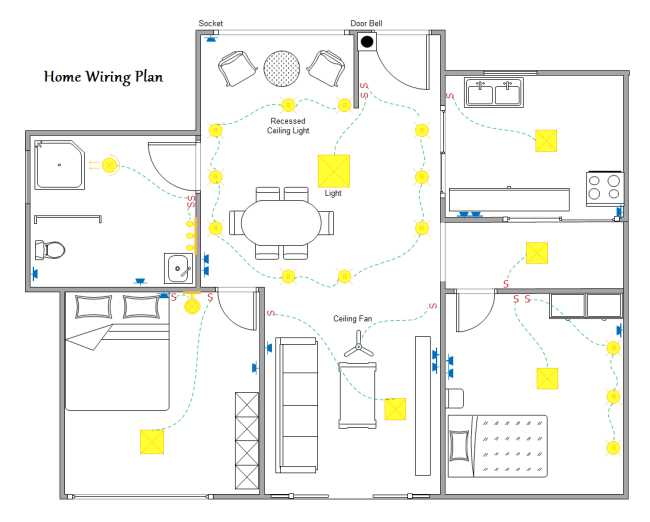
Identify the legend first and match each graphical mark with its meaning before examining the layout. A legend usually lists icons representing switches, outlets, breakers, lighting fixtures, junction boxes, and grounding points. For example, a small circle with two parallel lines often represents a receptacle, while a line broken by a small gap and angled mark usually denotes a switch. Tracing each icon from the legend prevents misinterpretation of components placed throughout the drawing.
Follow conductor lines carefully and observe how intersections are marked. Two crossing lines without a dot typically mean the wires pass without connection, while a solid dot at the crossing point indicates a joint. Misreading this detail leads to incorrect assumptions about power distribution. Pay attention to branching points where a single supply line splits toward multiple loads such as lighting fixtures or outlet groups.
Interpret line styles and thickness as indicators of different conductors or routing types. A continuous straight line commonly represents a standard power conductor. Dashed lines may indicate control wiring, low-voltage signaling, or conduit paths depending on the drafting standard used. Some schematics label each conductor with identifiers like L1, N, or PE to mark live, neutral, and grounding paths.
Use labeling codes printed near components to determine their role within the system. Common markings include:
- SW – switch controlling a fixture or outlet
- J-BOX – junction enclosure where multiple wires join
- BRK – breaker located in the distribution panel
- L – lighting unit
- GND – grounding connection
Trace the path from the distribution panel through protection devices and onward to loads. A typical flow moves from the breaker panel through protective devices, then through switches, and finally to fixtures or receptacles. When several rooms share one breaker, the schematic usually displays sequential branching points along a single supply line. Tracking that route helps identify how power is distributed across the building.
Check numbering systems used for conductors and terminals. Many technical drawings include numeric references beside wires such as 14-2, 12-3, or terminal numbers like T1, T2, T3. These markings indicate conductor gauge, number of insulated wires inside a cable, or connection points on devices. Matching these identifiers with installation notes ensures the drawing corresponds with the actual wiring layout and prevents installation errors.