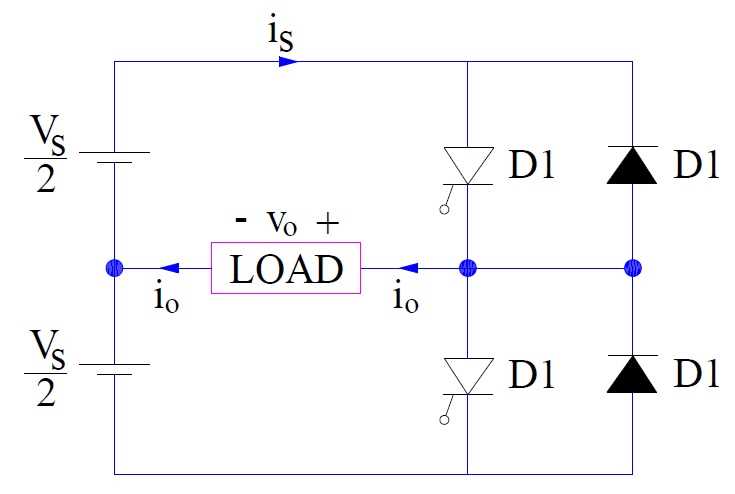
Place the four power transistors in an H shaped switching stage and drive them in opposite pairs. This configuration allows a DC source such as a 12 V or 24 V battery to produce alternating polarity across a load. The load can be a transformer primary, motor winding, or resistive output stage. Correct switching order prevents short paths between supply rails.
The topology uses two high side switches and two low side switches. During the first half cycle, the upper left device and lower right device conduct, pushing current through the load in one direction. During the next half cycle, the upper right device and lower left device conduct, reversing current flow. Alternating these states produces an AC waveform.
Power stages typically use MOSFETs such as IRF3205, IRLZ44N, or similar devices with low RDS(on). Each transistor requires a gate control signal from a driver IC or PWM controller. Direct microcontroller output rarely supplies enough gate charge for large MOSFETs, so dedicated driver chips such as IR2110 or IRS2104 are frequently used.
Dead time between switching transitions protects the power stage. If the upper and lower transistors on the same side conduct at the same moment, a direct short appears between positive supply and ground. This failure mode is known as shoot through and usually destroys MOSFETs within milliseconds.
Output waveform quality depends on switching method. Simple square wave control alternates transistor pairs at 50 Hz or 60 Hz. More advanced systems use PWM modulation at tens of kilohertz combined with a filter or transformer stage, producing a waveform closer to a sine output suitable for sensitive electronics.
H Bridge Inverter Circuit Diagram with MOSFET Layout and Switching Control
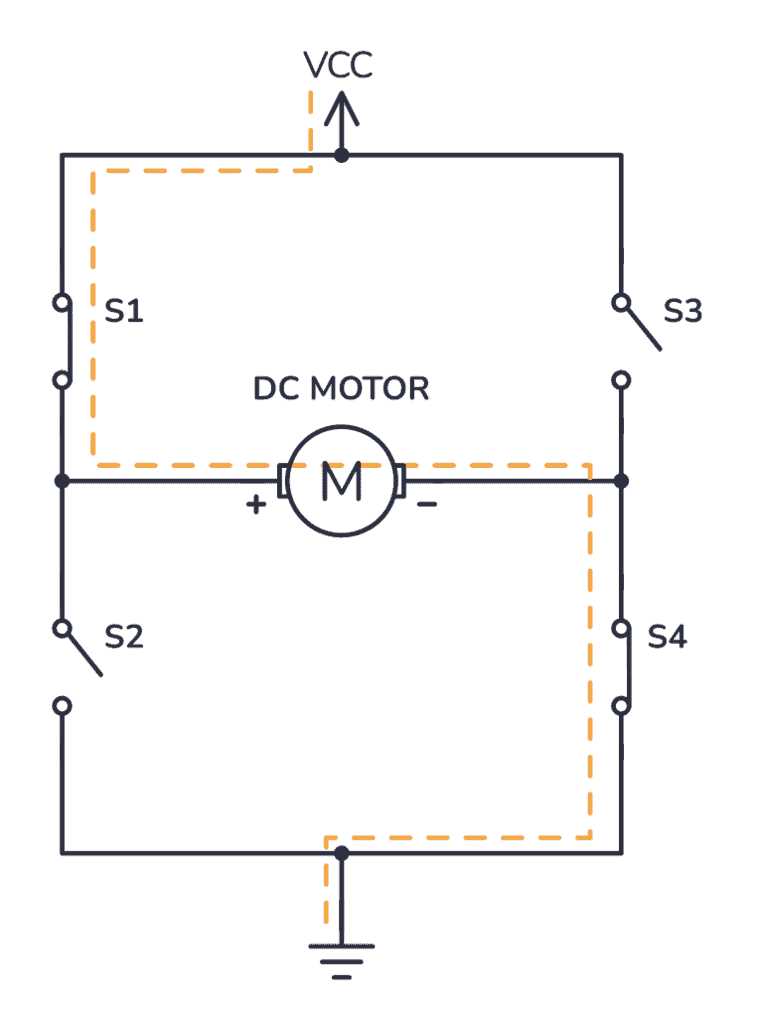
Arrange four MOSFET transistors in an H pattern around the load and switch them in diagonal pairs. The power source connects to the upper rail while ground connects to the lower rail. The load sits between the two switching legs. Alternating which diagonal pair conducts changes the current direction through the load, producing alternating polarity from a DC supply.
MOSFET placement and power path
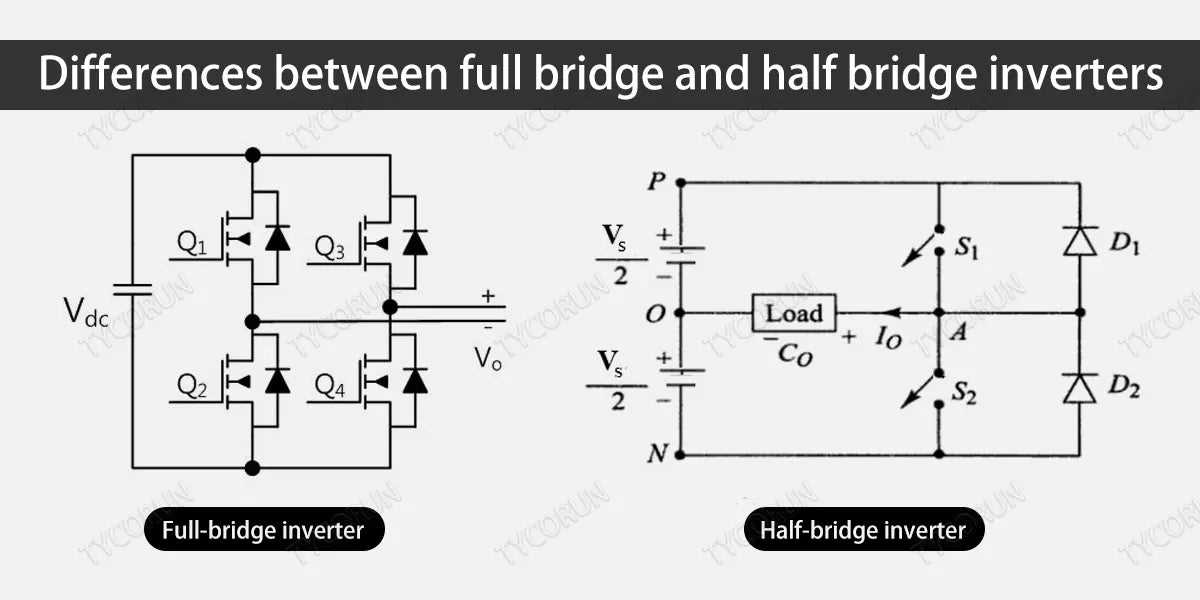
The upper devices act as high-side switches and the lower devices act as low-side switches. Current flows through one high-side transistor, across the load, and exits through the opposite low-side device. During the next switching phase the opposite pair conducts.
Typical power stage arrangement:
Upper left MOSFET → connected to positive supply
Upper right MOSFET → connected to positive supply
Lower left MOSFET → connected to ground
Lower right MOSFET → connected to ground
Load → placed between the midpoints of both transistor legs
Gate driver control and switching timing
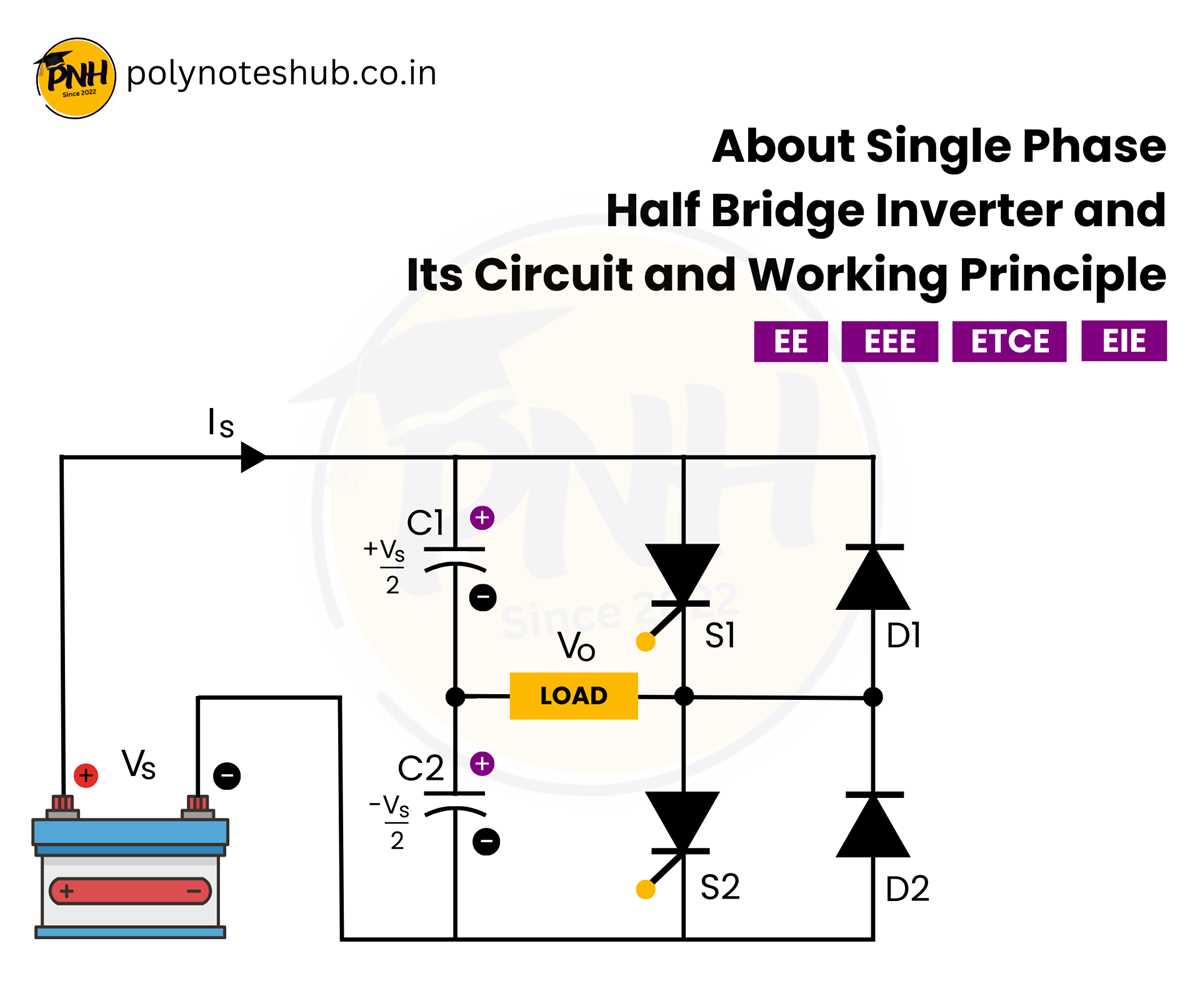
Use a dedicated gate driver IC such as IR2110 or IRS2186 rather than connecting microcontroller pins directly to MOSFET gates. High-side devices require a floating driver because their source terminal moves with the switching node. Bootstrap driver stages generate the gate voltage required to turn these devices fully on.
Insert dead time between switching transitions. A delay of 200–500 nanoseconds between turning one MOSFET off and the opposite device on prevents shoot-through. Without this delay both devices on the same leg may conduct briefly, creating a direct path between the supply rail and ground.
Place gate resistors between 5 and 22 ohms close to each transistor gate. These resistors control switching speed and reduce ringing caused by stray inductance in PCB traces. Add fast recovery diodes or body diode paths across inductive loads such as motors or transformers so current has a safe path during switching transitions.
H bridge MOSFET arrangement and current paths during positive and negative half cycles
Place four MOSFET switches in two vertical legs and connect the load between their midpoints. The upper devices attach to the positive supply rail, while the lower devices connect to ground. This layout allows polarity across the load to reverse by activating opposite transistor pairs.
The switching stage operates through diagonal conduction paths. Each pair produces one half of the alternating waveform. One pair pushes current through the load in one direction, while the opposite pair reverses that direction during the next interval.
Positive half cycle operation begins when the upper left MOSFET and lower right MOSFET conduct. Current leaves the power source, flows through the upper left device, passes across the load, and returns through the lower right device to ground. The load sees a positive voltage difference between its terminals.
The remaining two transistors remain off during this interval. This prevents a short path between the supply rail and ground through the same leg. Proper gate control signals guarantee that only one device per leg conducts at any moment.
Negative half cycle operation occurs when the upper right MOSFET and lower left MOSFET conduct. Current leaves the supply through the upper right transistor, travels through the load in the opposite direction, and returns through the lower left device. The polarity across the load reverses.
The switching sequence repeats at the selected output frequency. For power systems supplying AC loads, the pair alternation occurs at 50 Hz or 60 Hz. In PWM-based designs, transistor switching occurs at tens of kilohertz while the average voltage follows a sinusoidal pattern.
Body diodes inside MOSFET devices provide current paths during switching transitions. Inductive loads such as transformers or motors store energy in their magnetic fields, forcing current to continue flowing briefly after a transistor turns off. These diodes handle that current until the opposite device conducts.
Short trace lengths between MOSFET drains, sources, and the load reduce stray inductance. Long copper paths increase voltage spikes during fast switching events. Placing decoupling capacitors close to the power rail connections stabilizes the supply during rapid current changes.