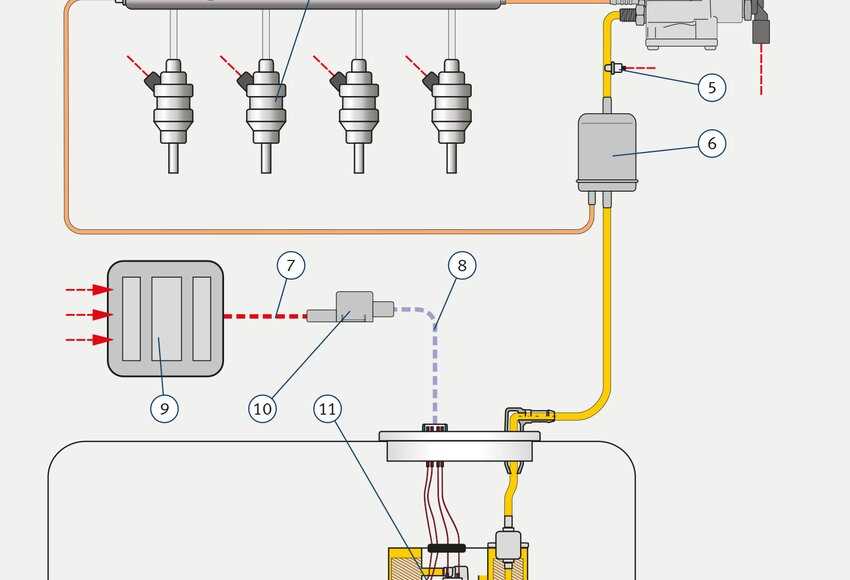
Check the wiring connections between the motor module and control relay before replacing any components. Accurate tracing of electrical lines prevents unnecessary replacements and ensures correct operation under load conditions.
Measure voltage drops at each terminal during operation. A drop exceeding 0.5 volts indicates resistance in the connectors or corrosion on the supply lines. Use a multimeter set to DC mode for precise readings.
Verify relay and fuse alignment in the power path. Swapped or worn contacts can cause intermittent flow issues. Inspect the terminals visually and clean with a contact-safe solution if oxidation is present.
Map the flow path of the delivery module to confirm continuity. Label each line with tape or a marker to avoid confusion during reassembly. Proper mapping reduces troubleshooting time when diagnosing weak or non-responsive motors.
Fuel Pump Circuit Diagram for Vehicle Wiring and Troubleshooting
Start by checking the power supply lines to the delivery module. Ensure that the battery voltage reaches the motor terminals under load; readings below 11.5 volts can indicate resistance or connector issues.
Inspect the relay and inline fuse for continuity. Swap the relay with a verified unit if intermittent operation occurs, and test the fuse with a multimeter for a complete connection. Physical inspection for melted spots or corrosion is recommended.
Trace the electrical path from the control unit to the motor assembly. Label each connector and terminal to avoid mixing supply and ground lines. Incorrect connections can lead to overheating or no movement at all.
Checking Signal and Ground Lines
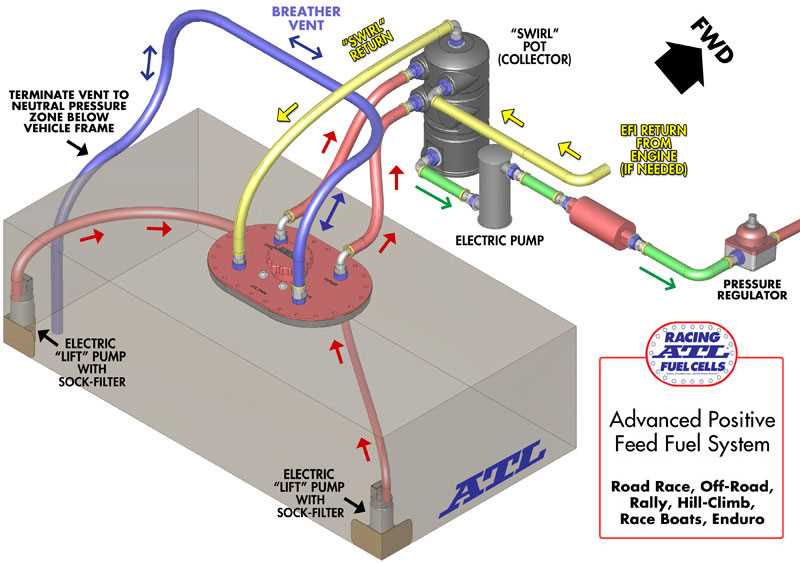
Measure resistance along the return line. Values exceeding 0.2 ohms suggest a poor ground, which reduces motor torque and causes erratic flow. Clean all metal contact points with a non-abrasive solution before retesting.
Verifying Motor Operation Under Load
Apply direct battery voltage briefly to the terminals to confirm rotation. Listen for unusual noises, such as grinding or humming, which indicate worn brushes or a blocked internal mechanism. Repeat tests with the module mounted to ensure proper fluid movement.
Document all connections before disassembly. Photographs or sketches help maintain correct wiring during repairs, reducing troubleshooting time and preventing short circuits or reversed polarity errors.
Identifying Fuel Pump Components and Their Connections
Begin by locating the motor assembly and control relay in the supply line system. Confirm that the positive and negative terminals are correctly aligned and free of corrosion. Use a multimeter to measure resistance across each connector; values above 0.5 ohms indicate poor contact that can reduce rotation speed.
Tracing Wiring Paths and Connectors
Label each wire between the motor module, relay, and inline fuse before disconnecting. Identify the feed line, return line, and signal path to the control unit. Misconnected lines can cause overheating or complete failure, so maintaining a clear map ensures safe reassembly and accurate troubleshooting.