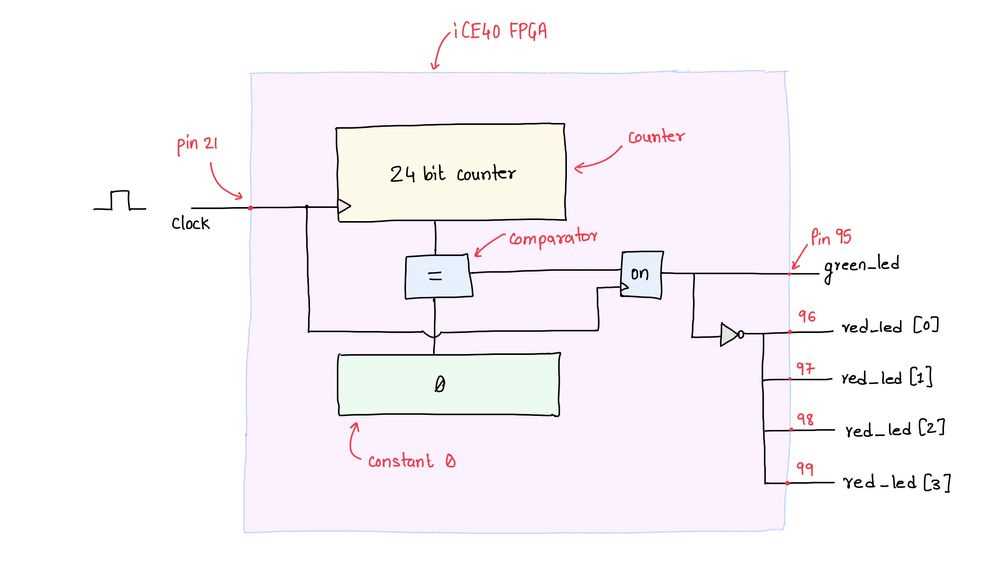
Ensure power rails are correctly mapped before initiating any component linkages. Standard boards require a 3.3V logic supply and a separate 1.2V core voltage, which must be stable within ±5% tolerance to prevent data errors.
Identify and label input and output pins clearly to avoid misrouting signals. Differential pairs should be paired consistently, with traces kept under 10 cm for high-speed data lines to maintain signal integrity and reduce reflection.
Use decoupling capacitors at each major module to stabilize voltage spikes. Recommended placement is within 2 mm of the pins, with 0.1 µF ceramic capacitors for high-frequency filtering and 10 µF tantalum capacitors for bulk decoupling.
Route critical clock lines separately from power and ground planes to minimize jitter. Clock signals over 100 MHz should follow controlled impedance traces with termination resistors as needed for signal matching.
Verify ground connections for all I/O banks to prevent floating voltages. Each bank should share a common reference plane, and multiple vias should connect layers to reduce loop inductance and improve return paths.
FPGA Board Connection and Signal Mapping Guide
Map all logic signals to dedicated pins before powering the board. Assign high-speed data lines to adjacent banks with shared reference voltage and keep differential pairs within 5 cm trace length. Use consistent labeling for input, output, and bidirectional pins to avoid misrouting and potential signal collision.
Verify power and ground planes for each module with multiple via stitching to reduce noise. Decouple each bank with 0.1 µF ceramic and 10 µF bulk capacitors placed within 2 mm of active pins. Critical clock signals should run on separate controlled impedance paths with termination resistors to maintain clean transitions and minimize jitter.
Understanding Pin Functions and Voltage Requirements
Assign each pin based on its designated role to prevent miscommunication between logic blocks. Inputs should only receive signals within the specified voltage range, while outputs must match the load impedance of connected modules.
Use voltage rails with precise tolerance for powering different banks. Standard pins often require 1.8 V or 3.3 V, while high-performance logic may demand tighter 1.2 V rails with minimal ripple.
Separate analog and digital pins physically and electrically to minimize interference. Connect analog references through low-noise sources and maintain at least 5 mm clearance from high-speed switching lines.
For bidirectional pins, implement proper pull-up or pull-down resistors to define default states and avoid floating conditions that could corrupt signals.
Clock input pins require controlled voltage swings with termination resistors. Avoid driving them directly from general-purpose outputs to maintain signal integrity and prevent metastability.
High-current output pins should be routed with wider traces or multiple vias to handle peak loads. Check the maximum current rating per pin to avoid thermal stress or voltage drops.
Keep I/O banks isolated with separate decoupling capacitors to stabilize voltage during simultaneous switching events. This helps prevent glitches and timing violations across modules.
Regularly measure voltage levels at critical pins during testing and adjust power distribution networks as needed to maintain consistent logic thresholds and reliable operation of all functional blocks.