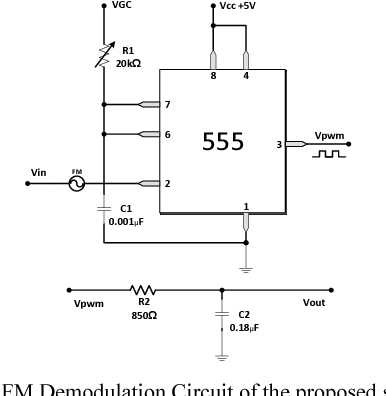
If you’re working on building a frequency modulation receiver, understanding how to extract the audio or data from FM signals is key. Begin by focusing on the correct arrangement of components such as mixers, filters, and detectors that are responsible for recovering the information from the modulated signal.
The primary goal is to separate the frequency-modulated signal from the carrier. This process involves specific stages, including the use of mixers to convert the FM signal into an intermediate frequency (IF) that is easier to process. From there, additional filtering is done to remove unwanted frequencies and noise.
One common approach is using a phase-locked loop (PLL) system, which synchronizes the phase of the received signal with a reference oscillator. This method is reliable for stable frequency tracking and offers clear output with minimal distortion. Understanding how to adjust the components based on the frequency range you’re working with is crucial for achieving optimal performance.
FM Demodulation Process and Key Components
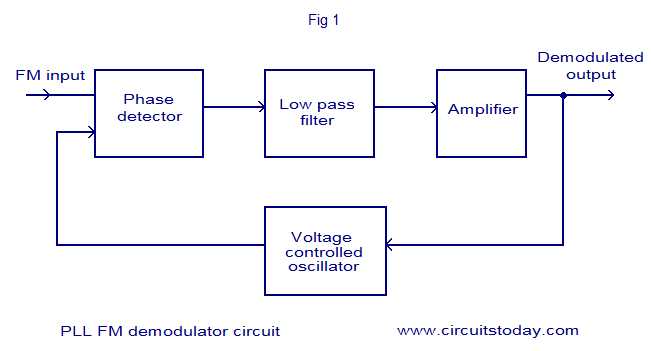
To extract the audio or data from an FM signal, a reliable arrangement of components is needed. Start by using a mixer to convert the frequency-modulated signal into a lower intermediate frequency (IF). The mixer works by combining the FM signal with a locally generated reference signal. This allows the frequency shift to be easily processed, making it possible to separate the original message.
Next, implement a band-pass filter to isolate the intermediate frequency. The filter ensures that only the desired frequency band passes through while blocking out any unwanted frequencies or noise. The filter’s design is critical; it must have sharp enough selectivity to prevent interference from nearby stations or signal components.
A detector is used to recover the original information. The most common types are the envelope detector and phase-locked loop (PLL) system. A PLL-based approach is widely used for FM recovery, as it locks onto the frequency of the received signal, providing stable output with minimal distortion. By adjusting the PLL’s parameters, you can achieve a high-quality reproduction of the original signal.
To optimize the overall performance, ensure that the voltage levels and frequency ranges are carefully matched to the components you’re using. For example, adjust the local oscillator frequency and the IF filter bandwidth to avoid signal clipping or distortion. Proper alignment of these components will result in clear and accurate reception, minimizing noise and maximizing the quality of the recovered signal.
Understanding the Components of an FM Demodulation System
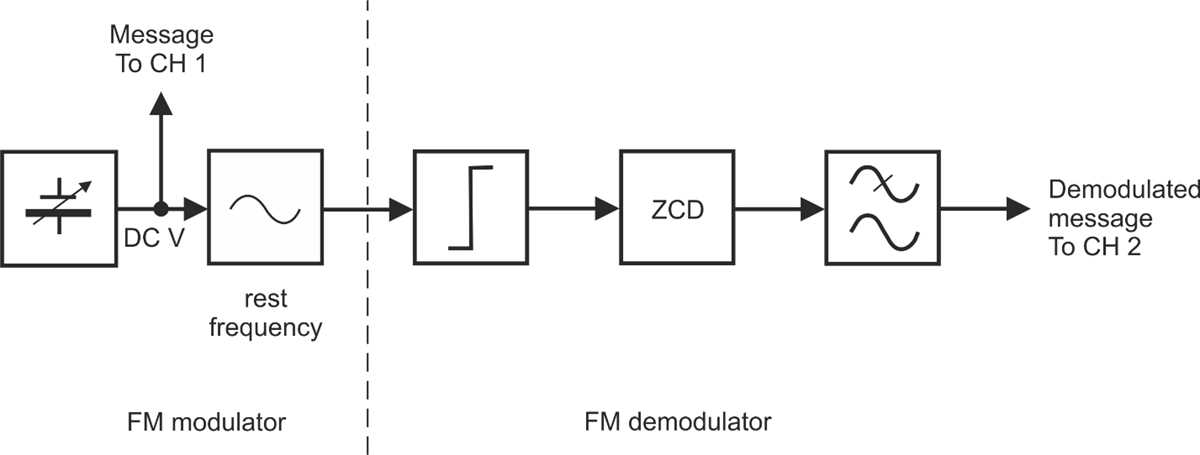
The mixer is a fundamental component, responsible for converting the frequency-modulated signal into an intermediate frequency (IF). By combining the incoming FM signal with a local oscillator signal, the mixer produces a difference frequency that is easier to process. Properly tuning the local oscillator is key to achieving the desired IF and minimizing interference.
Next, the band-pass filter isolates the intermediate frequency from the rest of the signal. This filter allows only the desired frequencies to pass through while rejecting others. Its bandwidth must be narrow enough to eliminate noise yet wide enough to include the modulated signal. Careful selection of filter parameters ensures clear reception and minimal distortion.
The detector is the last stage, where the original audio or data is recovered. A phase-locked loop (PLL) is often used for this task, offering stable tracking of the signal’s frequency. It locks the output signal to the frequency of the incoming modulated wave, providing high-quality recovery with minimal distortion. Ensuring proper tuning and alignment of the PLL guarantees an accurate output.