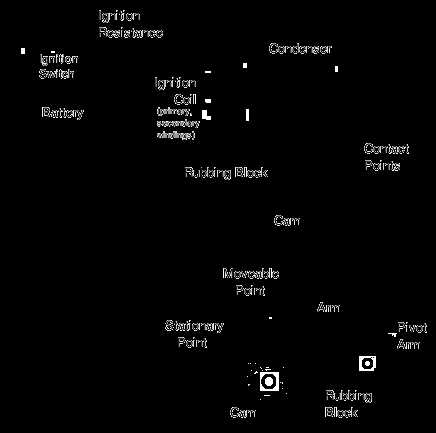
Use a transistor-based spark control layout with a Hall or inductive pickup to obtain stable high-voltage pulses across the coil primary. A typical configuration applies a switching transistor rated for at least 400–600 V collector-emitter tolerance and pulse current above 10 A. The pickup sensor feeds a shaping stage that converts rotor position signals into clean trigger pulses, which then drive the power switch controlling current flow through the coil winding.
Reliable operation depends on correct component pairing. Choose a power transistor such as an IGBT or high-current BJT mounted on an aluminum heat sink capable of dissipating 20–40 W of thermal load. Insert a resistor network (typically 220–470 Ω in the base or gate path) to stabilize switching behavior. A suppression capacitor in the range of 0.1–0.47 µF across the supply line reduces noise produced by rapid magnetic field collapse in the coil.
The pulse generator usually relies on a rotating reluctor wheel with one tooth per cylinder firing event. As the tooth passes the sensor, a voltage spike appears; a comparator stage converts that spike into a square trigger signal. With a supply of 12–14.4 V, the control unit rapidly interrupts current through the primary winding, producing a secondary surge that can exceed 20–30 kV, sufficient for reliable spark formation under compression.
Layout clarity improves troubleshooting. Place the pickup input stage away from the high-current switching path, route ground lines in a star topology, and keep coil connections short to reduce electromagnetic interference. Label the switching element, trigger stage, power supply filtering, and coil terminals clearly so technicians can verify signal flow from rotor position sensing to high-voltage generation.
Transistor-Based Spark Control Layout
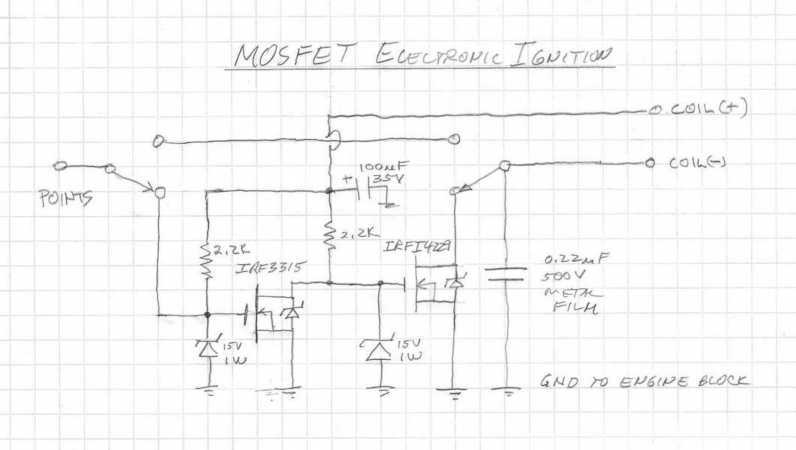
Use a transistor switch with a low-resistance primary coil and a pulse sensor placed near the crankshaft; this arrangement stabilizes spark timing at high rpm and reduces contact wear. A Hall or magnetic pickup feeds a shaping stage that converts the raw pulse into a sharp trigger for the switching device. Select a power transistor rated at least 400 V collector-emitter and 8–12 A peak current to withstand coil collapse voltage. Keep the trigger line under 30 cm and route it away from the high-voltage lead to reduce noise pickup.
- Magnetic or Hall pickup mounted 0.3–0.8 mm from the rotating trigger wheel
- Signal shaping stage using a Schmitt trigger or comparator
- Power transistor or IGBT switching the primary coil
- Flyback suppression network (fast diode + RC snubber)
- Primary coil resistance typically 0.4–1.2 Ω
- Power supply filtering capacitor 470–1000 µF close to the switching stage
Place the switching device on an aluminum heat sink of at least 40–60 cm². Thermal paste lowers junction temperature by roughly 8–12 °C during long engine operation. Use copper traces or wires rated for at least twice the expected current; thin conductors cause voltage drop and weak spark under load. A shielded cable for the pickup prevents false triggers generated by the collapsing magnetic field of the coil.
- Set trigger wheel with one reference tooth aligned to top dead center.
- Adjust pickup gap gradually while monitoring spark stability.
- Verify dwell time between 2.5 and 4 ms for typical automotive coils.
- Measure coil primary current; values above 10 A may overheat the switching device.
- Check suppression network temperature after 15 minutes of operation.
A compact layout reduces stray inductance and improves spark consistency. Mount the coil, switching stage, and power ground on a shared metal plate connected directly to the engine block. Keep sensor ground separate from the high-current return path until a single star connection point. This wiring layout allows stable spark delivery up to roughly 7000–9000 rpm for many four-cylinder engines when a strong coil and proper heat management are used.
How to Read and Interpret a Spark-Control Wiring Schematic for Troubleshooting
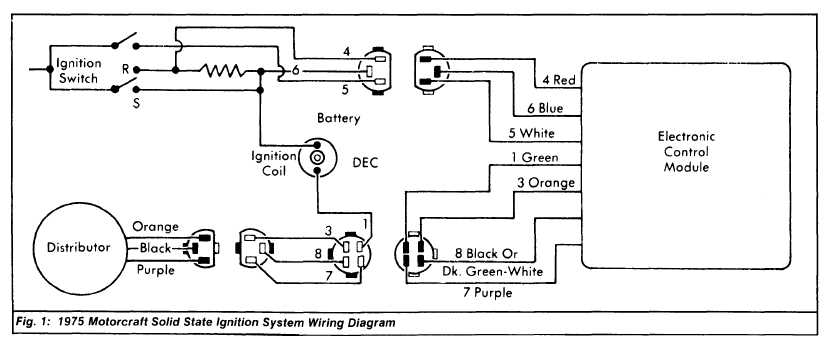
Locate the power path first: trace the line from the battery symbol through the fuse, switch, control module, and coil pack. Voltage flow on most automotive wiring maps is shown left-to-right or top-to-bottom. Measure supply points with a multimeter while comparing each node with the layout. A healthy supply typically shows 12–12.6 V with the engine off and about 13.5–14.5 V while running. A drop larger than 0.5 V between adjacent nodes signals corroded connectors, damaged wire, or a weak ground return.
Identify Symbols and Functional Blocks
Match each symbol with a real component before testing. The coil is commonly drawn as paired windings; the switching transistor appears as a three-terminal semiconductor; a crankshaft pickup may appear as a magnetic sensor or Hall device. Sensor outputs usually feed a control module that switches the primary winding of the coil. Pay attention to reference grounds marked with triangles or horizontal bars. If several components share the same ground mark, they connect to one chassis point. A faulty ground can disable multiple parts at once.
Follow trigger signals from the rotation sensor toward the control unit. The sensor typically produces a low-voltage pulse between 0.3 V and 5 V depending on type. Compare measured waveforms with expected values using an oscilloscope. Missing pulses while the starter rotates the engine point to a damaged sensor, broken cable, or incorrect air gap between the sensor and the toothed wheel. Many service manuals specify a gap between 0.5 mm and 1.5 mm.
Trace the Switching Stage
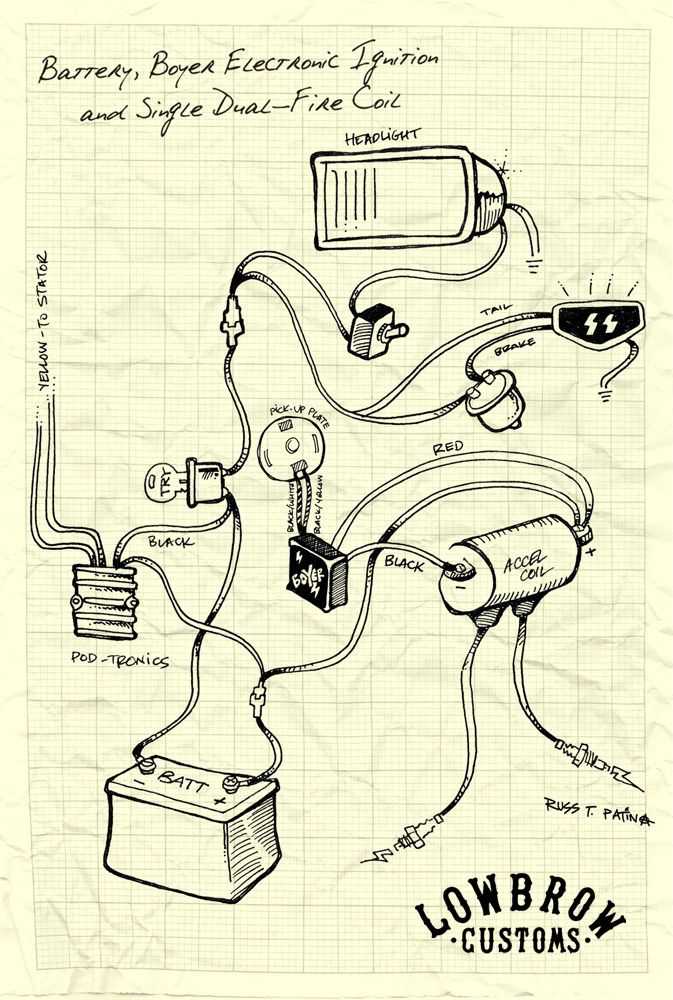
The coil primary side usually connects to battery power on one terminal and to a switching transistor inside the control module on the other. During operation the transistor repeatedly grounds the primary winding for a few milliseconds. This dwell period allows magnetic field buildup. When the switch opens, the field collapses and produces a high-voltage pulse in the secondary winding. If the wiring map shows a dwell control resistor or current sensor, verify its resistance; common values range from 0.2 Ω to 1 Ω.
Inspect connectors shown at junction points labeled with letters or numbers. Each connector pin corresponds to a table in service documentation listing wire color and destination. A pin labeled “B+” should always show battery voltage, while “GND” should read near 0 Ω relative to chassis. Pull the connector and probe from the harness side to detect broken conductors hidden under insulation.
Compare the entire power-to-spark path after measurements: battery → fuse → switch → control unit → coil → distributor or plug leads. A failure anywhere along this chain stops spark production. Mark each verified section directly on a printed wiring map; sections without confirmation become the next inspection targets. This method reduces guesswork and isolates the fault quickly.