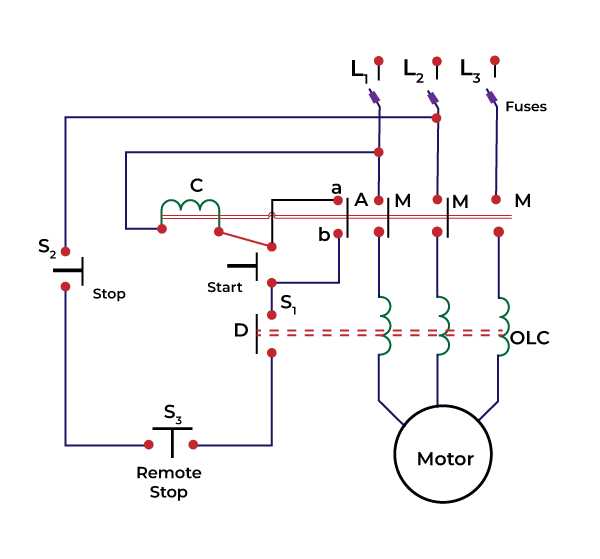
Use a 3-phase contactor rated for the motor’s full load current to ensure reliable engagement without overheating. Verify the overload relay settings match the motor’s rated amperage to prevent tripping under normal startup conditions.
Connect the power lines using color-coded conductors and confirm tight, corrosion-free terminations. Loose connections can create voltage drops and cause premature equipment failure.
Include a start-stop push button panel with proper fuses and protective devices to control motor activation. Test each control element independently before applying full voltage to avoid accidental short circuits.
Verify rotation direction by momentarily powering the motor and switching any two phases if needed. Incorrect phase sequencing can damage mechanical components or reverse pump operation.
Direct online starter setup and connection guide for electric motors
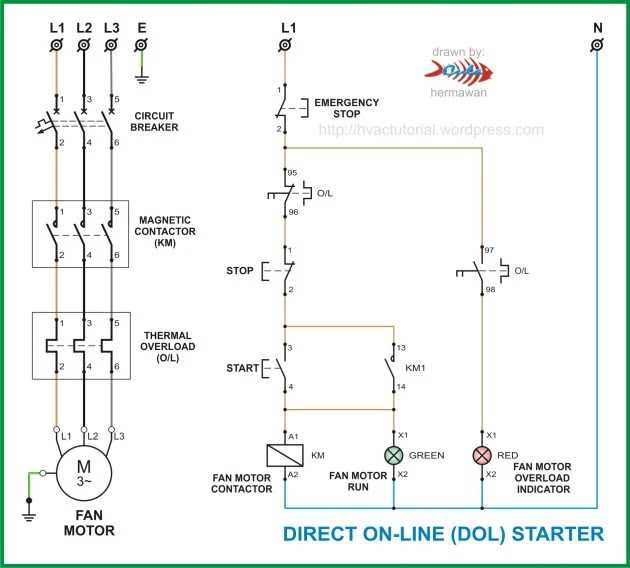
Connect the three-phase supply to a contactor rated for the motor’s full load current to prevent overheating. Ensure the overload relay is adjusted to match the motor’s nominal amperage to avoid nuisance tripping during startup.
Use properly insulated and color-coded conductors for all power connections. Confirm that each terminal is tightened securely and free from corrosion to maintain stable voltage and prevent arcing.
Install a start-stop control panel with fused protection. Each push button and relay coil must be tested individually before energizing the main supply to avoid short circuits or accidental starts.
Check the motor’s rotation by applying a brief voltage. Swap any two phases if the rotation is opposite to the intended direction. Incorrect phase sequencing can damage pumps or mechanical equipment.
Include a thermal overload relay in series with the contactor coil. Set the trip point slightly above the motor’s rated current to allow normal inrush while protecting against sustained overcurrent conditions.
Ensure that all control wiring uses separate terminals from power lines and is routed to avoid electromagnetic interference. Shielded wires can improve signal reliability in noisy environments.
Perform a full functional test by simulating a start and stop cycle multiple times. Monitor current draw, contactor engagement, and relay response to confirm that the installation operates safely under load conditions.
Selecting proper contactors and overload relays for starter installation
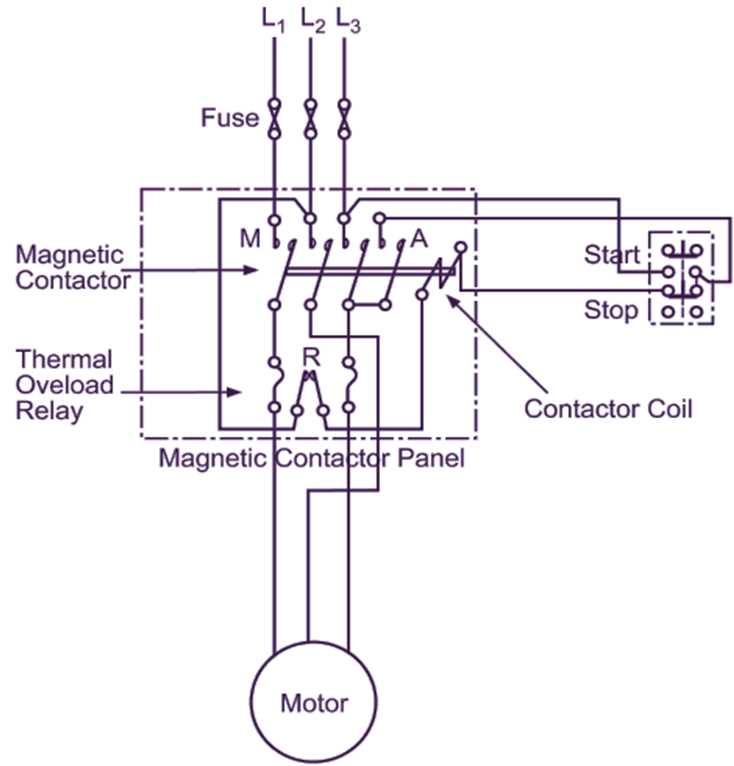
Choose a contactor rated for at least 125% of the motor’s full load current to handle inrush during startup. Ensure that the contactor’s coil voltage matches the control supply and that it has sufficient mechanical endurance for repeated operations over long periods.
Set the thermal overload relay according to the motor’s rated amperage, considering the ambient temperature. For applications with frequent starts, select a relay with adjustable trip characteristics to prevent nuisance trips while providing reliable protection against prolonged overcurrent conditions.