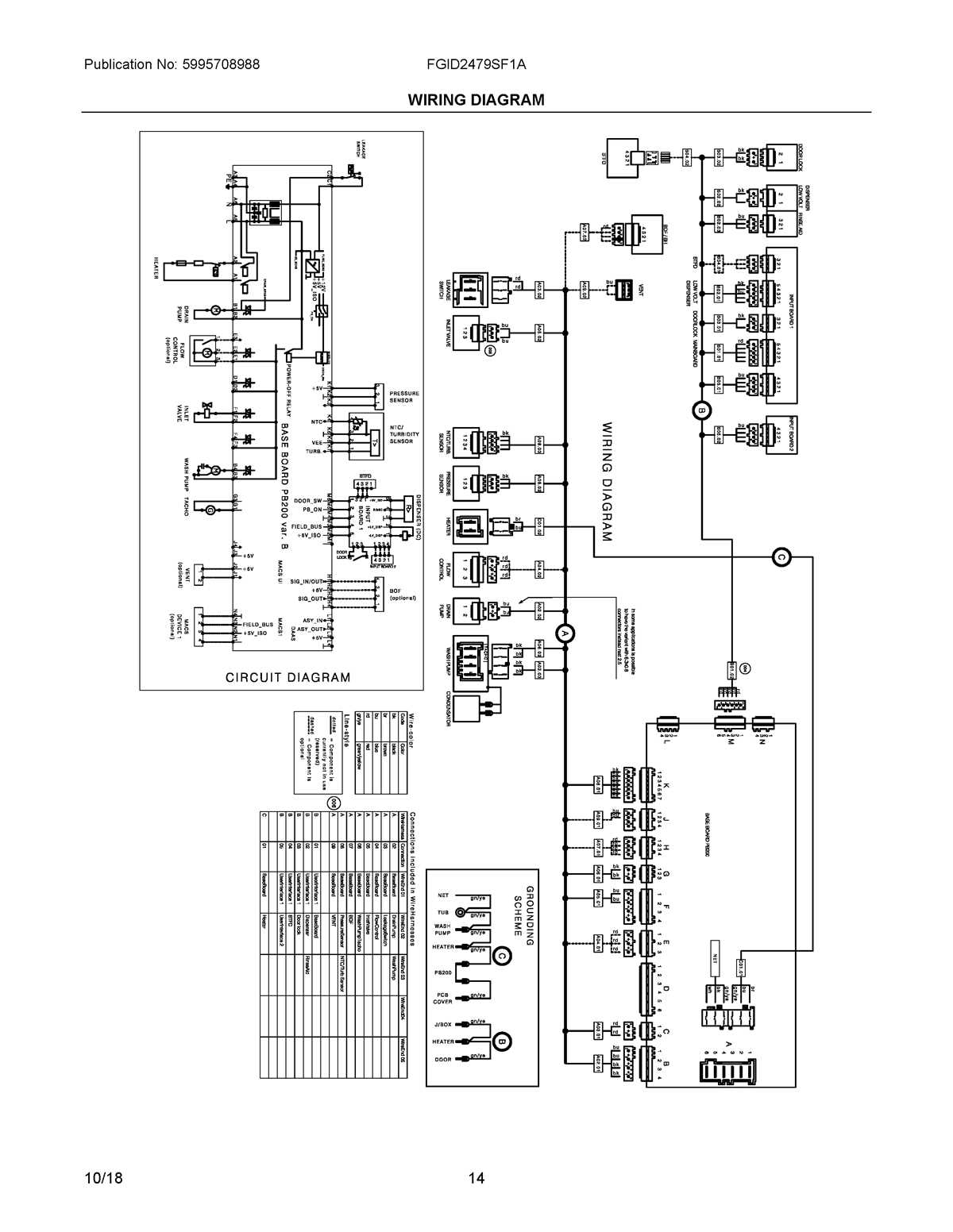
Disconnect the appliance from the 120-volt power supply before tracing any electrical connections inside the kitchen cleaning unit. Remove the lower front panel to access the terminal block, circulation motor, heating element leads, and the electronic control module. Most residential models use a single hot line, neutral return, and a green grounding conductor entering through the junction box located behind the kick plate.
The control board distributes voltage to several internal components during a wash cycle. Power first passes through the door latch interlock, which stops operation if the door opens. From there, the board sends current to the circulation motor that drives water through the spray arms. During heating phases, the same board activates the tubular heater mounted at the bottom of the tub.
Typical circulation motors in these appliances operate at 120 volts AC and draw about 1.5 to 3.0 amps during normal washing. The heating element usually consumes far more current, often between 7 and 12 amps. Because of this load difference, heater leads are usually thicker than signal conductors running to sensors or control buttons.
Temperature regulation relies on a thermistor mounted near the sump area. The sensor sends resistance values to the control module, which determines when to energize the heater. If this sensor fails or loses connection, the appliance may complete cycles without raising water temperature above roughly 100°F, leading to poor cleaning results.
Tracing the internal connection layout helps locate faults such as motors that fail to run, heaters that remain cold, or control boards that receive no voltage. A multimeter set to measure continuity and AC voltage allows quick checks between the power entry point, interlock contacts, control board terminals, and the motor harness.
Dishwasher Wiring Diagram With Motor Heater Control Board and Door Switch Connections
Verify the supply path from the household circuit to the internal control module before checking the motor or heater. The hot conductor from the 120V AC line enters the junction box under the appliance, connects to the terminal block, and then travels through the door latch interlock. If the latch contact remains open, voltage never reaches the controller and the appliance stays completely inactive.
Door latch and safety circuit
The door latch assembly normally includes one or two micro-contacts connected in series with the main power line. When the door closes fully, these contacts allow current to continue toward the control electronics. A worn latch or bent actuator can interrupt this path, leaving the control module without voltage even though the supply cable carries full power.
Motor and circulation circuit
The circulation motor receives power through a relay located on the control module. Two heavier conductors within the harness carry current directly to the motor windings. In many household units, this motor runs at 120 volts and draws about 2 to 3 amps while forcing water through the spray arms. Damaged insulation or loose connectors inside the harness can cause intermittent operation.
The heating element mounted below the tub connects to the controller through a separate pair of leads. During wash and drying phases, the controller activates a heater relay, sending current through the tubular element. This component normally consumes between 900 and 1400 watts, which equals roughly 7 to 12 amps depending on the model.
Temperature monitoring relies on a thermistor placed near the sump area. The sensor changes resistance as water temperature rises, sending data back to the control electronics. If this sensor loses connection, the heater may never activate or may run longer than intended.
Use a multimeter to trace voltage from the terminal block to the door latch contacts, then to the control module outputs feeding the motor and heater. Any open conductor, burned connector, or failed relay interrupts the electrical path and prevents the appliance from completing wash cycles.
Identifying dishwasher power supply motor heater and pump wiring connections
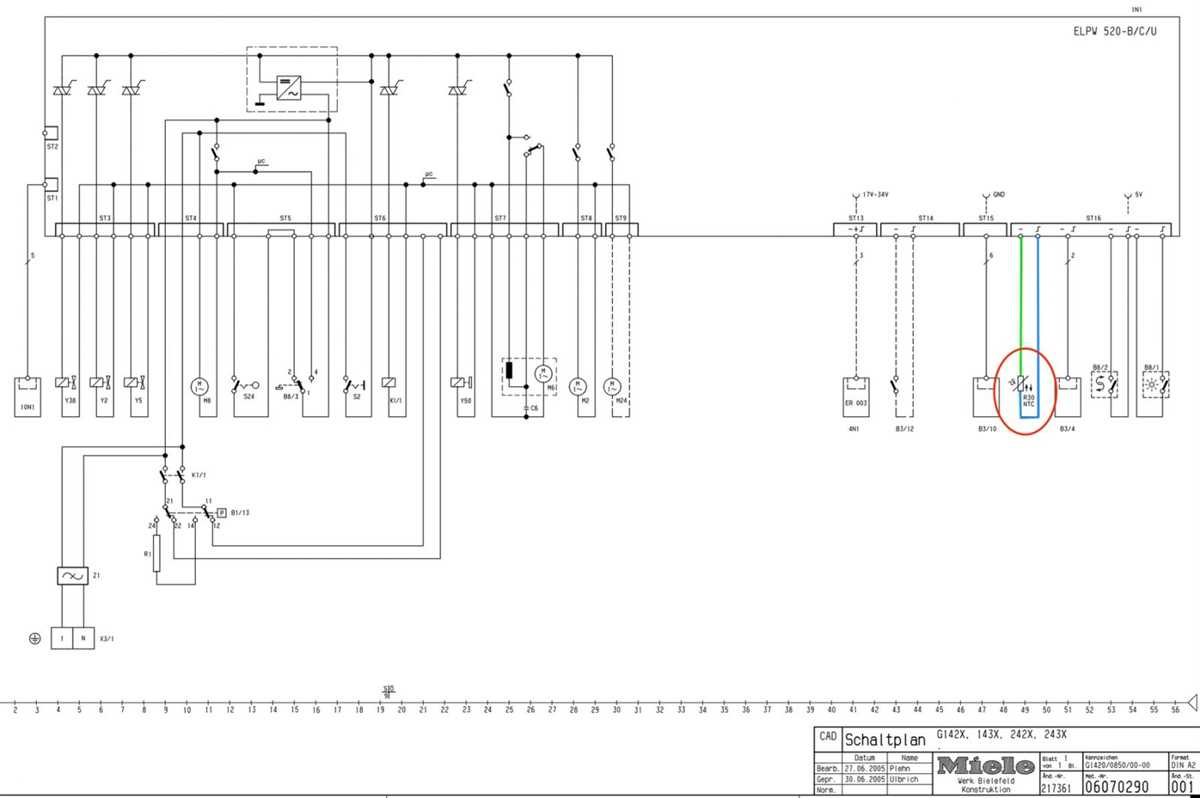
Locate the power entry block under the front lower panel and confirm the incoming line carries 120V AC before tracing internal conductors. Most kitchen cleaning appliances use three supply conductors: a black hot lead, a white neutral return, and a green grounding line attached to the metal chassis. These conductors feed the control module that distributes voltage to internal components.
Motor and circulation connections
The circulation motor sits near the sump assembly and connects to the control electronics through a two-conductor harness with thicker insulation than sensor leads. These conductors carry operating current directly from a relay on the controller. Normal draw ranges between 1.5 and 3 amps while the motor drives water through the spray arms.
Heating element connections
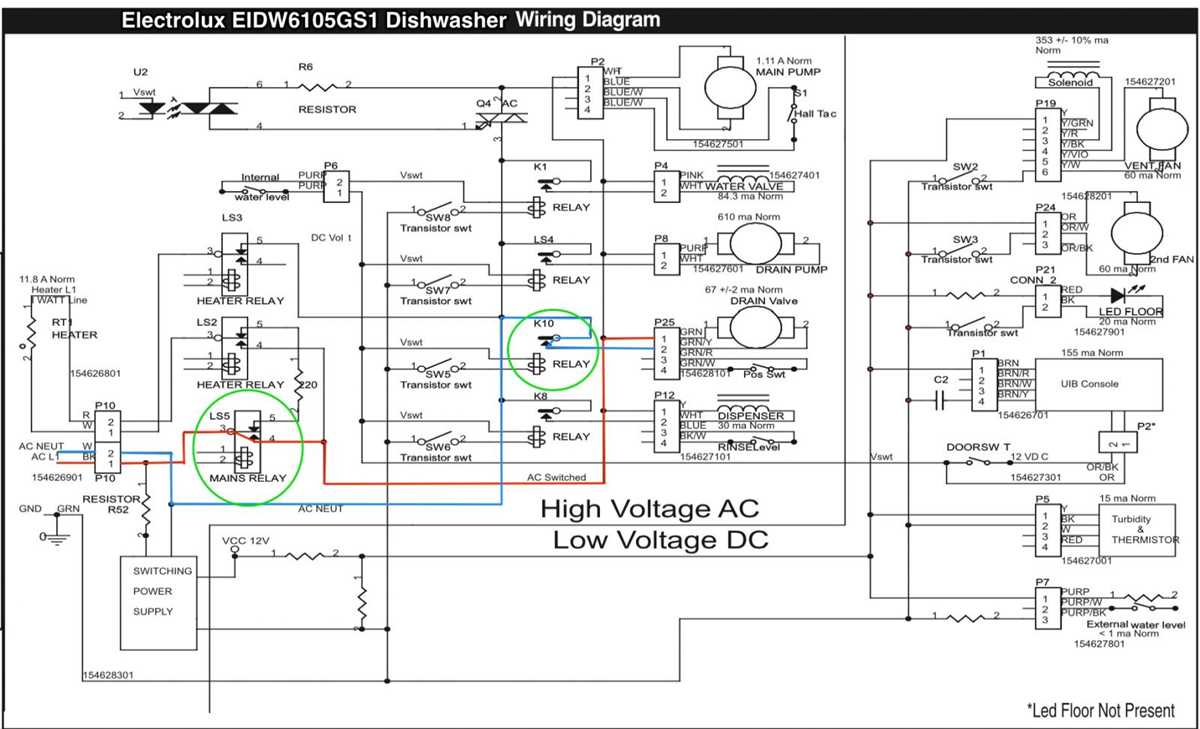
The tubular heater mounted beneath the tub uses a separate pair of high-current leads returning to the controller terminals. During wash and drying stages, the control relay closes and allows current to pass through the element. Power consumption usually ranges from 900 to 1400 watts, producing water temperatures between 120°F and 150°F.
The drain unit positioned beside the sump connects through a smaller harness because it runs only during brief drain cycles. These conductors typically carry less than 1 amp. Their routing often runs alongside the circulation motor harness but connects to a different relay output on the control board.
Trace each conductor visually from the control module toward the motor assembly, heater terminals, and drain unit. Burned connectors, brittle insulation, or loose terminals interrupt the electrical path and stop cleaning cycles, heating stages, or draining operations.