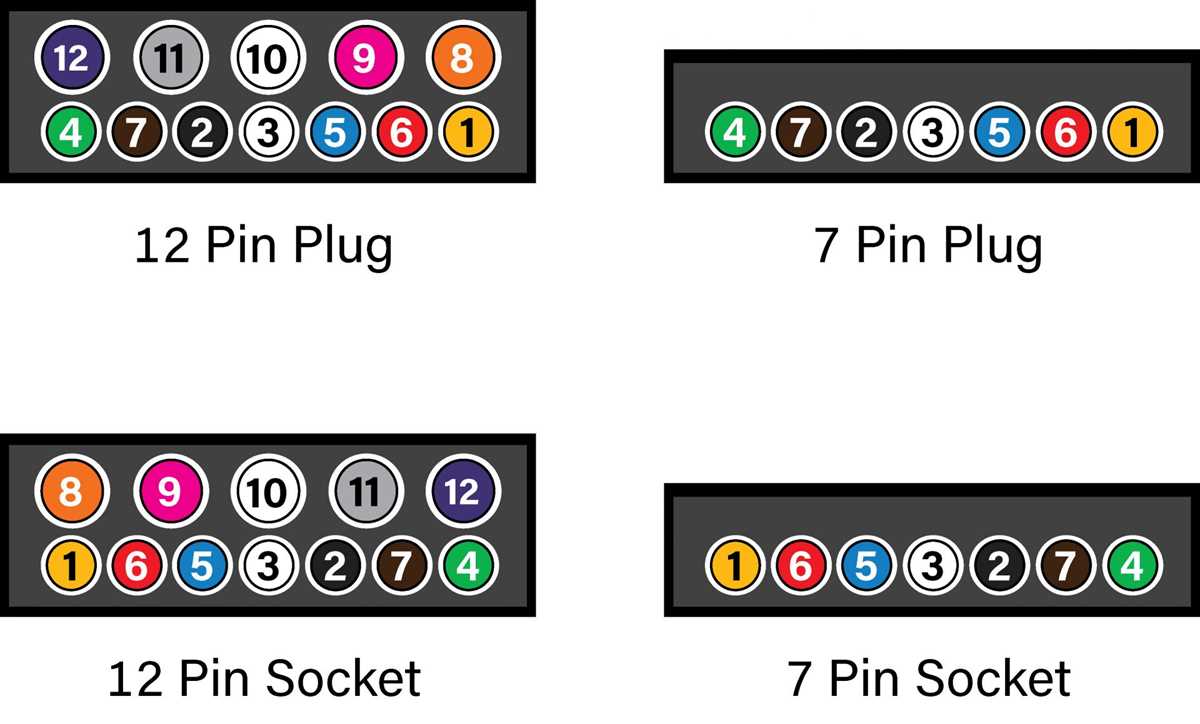
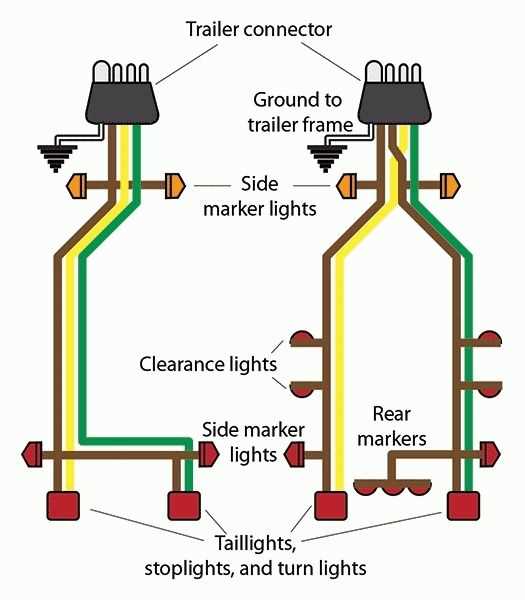
Check the connector pin layout before attaching any cable between a tow vehicle and a cargo platform. Most light-duty towing setups in North America use a 4-pin flat connector that carries ground, tail lamps, left turn signal, and right turn signal. Each conductor follows a standard color pattern such as brown for tail lamps, yellow for left turn, green for right turn, and white for ground.
Choose the correct connector type based on lighting functions and brake requirements. Small utility carriers usually rely on the 4-pin plug, while larger hauling platforms often require a 7-pin round connector that adds circuits for electric brakes, reverse lights, and auxiliary 12-volt power. These additional contacts allow brake controllers and battery charging lines to operate during transport.
Map every conductor from the towing vehicle socket to the rear lamp assemblies. Tail lamps typically combine running lights, stop signals, and turn indicators inside a single housing. Accurate conductor routing prevents signal overlap, dim lamps, or blown fuses during road use.
Protect the cable bundle with loom tubing and secure it along the frame using metal clips spaced about 30–40 cm apart. Ground points should connect directly to clean metal on the chassis using a ring terminal and corrosion-resistant bolt. Reliable grounding reduces flickering lights and maintains stable current flow across all lamp circuits.
Trailer Wiring Diagram Guide with Connector Pin Layout and Light Circuit Mapping
Match each connector contact with its lighting function before routing any cable from the tow vehicle to the cargo platform frame. A common 4-pin flat plug carries four circuits: ground, running lights, left turn signal, and right turn signal. The typical color pattern used across many North American towing systems includes white for ground, brown for tail lamps, yellow for the left indicator, and green for the right indicator.
Connector Pin Layout
Check the orientation of the plug while identifying contacts. On a standard 4-pin flat connector viewed from the front of the vehicle socket, the exposed pins follow this order from left to right: ground, tail lamps, left signal and brake lamp, right signal and brake lamp. Larger towing setups often use a 7-contact round connector that adds circuits for electric brake control, reverse lamps, and auxiliary 12-volt supply used for charging onboard batteries or powering interior lights on large cargo carriers.
Light Circuit Mapping
Route each conductor along the frame rail and split the lighting circuits at the rear cross member. The brown conductor normally feeds both rear running lamps and side marker lamps through a junction point. Yellow and green conductors connect directly to the left and right signal lamps. Ground returns through the white conductor attached to bare chassis metal using a bolt and ring terminal. Clear mapping of these circuits helps diagnose dim lamps, crossed signals, or fuse failures during night driving.
How to Identify Trailer Connector Pin Functions and Color Codes
Check the connector type first and count the contacts before tracing any conductor. Small towing setups normally use a 4-contact flat plug, while larger cargo carriers often rely on 5-contact, 6-contact, or 7-contact connectors. Each contact corresponds to a specific lamp or control circuit linking the tow vehicle to rear lighting units.
Use the common color pattern applied in many North American towing systems. The white conductor usually connects to chassis ground, brown supplies running lamps, yellow controls the left turn and brake lamp, and green feeds the right turn and brake lamp. When a 5-contact plug is used, a blue or purple conductor often activates a reverse lamp circuit mounted near the rear frame.
Identify each pin by viewing the connector from the front of the vehicle socket. Contact placement stays consistent across many manufacturers, allowing quick recognition of lamp circuits. Ground normally sits at the outer edge of flat connectors, while signal contacts occupy the center positions.
Larger round connectors add circuits for braking systems and auxiliary power. A 7-contact round plug typically includes the following functions: ground return, tail lamps, left signal and brake lamp, right signal and brake lamp, electric brake control line, reverse lamp circuit, and a constant 12-volt supply used for charging onboard batteries or powering interior lighting in enclosed cargo units.
Verify every conductor with a multimeter or test light before final connection. Activate the vehicle lights one function at a time and check the corresponding pin. This method confirms signal routing and prevents crossed circuits that could cause dim lamps or simultaneous blinking on both sides.