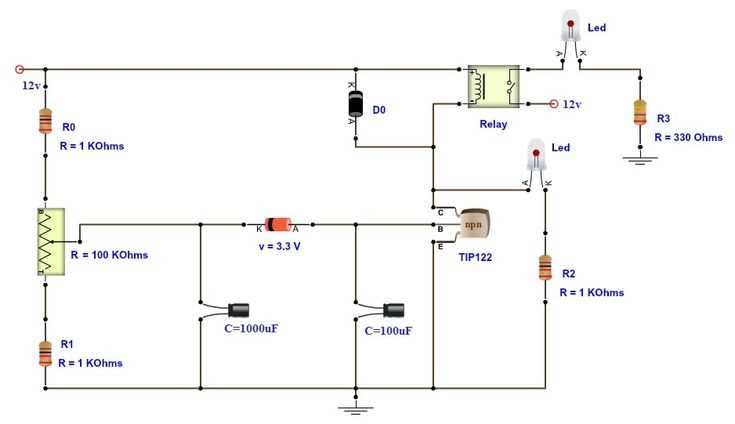
Choose the correct resistor and capacitor values to achieve the desired interval. A 10kΩ resistor combined with a 100µF capacitor produces approximately a one-second timing period, which can be adjusted proportionally by changing either component.
Use a stable power source to prevent fluctuations that can affect timing accuracy. Small voltage variations can alter the charging rate of capacitors, leading to inconsistent intervals.
Assemble components on a breadboard first to verify functionality. Connect the resistor and capacitor in series with a switching element, and test the charging and discharging sequence with a multimeter or LED indicator.
Document all connections and values to facilitate adjustments. Record each resistor and capacitor rating along with measured intervals, so changes can be implemented precisely without trial and error.
Delay Timing Setup Guide
Select components based on the required interval. For intervals under one second, use low-capacitance capacitors between 10µF and 47µF paired with resistors in the 1kΩ–10kΩ range. Longer intervals require higher capacitance and resistance values proportionally.
Check voltage ratings of capacitors to ensure they exceed the supply voltage by at least 50%. Underrated components can fail or reduce timing accuracy under continuous load.
Use a stable switching element such as a transistor or MOSFET to control the start and stop of the charging sequence. Ensure the component can handle the load current without overheating.
Assemble on a test breadboard before soldering. Connect the resistor and capacitor in series with the switching element, then apply voltage and observe the interval using an LED or multimeter to verify timing accuracy.
Adjust resistor or capacitor values incrementally to fine-tune the interval. Small changes in resistance or capacitance can shift the timing by tens to hundreds of milliseconds, allowing precise control.
Document each modification including component values and measured intervals. Maintain a simple chart of resistor-capacitor combinations to replicate timing setups in future projects without recalculation.
Test under load conditions by connecting the timing setup to the intended device or relay. Monitor voltage and switching response to ensure consistent operation across all expected conditions.
Consider environmental factors such as temperature and humidity. High temperatures can reduce capacitor efficiency, slightly shortening the interval, while low temperatures can extend it. Choose components rated for the expected range to maintain stability.
Selecting Components for Accurate Timing Control
Choose resistors with precise tolerance to maintain consistent intervals. A 1% tolerance resistor ensures minimal variation, whereas a 5% resistor can shift timing by noticeable amounts.
Select capacitors with low leakage to prevent gradual loss of charge that affects timing accuracy. Electrolytic capacitors with leakage below 5µA are suitable for intervals up to several seconds.
Verify voltage ratings for both resistors and capacitors. Components should exceed the supply voltage by at least 20–50% to avoid breakdown and maintain stable operation under load fluctuations.
Consider temperature coefficients of components. High temperature can reduce capacitance slightly, shortening intervals. Use capacitors rated for the expected ambient range to preserve timing precision.
Use a stable switching element such as a logic-level MOSFET or low-hFE transistor to control the charging path. Ensure the device can handle the peak current without introducing delays or voltage drops.
Test combinations on a prototype board to identify the most consistent pairing of resistor and capacitor. Measure intervals with an accurate timer and adjust component values incrementally for exact timing.
Document component specifications and measured intervals to replicate the setup reliably. Keeping a detailed record allows future adjustments without repeated trial-and-error testing.