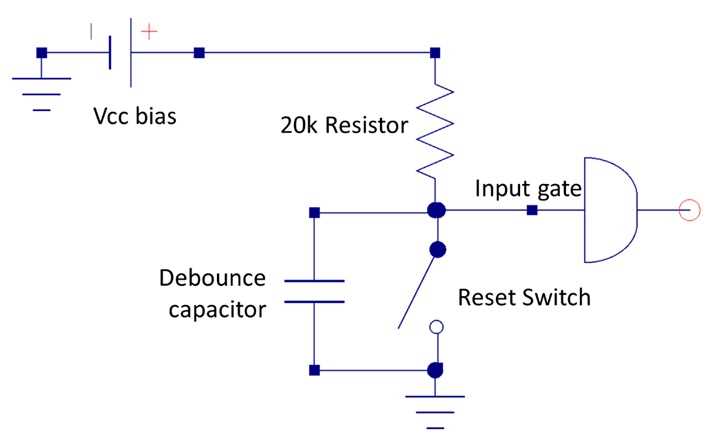
Use a resistor-capacitor network to filter out rapid on-off pulses from mechanical switches. Choose a capacitor value between 0.1µF and 1µF and pair it with a 10kΩ to 100kΩ resistor to achieve stable signal timing without noticeable lag.
Connect the input from the switch to the junction of the resistor and capacitor while linking the capacitor’s other terminal to ground. This configuration smooths voltage fluctuations and prevents multiple triggers from a single press.
Verify output with a logic analyzer or oscilloscope to ensure that each button press produces a single clean pulse. Adjust resistor or capacitor values if the signal shows bouncing or slow rise times, and secure all solder joints to maintain consistent operation.
Switch Debounce Setup Guide
Select a resistor and capacitor pair based on the mechanical switch’s bounce characteristics. Typical values range from 10kΩ to 100kΩ for resistors and 0.1µF to 1µF for capacitors to filter spurious pulses effectively.
Position the resistor between the power supply and the switch input, and connect the capacitor from the input to ground. This arrangement smooths voltage spikes caused by rapid contact closure or release.
For multiple switches, use individual resistor-capacitor pairs to prevent interference between inputs. Label each connection clearly to simplify troubleshooting and future modifications.
- Test each switch individually with a multimeter or logic analyzer.
- Observe the output waveform to confirm single pulse response per actuation.
- Adjust component values if multiple triggers appear or the rise/fall time is too slow.
Secure all connections with solder or reliable terminal blocks. Loose contacts can reintroduce bouncing, negating the stabilization setup.
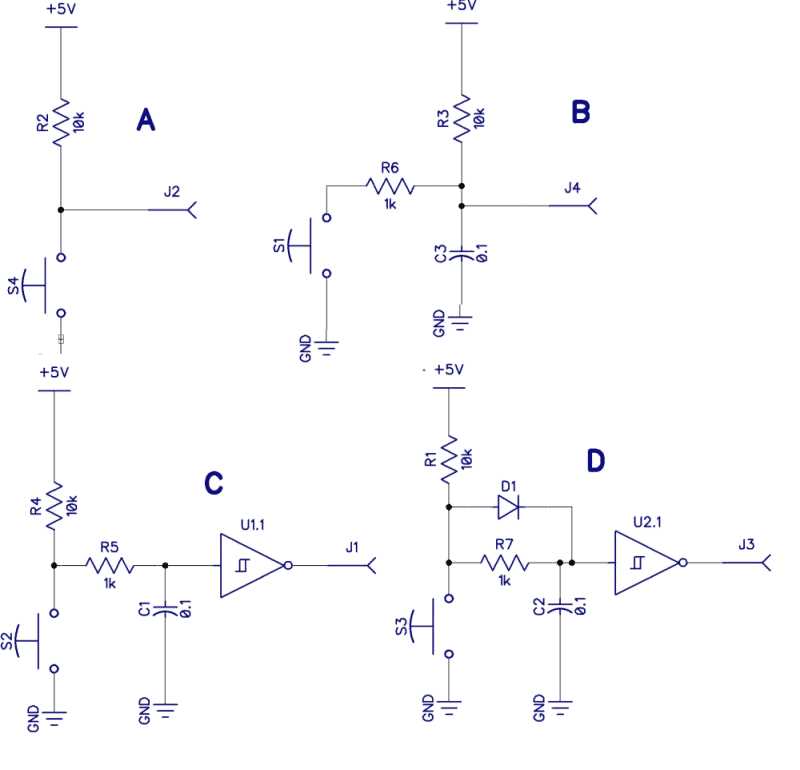
Consider adding a small buffer or Schmitt trigger stage after the RC network when connecting to microcontroller inputs. This improves noise immunity and provides sharper transitions for digital logic interpretation.
Finally, verify the full assembly under actual operating conditions by pressing each switch rapidly. Ensure that the output consistently produces a single, clean pulse, confirming the system is properly stabilized for all inputs.
Selecting Resistors and Capacitors for Stable Contact Signals
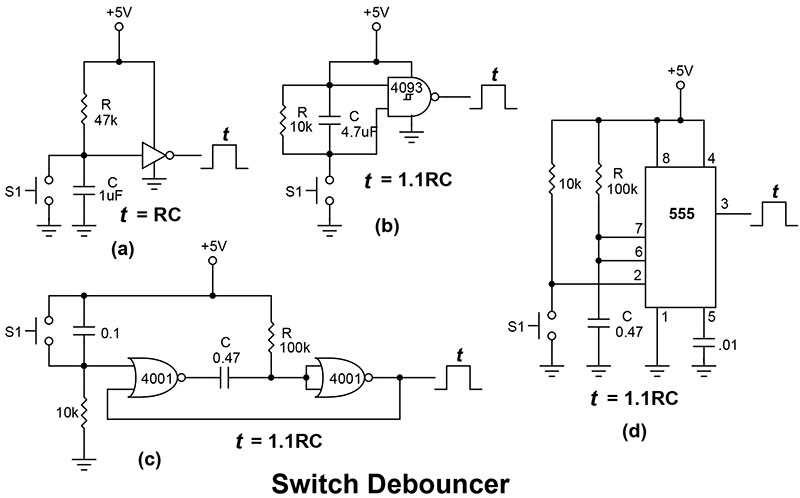
Choose resistors between 10kΩ and 100kΩ to limit current while allowing the capacitor to charge and discharge smoothly. Lower values respond faster but may transmit noise, while higher values increase delay.
Select capacitors in the range of 0.1µF to 1µF depending on the switch bounce duration. Larger capacitance improves stability for rough or fast-switching contacts but may slow down response in high-speed applications.
For precise timing, calculate the RC time constant using τ = R × C. Aim for a value slightly longer than the maximum bounce time to ensure single, clean transitions without excessive delay.
- Verify each resistor’s tolerance to avoid drift affecting signal clarity.
- Use capacitors with low leakage and stable dielectric materials to maintain consistent filtering over temperature changes.
- Adjust component selection if multiple spikes are observed or transitions become sluggish.
Combine each switch with its dedicated RC pair to prevent cross-talk and maintain independent signal stability for multiple inputs.
Finally, test the assembly under rapid actuation to ensure the output produces a single, clean pulse for each contact press, confirming reliable stabilization across the system.