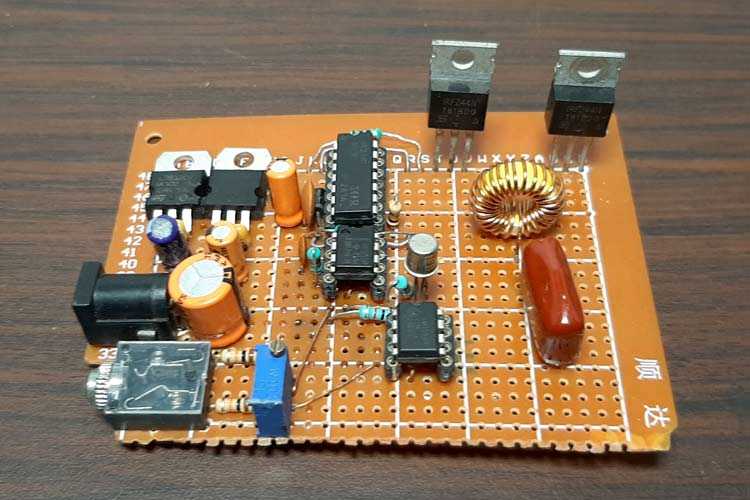
Use a PWM-based audio power stage with a half-bridge MOSFET pair when compact size and low heat loss are required. A practical layout places two N-channel MOSFETs after a gate driver and feeds the output through an LC reconstruction filter. Typical switching frequency ranges from 250 kHz to 400 kHz, which keeps the filter components reasonably small while maintaining clean audio recovery. Choose MOSFETs with low RDS(on) (below 20 mΩ) and gate charge under 50 nC to reduce switching losses.
The signal path usually begins with a PWM modulator that converts the analog waveform into a high-frequency pulse train. Many builders use comparator-based modulation with a triangular carrier between 200–500 kHz. Dead-time between the upper and lower MOSFET gates should remain within 20–50 ns to prevent cross-conduction. A dedicated gate driver such as a high-side/low-side driver IC keeps switching edges sharp and maintains stable operation under heavy load.
After the switching stage, the LC output network restores the audio waveform before the speaker. For an 8-ohm load, common values are 10–22 µH inductance paired with 470–680 nF polypropylene capacitors. Keep the inductor’s current rating above the expected peak output level; a 100 W design often requires coils rated for 8–10 A. Place this filter close to the MOSFET bridge and route high-current traces wide to minimize electromagnetic noise.
Power supply stability also shapes performance. A supply rail between 24 V and 48 V is common for medium-power audio builds. Bulk electrolytic capacitors (1000–2200 µF) near the switching stage combined with 0.1 µF ceramic bypass capacitors suppress voltage ripple and ringing. Careful grounding–separating signal ground from high-current return paths–keeps distortion low and prevents audible interference.
High-Efficiency Switching Audio Power Stage Layout
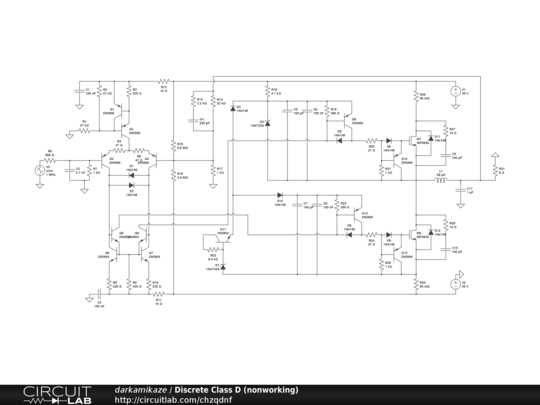
Use a half-bridge switching topology with complementary MOSFETs driven by a dedicated gate driver; this arrangement minimizes heat losses and allows audio power stages to reach above 85–90% electrical utilization while delivering strong output to low-impedance speakers.
A typical switching audio stage relies on pulse-width modulation generated by a comparator or dedicated controller IC. The modulated waveform drives two power transistors operating in rapid on/off states rather than linear conduction. Because each transistor spends minimal time in the transition region, thermal dissipation drops dramatically compared with linear audio stages. A bootstrap driver is commonly added so the high-side transistor receives adequate gate voltage during switching cycles.
Core Functional Blocks
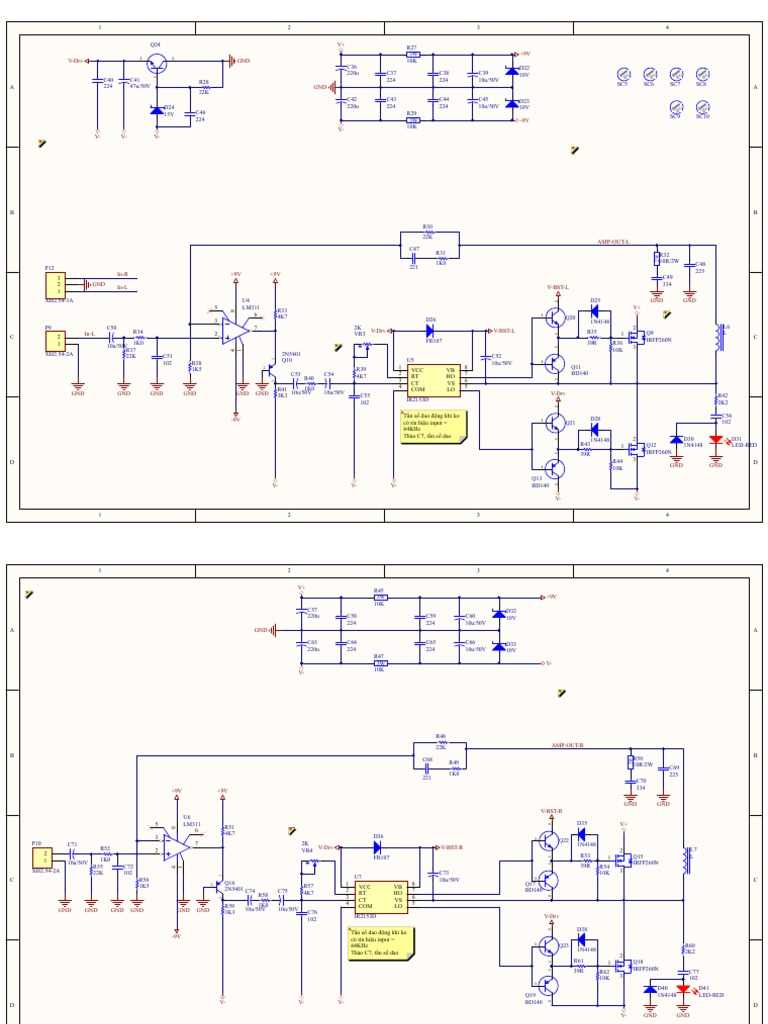
The signal path usually includes an input buffer, a PWM generator, a MOSFET driver, a switching power pair, and an LC reconstruction filter. The buffer stabilizes input impedance and prevents distortion from the modulation stage. The PWM block compares the incoming audio waveform with a high-frequency triangular carrier, often between 250 kHz and 600 kHz. That comparison produces a variable duty-cycle pulse stream representing the audio envelope.
The driver stage must supply peak gate currents of several amperes so the MOSFET gates charge and discharge quickly. Gate resistors between 5 Ω and 33 Ω help control switching speed and reduce ringing. Dead-time control–often around 20–80 ns–prevents both transistors from conducting simultaneously, which would otherwise create a destructive short across the supply rails.
Output Reconstruction Network
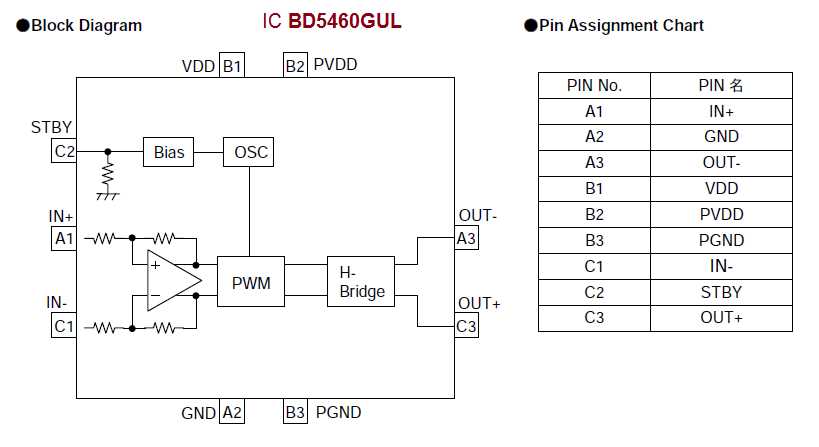
An LC filter converts the high-frequency pulse stream into a smooth analog waveform suitable for loudspeakers. Inductor values commonly range from 10 µH to 33 µH depending on load impedance and switching frequency. Capacitors between 220 nF and 680 nF form a low-pass network that removes carrier remnants while preserving the audio band. Ferrite-core inductors with low DC resistance help maintain strong output power without unnecessary heating.
PCB layout strongly affects switching audio performance. Keep MOSFETs, driver IC, and decoupling capacitors within a few millimeters of each other to minimize parasitic inductance. Use wide copper traces or planes for power paths, especially between the switching pair and the output filter. Place high-frequency bypass capacitors–100 nF ceramic types–directly across the supply pins of the driver stage.
Protection features raise reliability: add current sensing using a low-value shunt resistor (0.01–0.05 Ω), integrate thermal shutdown through the controller IC, and include a Zobel network across the speaker output (typically 10 Ω with 100 nF in series). These elements stabilize the load response and reduce oscillation when long speaker cables introduce additional inductance.