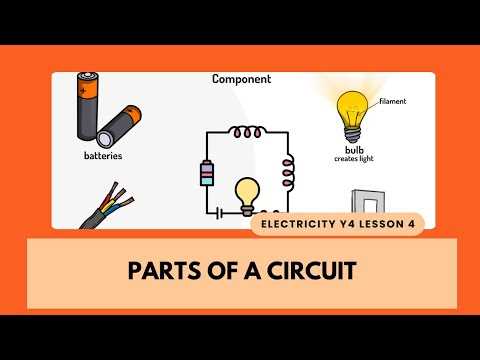
Use clear electrical symbols instead of pictures when teaching children how power flows through a simple path made from a battery, wires, and a bulb. A straight line represents a wire, two parallel lines show a battery cell, and a small circle with a cross inside marks a light source.
In primary science classes for pupils aged 7–11 years, learners usually build small electrical setups using AA batteries, miniature bulbs, switches, and insulated leads. After assembling the real components, students draw a symbolic layout that mirrors the physical arrangement. This approach helps them connect practical activity with visual representation.
A basic closed electrical path contains three main parts: a power source, a load such as a bulb or buzzer, and a continuous conductor path. If the line representing the wire breaks anywhere in the drawing, the current cannot move and the light will remain off. Children quickly understand this rule when they compare open and closed paths.
Teachers often use simple tasks such as drawing a battery connected to one bulb through a switch. Pupils learn that the switch symbol placed in the line controls the flow of current. When the symbol shows an open gap, the electrical path stops. When the line closes, the bulb receives power and produces light.
Simple Circuit Diagrams for KS2 Students With Symbols and Basic Electricity Examples
Use standard electrical symbols rather than pictures when teaching young pupils how power travels through a closed electrical path. A straight line represents a conductor, two long and short parallel lines represent a battery cell, a circle with a cross shows a bulb, and a break in the line with a lever indicates a switch.
Primary school science activities often involve drawing simple layouts that match small classroom experiments. A typical exercise includes connecting a battery holder, a miniature bulb, and a switch with wires, then reproducing the same arrangement using symbols on paper.
- Battery symbol placed at the start of the power path
- Straight lines used for wires
- Bulb symbol connected within the loop
- Switch symbol placed along the conductor line
Another common classroom example uses two bulbs connected in the same loop with a battery pack. Pupils sketch the symbolic layout and observe how both lights operate when the switch closes. If the path contains a break anywhere in the drawing, the electrical flow stops and the bulbs remain off.
Common Electrical Symbols KS2 Pupils Use for Battery Bulb Switch and Wires
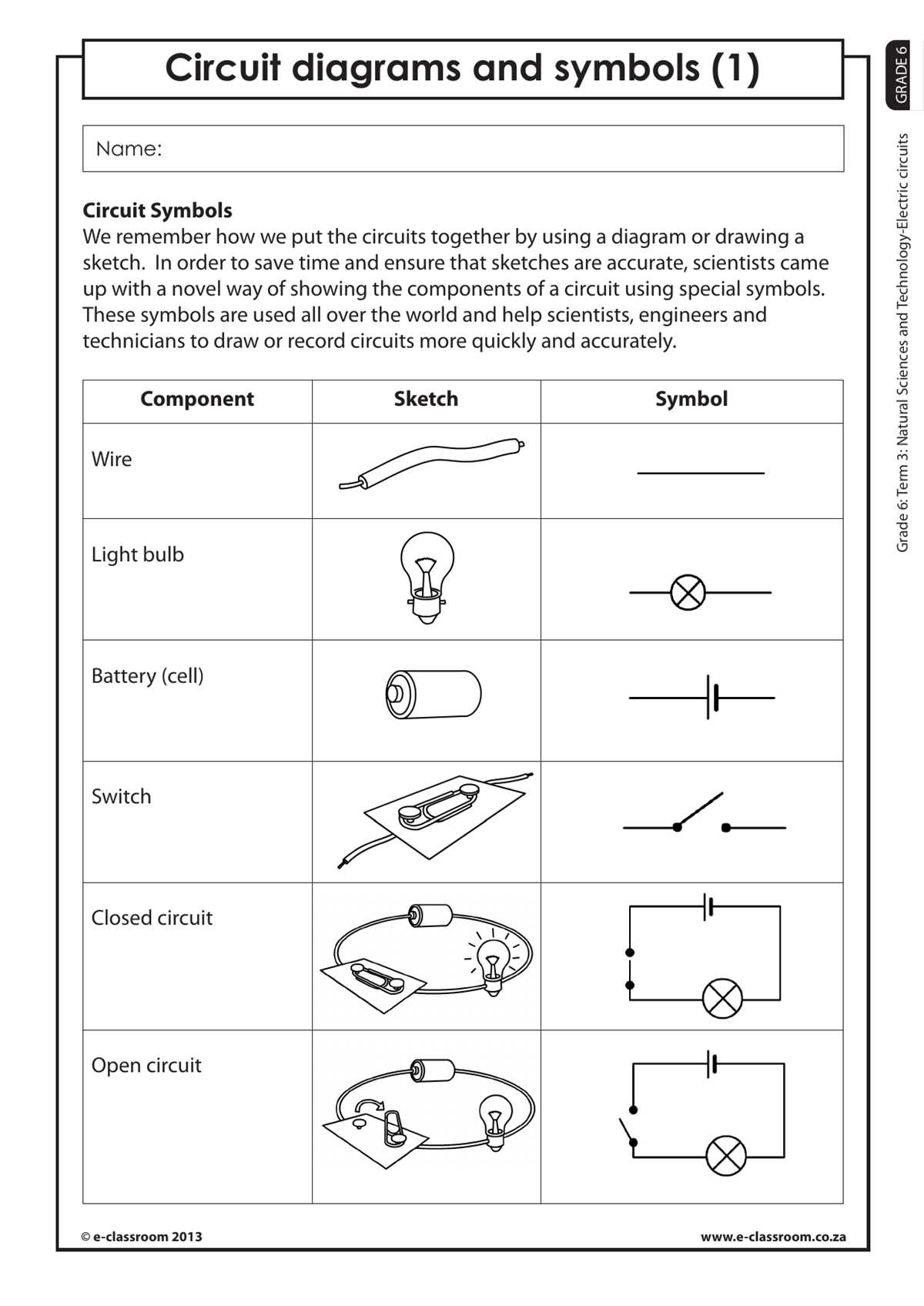
Use standard schematic symbols rather than pictures when teaching children how a simple electrical path works. These symbols appear in primary science textbooks and help pupils describe connections between power sources, loads, and conductors.
The battery symbol appears as pairs of parallel lines with different lengths. The longer line marks the positive side and the shorter line marks the negative side. When several cells are drawn together, multiple pairs of lines appear in sequence to represent a battery pack used in classroom experiments.
A bulb symbol is usually drawn as a circle with a cross or small filament mark inside it. This icon shows the component that produces light once electrical current flows through the closed path. In practical lessons, pupils often connect miniature bulbs rated for 1.5–3 volts to match the voltage of common AA cells.
The switch symbol appears as a break in a line with a movable lever. When the lever touches the line, the path becomes closed and electricity flows. When the lever remains lifted, the path stays open and the bulb does not light.
Conductors appear as straight lines that connect each component symbol. These lines represent insulated wires used in real classroom setups. Intersections without dots usually indicate that wires cross without electrical contact, while a small filled dot marks a connection point.
Teachers often ask pupils to reproduce a simple setup containing one battery, one switch, and one bulb using these symbols. Matching the symbolic layout to the physical components helps students understand how electrical current moves through a complete loop.