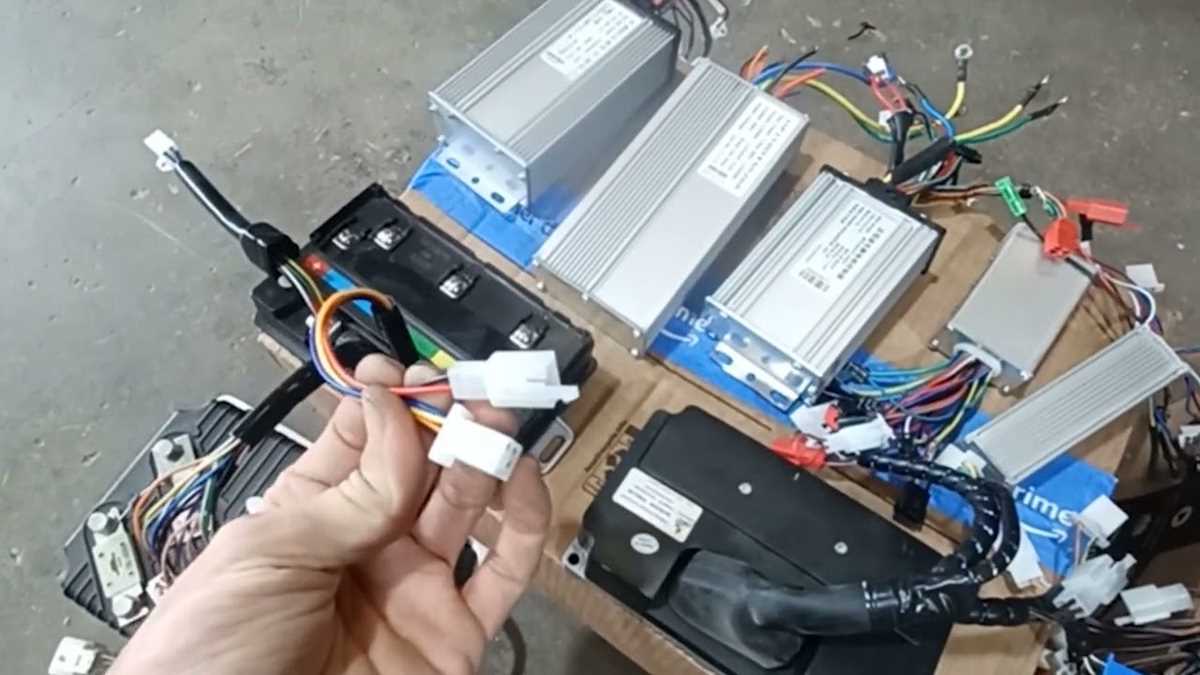
Match the three phase conductors from the wheel drive unit to the controller outputs using identical colors. Most electric bike and scooter drive systems use yellow, green, and blue phase leads that deliver three-phase current from the controller to the stator windings inside the wheel assembly. Correct pairing allows the rotor to spin smoothly without vibration or reverse rotation.
The drive system also relies on position sensors placed inside the wheel assembly. These small Hall sensors report rotor position to the controller so that current can switch between phases at the correct moment. Five thin signal leads normally exit the axle together with the phase conductors. Typical colors include red for 5V supply, black for ground, and three additional signal lines often colored yellow, green, and blue.
Power enters the system through a battery pack connected to the controller input terminals. The controller converts direct current from the battery into timed three-phase output signals that energize the stator coils. Higher battery voltage produces greater rotational speed, while controller current limits determine torque.
A clear connection layout helps trace each conductor from the battery and controller to the wheel drive assembly. Thick lines in such layouts represent phase conductors carrying high current, while thinner lines indicate sensor signals that guide switching timing inside the controller electronics.
Brushless Hub Motor Wiring Diagram With Phase Wires Hall Sensors and Controller Connections
Connect the three thick phase conductors from the wheel drive unit to the matching outputs on the electronic control module using identical colors. Yellow, green, and blue leads usually carry high current from the controller to the stator windings. If rotation occurs in the wrong direction, swap any two of these phase leads to reverse the magnetic sequence.
Hall Sensor Signal Lines
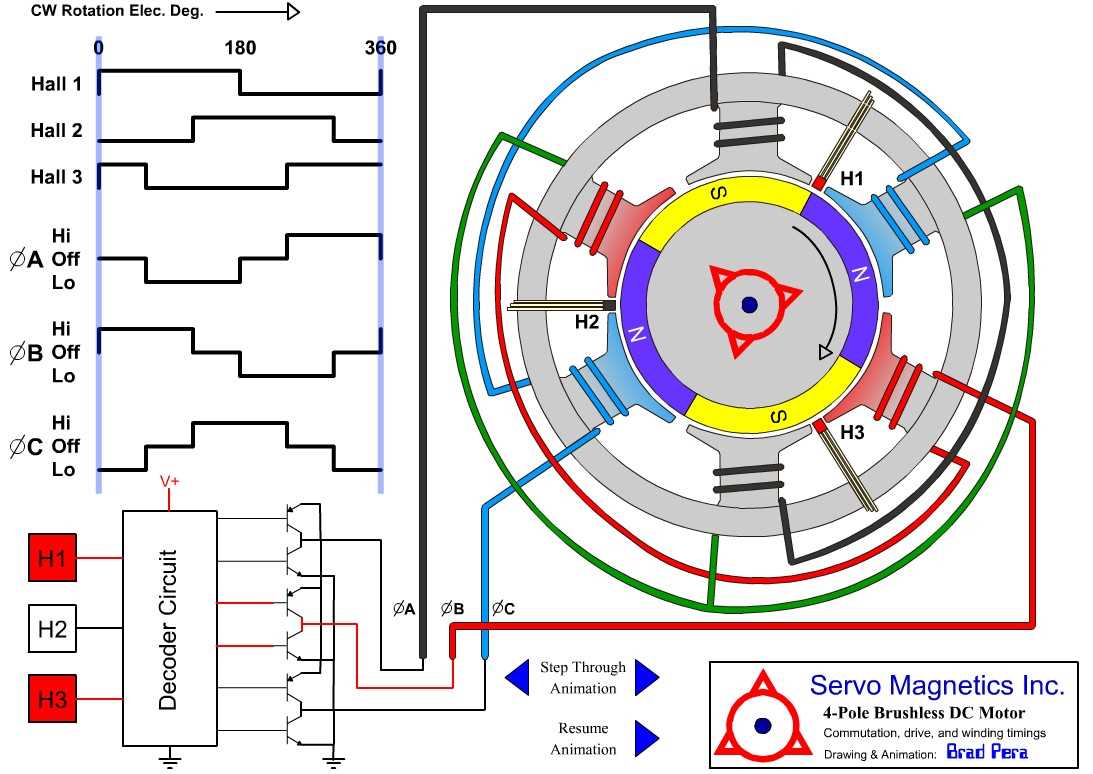
Link the thin sensor harness from the wheel assembly to the controller input connector. This harness typically contains five small conductors. Red provides a 5-volt supply for the sensors, black connects to ground, and three additional signal leads transmit rotor position data. These signals allow the controller to energize each phase at the correct moment.
Controller and Battery Connections
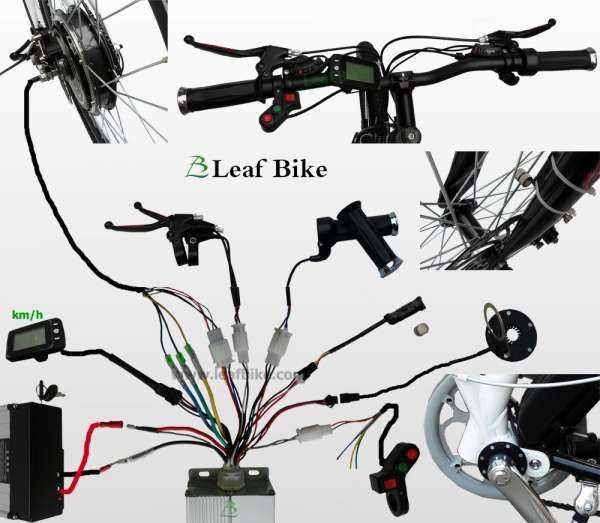
Attach the battery positive lead to the controller power input through a fuse rated for the system current, often between 20 and 40 amps in small electric bikes or scooters. The negative battery lead connects directly to the controller ground terminal. From this unit, phase outputs deliver alternating current pulses that drive the stator coils inside the wheel assembly.
Follow the connection layout carefully when tracing each conductor. Thick lines represent high-current phase paths, while thin lines mark sensor signals and low-power control connections. Correct pairing between controller outputs and wheel assembly leads prevents overheating, rough rotation, or startup failure.
How to Connect Phase Wires Between Hub Motor and Controller
Match the three thick phase conductors from the wheel drive unit to the controller outputs using identical colors. Most systems use yellow, green, and blue insulation to identify the three power phases. Correct pairing allows the controller to energize stator windings in the correct sequence.
Locate the phase terminals on both the controller and the wheel assembly cable. These conductors carry the highest current in the drive system and usually have thicker insulation compared with sensor leads. Secure connections using soldered joints or high-current connectors rated for the system amperage.
Follow the common color mapping used in many electric bicycle and scooter systems.
- Yellow phase lead from controller to yellow lead from wheel drive unit
- Green phase lead from controller to green lead from wheel drive unit
- Blue phase lead from controller to blue lead from wheel drive unit
If the wheel spins in the wrong direction or vibrates during startup, adjust the phase pairing.
- Swap any two phase conductors
- Test rotation again using low throttle input
- Repeat adjustment until smooth forward rotation appears
Use connectors rated for currents commonly reaching 20–40 amps in small electric bike systems and higher values in larger scooter setups. Poor contact resistance creates heat buildup and can damage insulation around the conductors.
Route the three phase conductors through protective sleeving along the frame. Avoid sharp metal edges near the axle exit point because vibration and wheel movement can wear through insulation and cause short circuits.