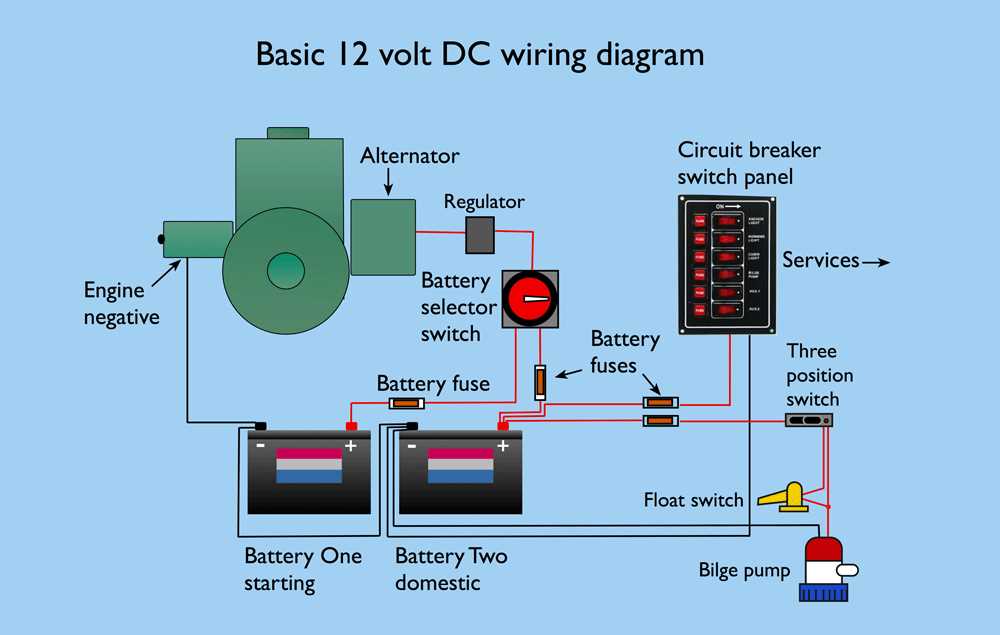
Connect the battery positive lead to a fused distribution block before routing power to the marine control console. A fuse rated between 5 A and 15 A for lighting circuits and 15 A to 30 A for pumps or electronics prevents cable overheating. Position the fuse holder within 7 inches of the battery terminal to reduce the risk of short-circuit damage.
The control console typically distributes power to multiple onboard devices such as navigation lights, bilge pump, horn, livewell pump, and accessory outlets. Each rocker or toggle control routes current from the positive supply line to a separate load conductor. Ground returns from these devices normally join a negative bus bar connected directly to the battery negative terminal.
Marine electrical installations require corrosion-resistant conductors and sealed connectors. Use tinned copper cable rated for marine environments and select proper gauge size based on load current and cable length. For example, lighting circuits often use 16 AWG, pumps commonly use 14 AWG, and higher loads such as washdown pumps may require 12 AWG.
Clear connection mapping prevents crossed circuits and unstable device operation. Label each conductor during installation and follow a structured layout where the positive supply feeds the control console, each output line goes to a dedicated device, and all return paths meet at the ground bus. This arrangement keeps voltage drop low and simplifies troubleshooting during maintenance.
Boat Switch Panel Wiring Diagram With Terminal Layout and Battery Connection Guide
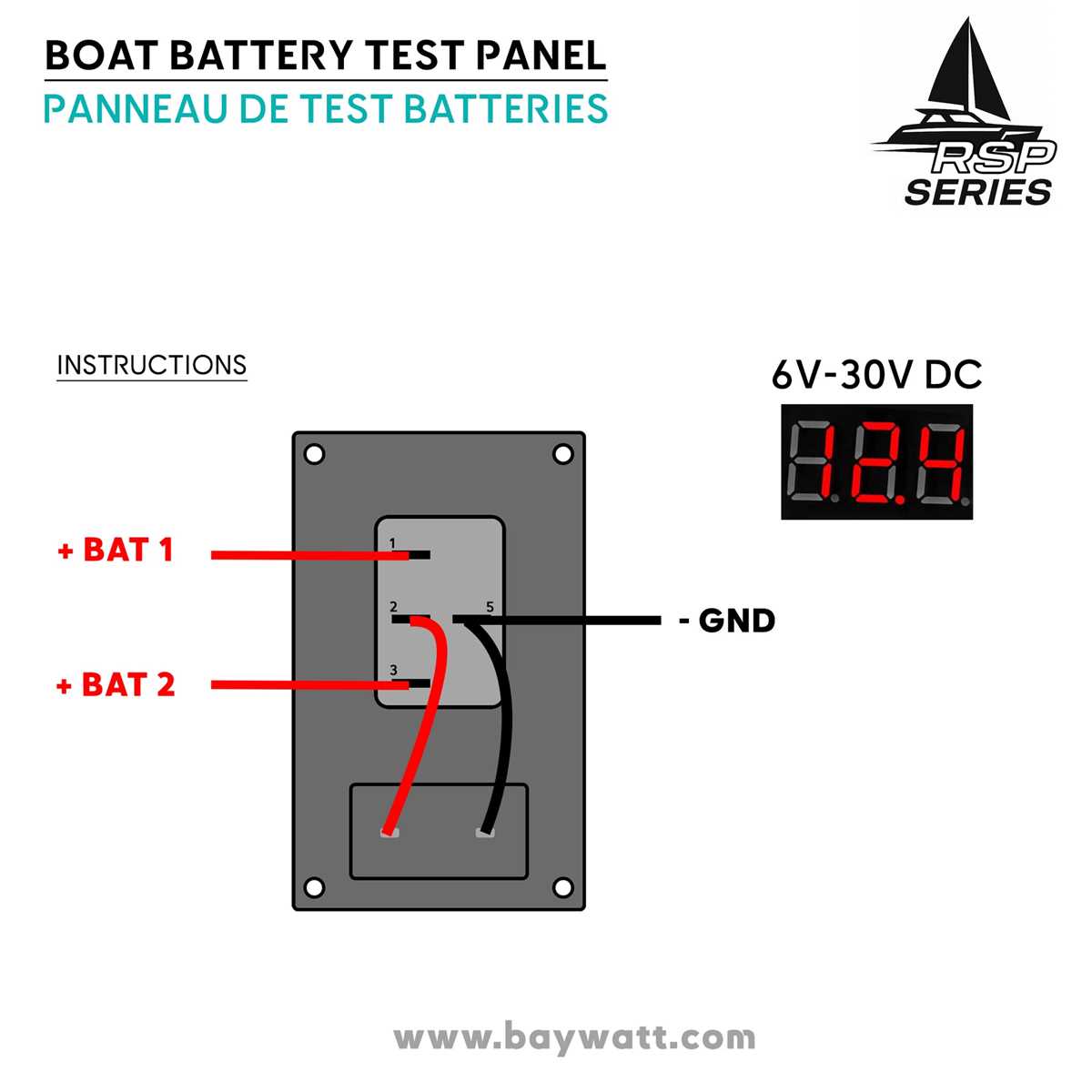
Run the positive battery cable to a fused distribution block, then route a separate power lead from that block to the marine control console. A main fuse rated between 30 A and 50 A usually protects the supply line feeding multiple onboard devices. From the console, each rocker or toggle unit directs current to a specific load such as navigation lights, bilge pump, horn, or accessory outlet. Place a negative bus bar close to the console so all return conductors from connected equipment terminate at a single grounding point linked to the battery negative terminal.
Terminal layout on most marine control consoles follows a consistent pattern: one input stud receives the positive feed from the fuse block, several output terminals send power to individual devices, and a grounding strip collects negative conductors. For example, a navigation light circuit may use 16 AWG tinned copper cable, while bilge pumps often require 14 AWG due to higher current draw. Keep cable runs short and support them with insulated clamps every 18 to 24 inches to prevent vibration damage. Label each conductor during installation so troubleshooting becomes faster if a light, pump, or electronic accessory stops operating.
How to Connect a Boat Switch Panel to Battery Fuse Block and Ground Bus
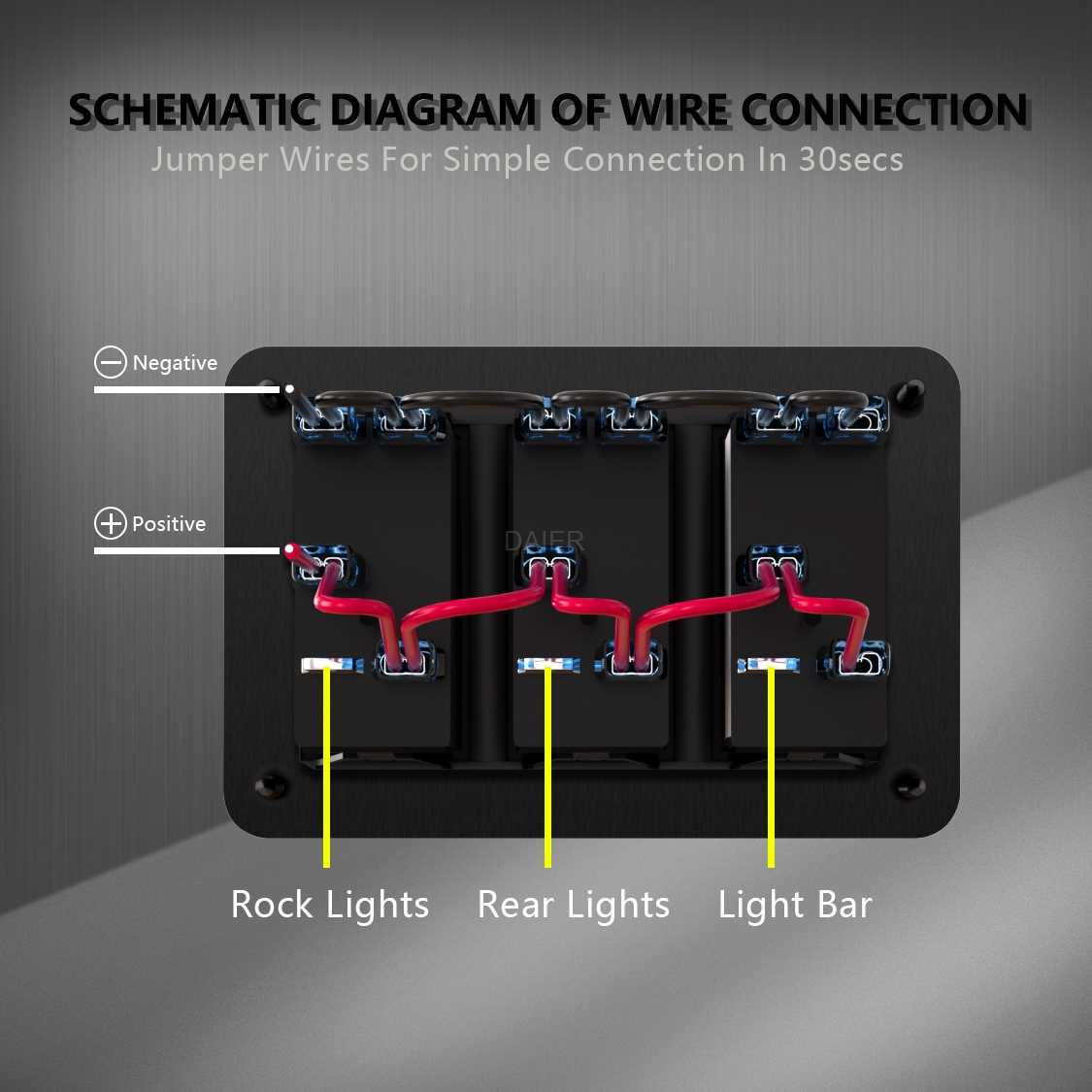
Install the fuse block within about 7 inches of the battery positive terminal and run a heavy supply cable from the battery to that block. A conductor sized 10 AWG or 8 AWG works for most small craft electrical systems feeding multiple accessories. This main line protects the entire distribution network before power reaches the control console.
Connect the positive output from the fuse block to the power input stud on the control console. This terminal becomes the source feeding each rocker or toggle unit mounted on the console face. Use a ring connector with heat-shrink insulation and tighten the terminal nut firmly so vibration does not loosen the connection.
Route separate output conductors from each control unit to its device. Typical onboard equipment includes lighting, pumps, and electronics. Select cable gauge based on current draw.
- Navigation lights commonly use 16 AWG tinned copper
- Bilge pump circuits often require 14 AWG
- High draw pumps or washdown systems may require 12 AWG
- Electronic accessories such as GPS units may run on 16 or 18 AWG
Install a negative bus bar near the console and attach the battery negative cable directly to this bar. Every device return conductor should terminate here rather than attaching randomly to the hull structure. This arrangement reduces voltage drop and simplifies electrical troubleshooting.
Secure all conductors along structural supports using insulated clamps placed roughly 18–24 inches apart. Keep cables away from fuel lines and sharp edges. Label both ends of each conductor so lighting, pumps, and electronic equipment can be identified quickly during maintenance.