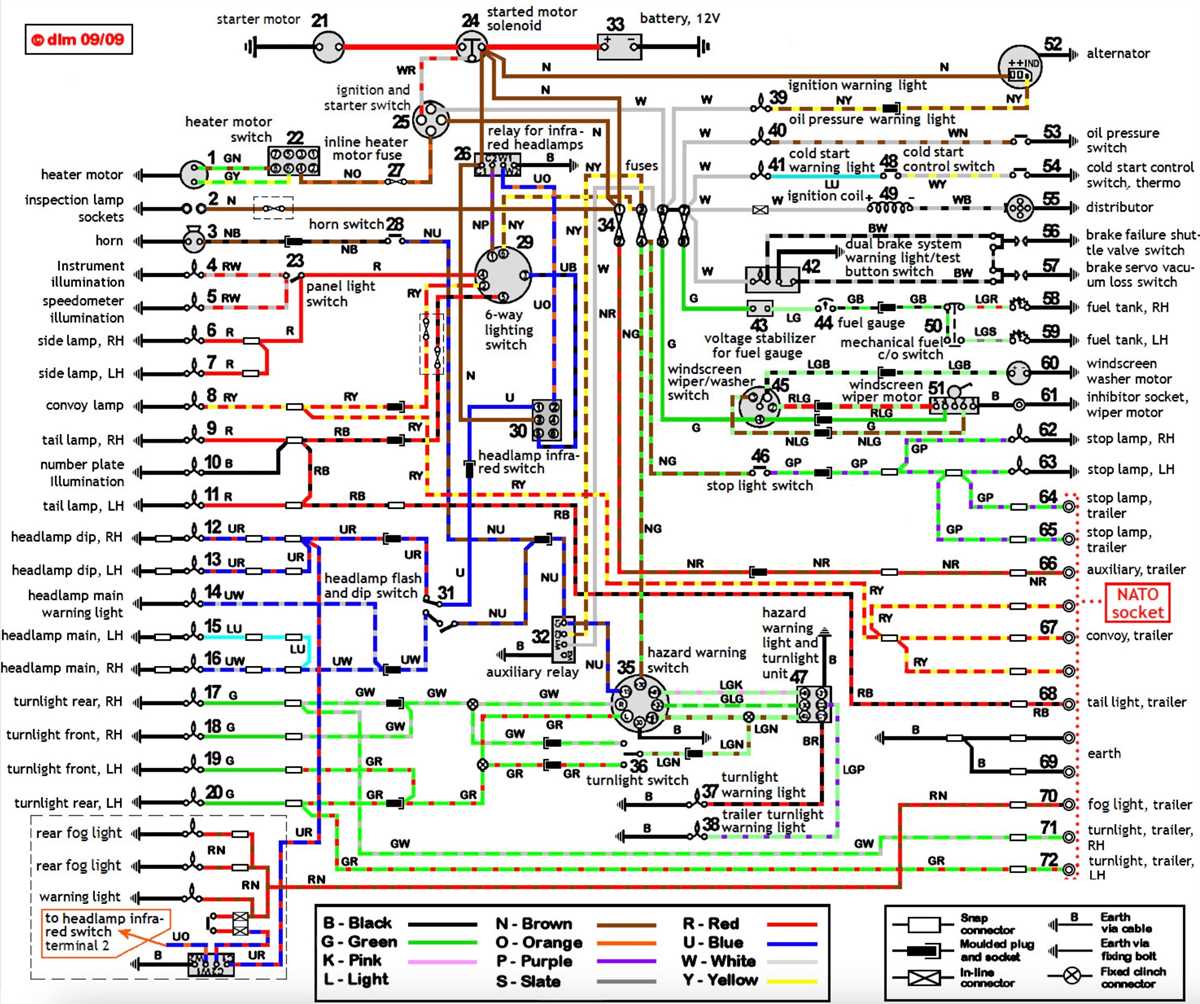
Ensure each connection follows color codes and gauge specifications to prevent shorts and voltage drops. Red lines typically carry power from the main battery, while black or brown lines serve as ground pathways.
Segment circuits by function–lighting, ignition, and accessory modules should have distinct routes with inline fuses. Fuse ratings between 10A and 20A are common for auxiliary components, while main circuits often require 40A or more.
Route conductors away from heat sources and moving parts. Plastic conduits and adhesive clips reduce abrasion risk, and spacing at least 2–3 centimeters from exhaust manifolds minimizes insulation melting.
Label each terminal and connector clearly to streamline troubleshooting. Use heat-shrink sleeves with printed codes and consider numbering relays to identify circuits quickly during maintenance or upgrades.
Verify voltage drops before final assembly. Multimeter testing at endpoints ensures that each pathway delivers the expected potential without excessive loss, particularly across long runs to high-demand devices.
Electrical Layout Recommendations for Vehicle Systems
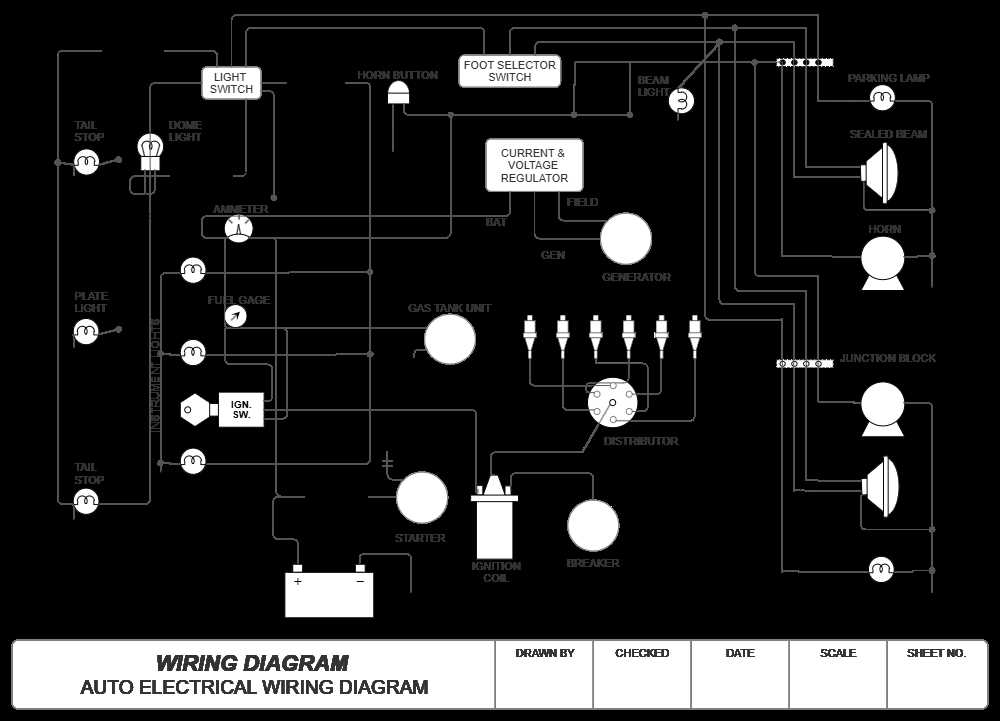
Separate high-current circuits from signal paths to prevent interference. Alternator feeds, starter solenoids, and battery connections should run along thick, insulated conductors with minimal bends.
Use inline fuses and circuit breakers for all auxiliary modules.
- Headlight circuits: 15–20A
- Dashboard electronics: 5–10A
- Cooling fans: 20–30A
Position fuses near the power source for easy replacement.
Implement clear labeling for each connection. Color-coded sleeves or printed markers help differentiate circuits: red for ignition, blue for sensors, yellow for lighting.
Maintain grounding consistency. Attach all negative terminals to a common chassis point; avoid using rusted or painted surfaces to prevent voltage drop and intermittent failures.
Route conductors away from moving components.
- Steering shafts
- Pedal linkages
- Suspension arms
Use split tubing or braided sleeves to protect insulation against abrasion.
Test each path with a multimeter before final assembly. Measure voltage at endpoints under load to verify proper continuity and absence of excessive resistance in long runs.
Document all modifications visually and in writing.
- Sketch connector layouts
- Record fuse ratings
- Label relay positions
This simplifies troubleshooting and future upgrades without relying on memory.
Identifying Fuses and Relay Locations
Consult the fuse box cover first to locate each protective device accurately. Numbers and color codes on the lid correspond to amperage ratings and relay functions, simplifying identification of ignition, lighting, and accessory circuits.
Separate high-amperage relays from low-current fuses. Relays controlling starter motors or cooling fans are typically larger and mounted on metal brackets near the battery, while smaller 5–15A fuses sit in interior panels for dashboard electronics and sensors.
Use a continuity tester or multimeter to confirm functionality. Check both ends of a fuse and across relay terminals to verify that the circuit completes only when the relay is activated, preventing misdiagnosis of inactive components.
Document each location visually.
- Sketch the fuse block layout
- Label relays with their designated circuits
- Note amperage ratings next to each protective device
This provides quick reference for maintenance or aftermarket modifications without relying solely on memory.
Replace blown fuses with identical ratings and avoid substituting relays with incompatible amperage. Incorrect replacements can cause overheating, intermittent failures, or permanent damage to control modules and high-demand systems.