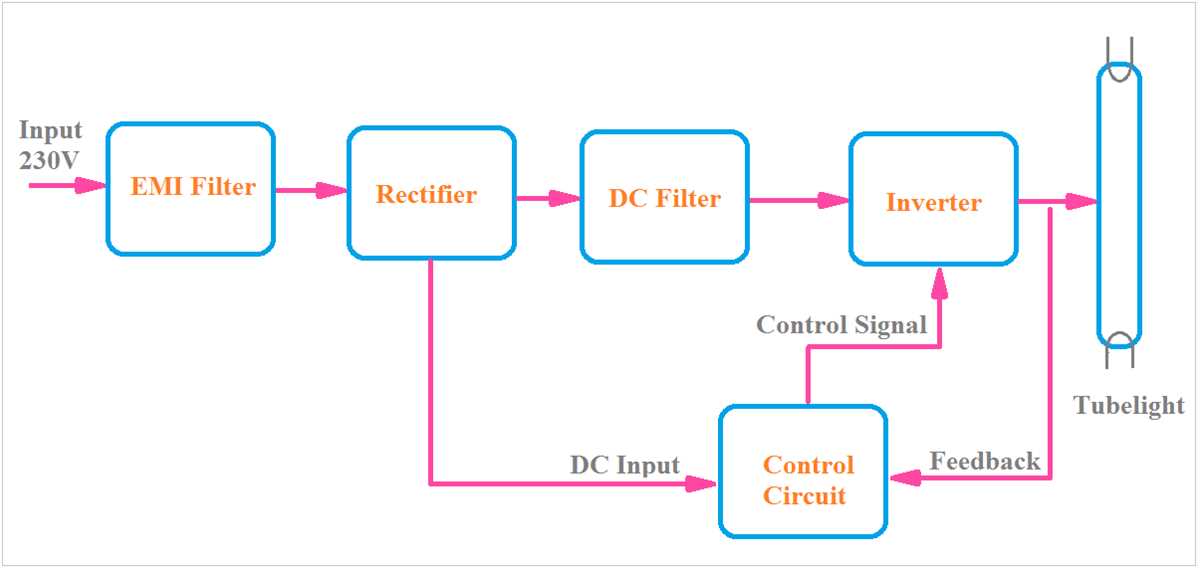
Connect the supply line to the choke coil first, then route the output toward the lamp holders and starter socket. This arrangement allows the inductive coil to limit current once the fluorescent tube ignites. Most installations operate on 120V or 230V AC, depending on regional power standards.
The choke coil functions as an inductive current limiter. When power first reaches the lamp system, current flows through the tube filaments and the starter unit. The starter briefly closes its internal contacts, heating the lamp electrodes. After a short delay, the contacts open and the collapsing magnetic field in the coil generates a voltage surge often exceeding 400 volts, which ionizes the gas inside the tube.
Once ionization occurs, the fluorescent tube begins conducting electricity and producing light. At this stage the coil restricts current to a safe operating level. Without this inductive component, current would rise rapidly and damage the electrodes inside the tube.
The starter device contains a small neon lamp and bimetal contacts. When voltage appears across the starter, the neon lamp glows and heats the bimetal strip. This heat bends the strip until the contacts touch, allowing current to pass through both lamp filaments. After the contacts open again, the inductive coil creates the high voltage pulse needed to ignite the tube.
Common fluorescent installations using 36W or 40W tubes rely on inductive coils rated around 0.43 to 0.44 amps. Matching the coil rating to the lamp wattage prevents overheating and maintains stable illumination.
Ballast Circuit Diagram Showing Fluorescent Lamp Starter and Choke Connections
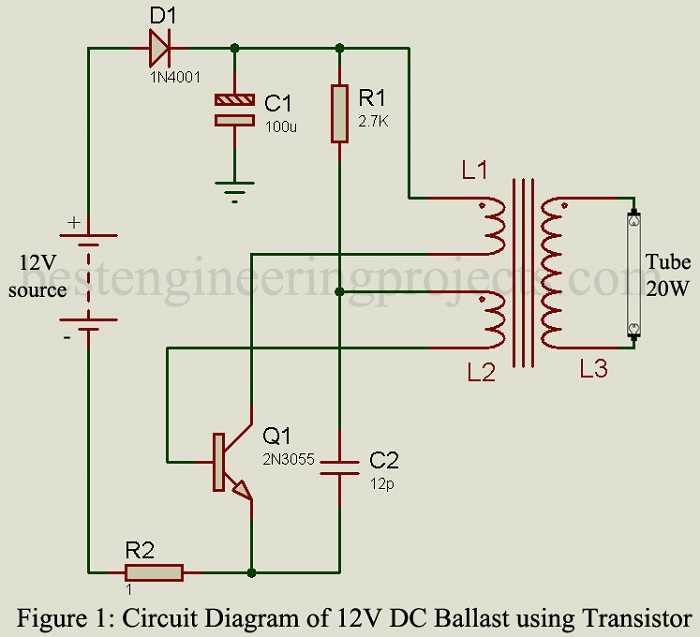
Route the supply line through the inductive choke before reaching the fluorescent tube holder, then place the starter across the lamp filaments. This layout allows the coil to control current after ignition while the starter creates the initial heating phase required for the tube electrodes.
Main components and their placement
- Inductive choke connected in series with the lamp
- Starter unit linked across the tube electrode terminals
- Two lamp holders supporting the fluorescent tube
- AC supply line entering through the choke coil
During startup, current flows through the tube filaments and the starter capsule. The internal contacts of the starter briefly close, heating both electrodes. When the contacts open again, the magnetic field stored in the choke collapses and produces a high voltage surge that can reach 400–600 volts, allowing the gas inside the tube to ionize and begin emitting light.
Typical current path
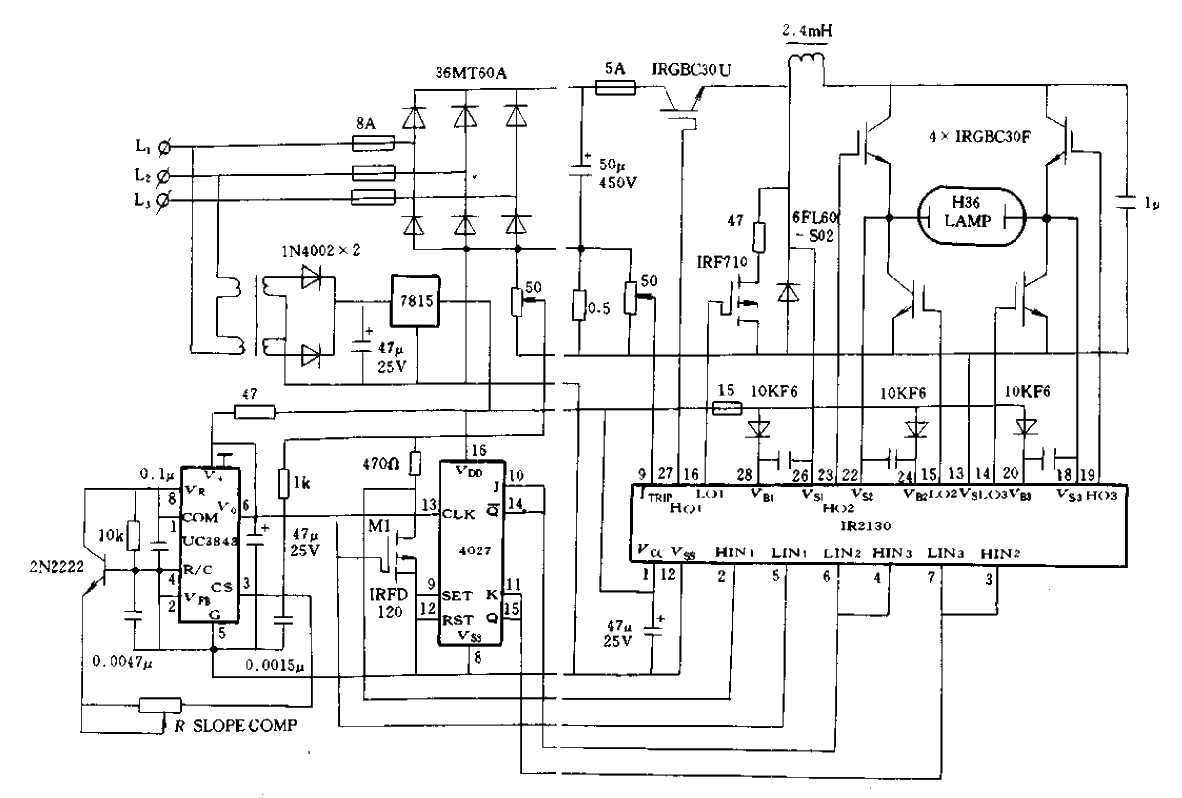
- Supply line enters the inductive choke
- Current continues toward one tube electrode
- Flow passes through the starter unit and opposite electrode
- Ignition occurs and current stabilizes through the tube
Once illumination begins, the starter stops conducting and the inductive coil limits current to the rated level of the tube. Common installations using 36W or 40W fluorescent tubes operate near 0.43 amps, which prevents overheating of the electrodes and maintains stable brightness.
Identifying ballast starter lamp holder and power supply in a ballast circuit diagram
Locate the AC supply first; it appears as two incoming lines labeled L and N or simply line and neutral. The line conductor typically routes directly into the inductive choke coil, while the neutral side continues toward the opposite lamp holder terminal.
The inductive choke is usually represented by a coil symbol placed in series with the fluorescent tube. Its role is current limitation after ignition. In many lighting layouts, this component sits between the incoming line and the first electrode of the tube.
The starter unit appears as a small enclosure symbol connected across both tube electrodes. This device briefly closes internal contacts, allowing current to pass through the lamp filaments. After heating, the contacts separate and trigger a high voltage pulse generated by the coil.
Lamp holders are placed at both ends of the fluorescent tube. Each holder connects to one filament of the lamp. In most layouts, one terminal from each holder links toward the starter socket, while the remaining terminals form the main current path through the tube.
Power flow typically follows this order: line conductor → inductive choke → first lamp electrode → starter path → second electrode → neutral return. Once gas inside the tube ionizes, current travels directly through the lamp and bypasses the starter.
Standard installations using 36W or 40W fluorescent tubes operate from a 220–240V AC supply. The inductive coil in such systems handles roughly 0.43A of operating current while stabilizing lamp output.
Identification becomes easier by tracing the series path containing the coil and the tube. Any symbol placed across both electrodes with a small capsule appearance represents the starter device, while the rectangular or cylindrical coil symbol indicates the inductive current limiter.