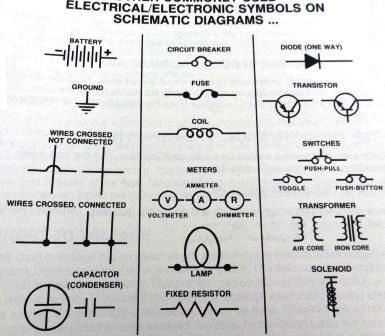
Use standardized graphic marks while reading a vehicle electrical schematic; this approach prevents misinterpretation of circuits and reduces repair time. Each mark represents a specific component or electrical function, such as a power source, protective element, switch, or ground connection. For example, a battery is typically shown as two parallel lines of unequal length, while a fuse appears as a small rectangle placed along a conductor path. Recognizing these visual cues allows a technician to trace current flow through lighting units, control modules, and sensor circuits without dismantling large sections of the vehicle.
Switch indicators require particular attention. A simple on-off control is often drawn as a break in the conductor line with a movable contact. Variants exist for push buttons, relays, and multi-position selectors. Relay marks frequently include a coil representation paired with one or more contact sets, showing how a low-current trigger controls a higher load such as a cooling fan or starter solenoid. Accurate reading of these marks helps identify whether a failure originates in the control side or the power side of the circuit.
Ground points and connectors also appear frequently within vehicle electrical plans. A ground point normally uses three descending horizontal lines of decreasing width, indicating the connection between the electrical network and the vehicle chassis. Multi-pin connectors are drawn as paired blocks with numbered terminals, allowing precise tracking of conductors passing through dashboards, engine compartments, and body harness sections. Terminal numbering often corresponds to service manuals, which simplifies pinpoint testing with a multimeter.
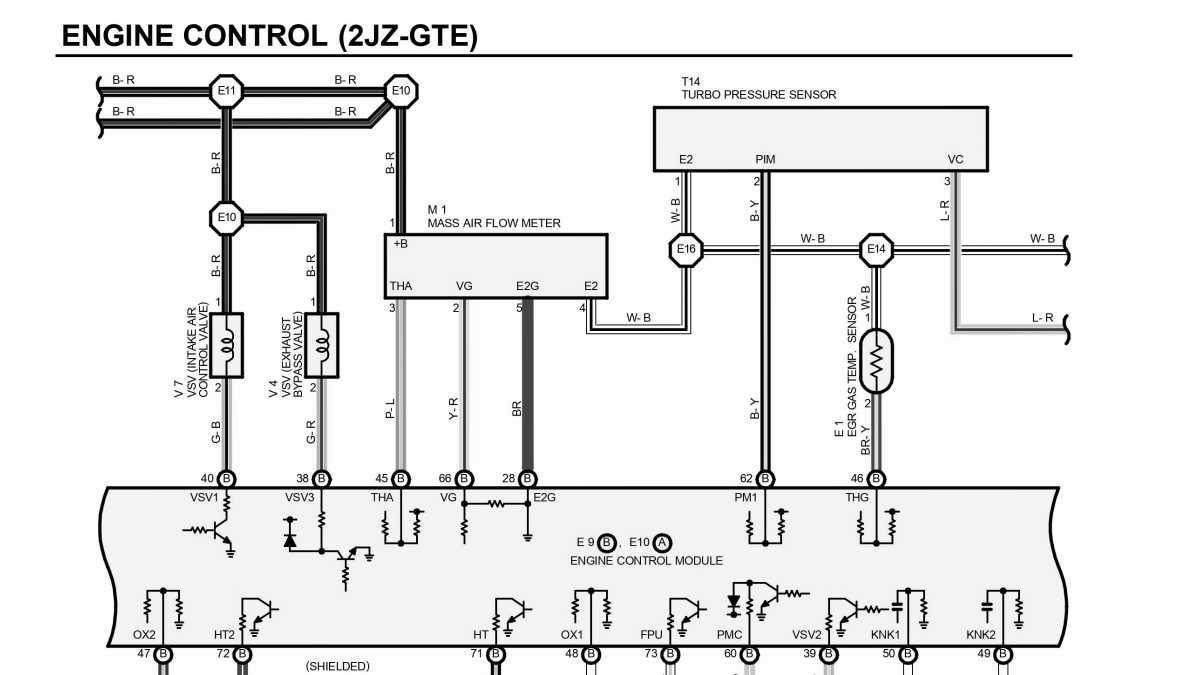
Color codes and conductor labels complement these graphical marks. Manufacturers typically attach two- or three-letter abbreviations representing insulation color, such as BK for black or RD for red. Combined with gauge numbers, these labels reveal conductor thickness and expected current capacity. Careful interpretation of these notations makes it possible to locate damaged lines, verify correct routing, and rebuild sections of the electrical network without guesswork.
Practical Guide to Understanding Automotive Schematics
Use the legend of the electrical schematic first and match each graphic mark with its function before tracing any circuit. Ground points usually appear as three descending lines or a triangle pointing downward; these marks show where current returns to the chassis. Power supply points often carry a battery icon or a labeled voltage feed such as B+ or IGN. Fuse indicators appear as a small rectangle placed inline with a conductor path and are typically labeled with amperage values like 10A, 15A, or 30A. When a line crosses another without a dot, the conductors do not connect; a solid dot at the intersection indicates a junction.
Reading Circuit Paths
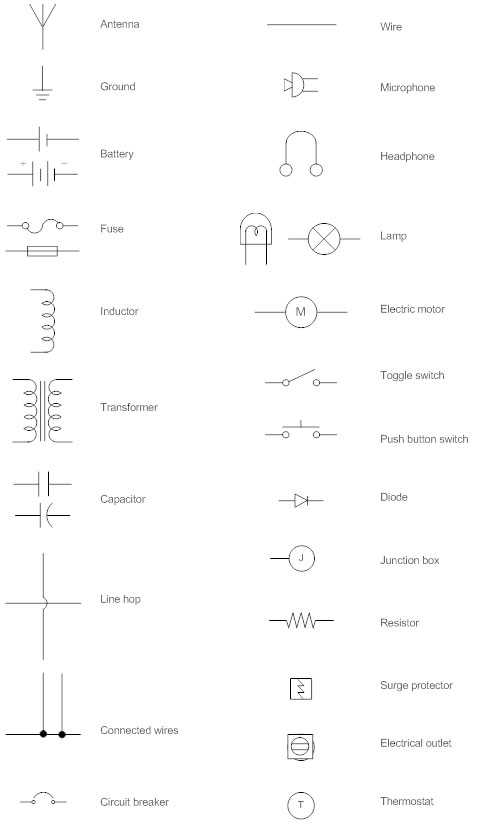
Follow the path from the power source through protection components, switching devices, and finally the load. A relay is commonly drawn with a coil and a pair of contacts; the coil terminals may be labeled 85 and 86, while switching contacts often carry numbers such as 30, 87, and 87a. Switch pictograms differ by movement type: a simple break contact shows a pivoting arm, while multi-position selectors display several contact paths. Lamps appear as a circle with a small filament shape inside, while motors often show a circle with the letter “M”.
Connector and Color Identification
Connector blocks are usually shown as rectangles containing numbered pins. Each pin number corresponds to a cavity inside the physical plug, allowing direct comparison with the harness. Color abbreviations beside conductors indicate insulation color: BK (black), RD (red), BL (blue), GN (green), WH (white), and YL (yellow). A pair such as RD/WH indicates a red conductor with a white stripe. These codes allow quick tracing through multiple schematic pages without removing interior panels.
Manufacturers also divide electrical maps into grid coordinates printed along page borders. A reference such as “C3” or “E7” directs the reader to the continuation point of the same conductor on another page. Splice points appear as labeled nodes like S104 or S210 and indicate where one feed splits into several branches inside the harness. Using these identifiers speeds fault tracing: measure voltage at the fuse, then at the relay contact, then at the load connector pin. The point where voltage disappears usually marks the break, corrosion spot, or failed component.