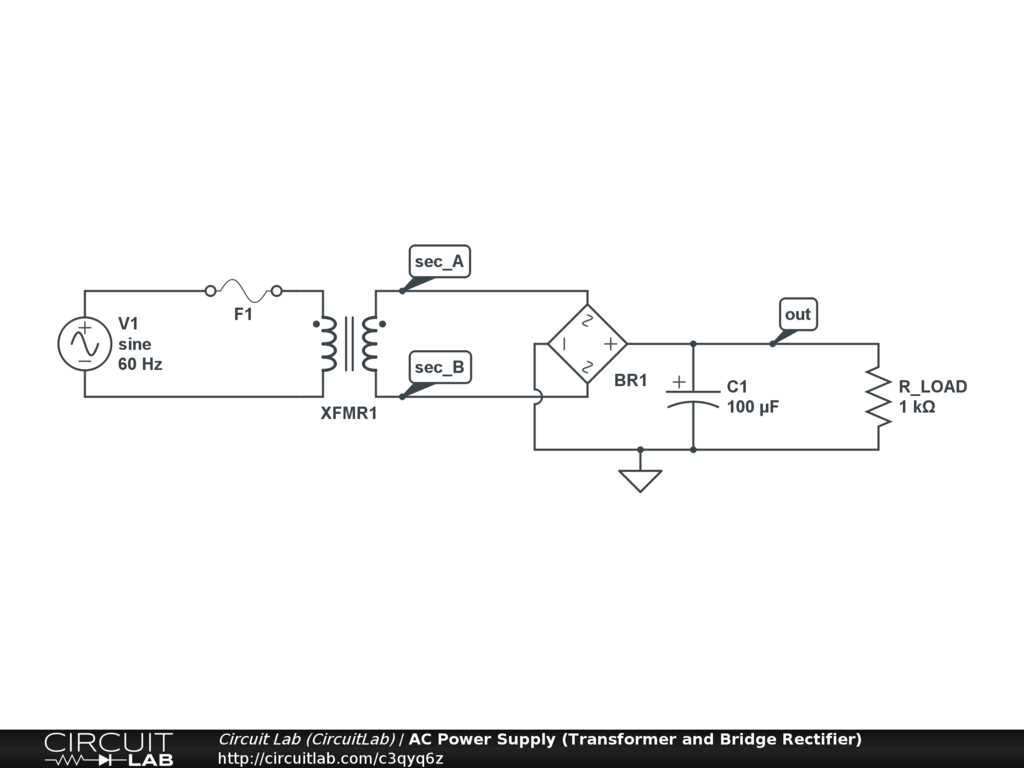
To efficiently convert alternating current (AC) into direct current (DC), using a setup that incorporates four diodes can help in achieving smooth voltage conversion. By arranging the diodes in a specific manner, it ensures that both positive and negative halves of the AC waveform are used, resulting in a more consistent output.
This method minimizes ripple and provides a more stable DC output, making it ideal for various applications that require steady voltage. It is particularly useful in powering devices that need a reliable, unidirectional power source, such as batteries and low-voltage circuits.
When building the setup, ensure the diodes are properly oriented to manage current flow and prevent reverse breakdown. Additionally, incorporating a filtering component, such as a capacitor, after the diodes can smooth out any remaining fluctuations in the voltage, improving the overall quality of the DC output.
AC to DC Conversion Setup for Smooth Power Supply
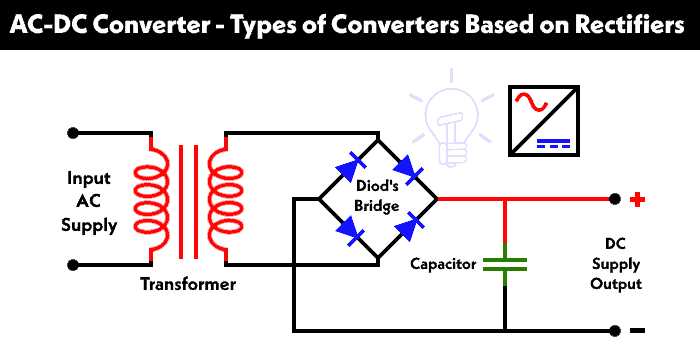
To achieve a steady DC output from an AC source, using four diodes in a specific configuration is highly recommended. The diodes must be arranged in such a way that they handle both the positive and negative halves of the alternating current waveform. This ensures that the output voltage remains as constant as possible, reducing fluctuations commonly seen in simpler setups.
Optimizing Output Voltage Quality
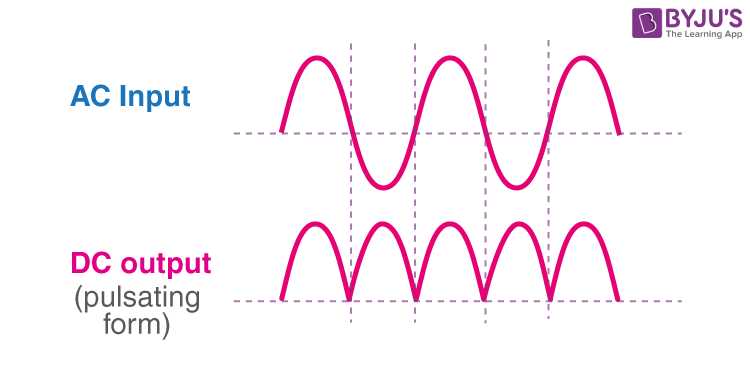
One of the most effective ways to smooth out the DC output after the initial conversion is by using a filtering capacitor. This component helps to reduce the ripple that remains in the output voltage, making it more suitable for devices that need a constant voltage source. The capacitor charges during the peaks of the AC signal and discharges during the troughs, filling in the gaps between the cycles.
For the best results, select a capacitor with the correct rating. A capacitor that’s too small may not effectively smooth the voltage, while one that’s too large could take up unnecessary space and increase the overall cost of the setup. Start by choosing a capacitor with a voltage rating higher than the peak AC voltage to ensure durability.
Calculating the Proper Diode Ratings
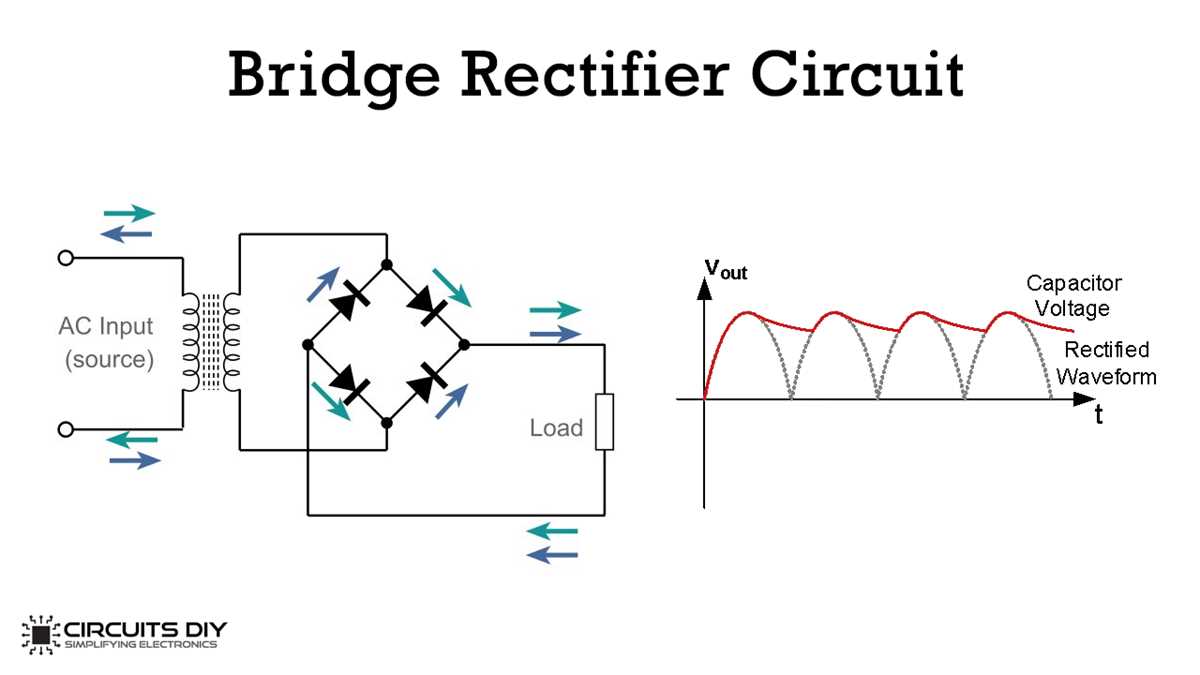
The diodes must be rated appropriately to handle the maximum current that the load will require. Choose diodes with a peak inverse voltage (PIV) rating higher than the peak AC voltage to prevent damage during the reverse cycle. It’s also important to consider the current rating of the diodes; if they are under-rated, they could overheat and fail, leading to system malfunction.
When assembling the diodes, pay careful attention to their orientation. Incorrect placement can cause current to flow in the wrong direction, effectively disabling the conversion process. Ensure that the diodes are aligned in such a way that they allow current flow only during the appropriate half of the AC cycle, while blocking current during the opposite half.
Understanding the Components of an AC to DC Bridge Rectifier
The key components in this power conversion setup are the diodes, transformer, and capacitor. Diodes play the critical role of allowing current to flow in only one direction, thus converting alternating current into unidirectional flow. The transformer adjusts the AC voltage to a level suitable for the system’s requirements, while the capacitor smooths out any remaining ripple in the output voltage.
The diodes are arranged in a specific configuration to ensure that both halves of the AC waveform are utilized. Each diode conducts during the appropriate phase of the AC cycle, ensuring continuous power delivery. These diodes must be selected based on the maximum current the load will require and the peak voltage the diodes will be exposed to.
A transformer is necessary to step up or step down the AC voltage, depending on the desired output. The voltage rating of the transformer should correspond to the requirements of the load. It’s also important to ensure that the transformer’s current rating matches the expected load current to prevent overheating and potential failure.
The capacitor, typically placed after the diodes, serves to filter out the ripples left in the DC voltage. Capacitors charge during the peak voltages and discharge during the troughs of the AC waveform, filling in gaps to produce a smoother output. For optimal performance, the capacitor’s value should be chosen based on the load and the frequency of the AC source.
Other components that might be used to enhance performance include resistors for current limiting or to assist with filtering, and inductors for further smoothing. However, in basic applications, the combination of diodes, transformer, and capacitor is sufficient to create a reliable DC output.
When selecting components, always ensure that the voltage ratings of the diodes and capacitor exceed the peak values of the AC source to prevent component failure. Diode placement must also be correct, as improper orientation will result in the failure of the system to convert AC into usable DC power.