Use a three-conductor supply line with phase, neutral, and protective ground and connect each conductor to the correct terminal on the power socket: phase to the brass contact, neutral to the silver contact, and ground to the green screw. This arrangement keeps current flow predictable and reduces overheating at contact points. In most residential systems the supply carries 120 V at 60 Hz in North America or 230 V at 50 Hz across many European grids.
The internal contact layout of a wall socket follows a clear electrical path. The phase conductor feeds the narrow slot or designated live terminal, while the neutral conductor returns current through the wider slot. A copper or green-insulated conductor routes fault current toward the grounding system. Terminal screws must clamp the conductor clockwise so tightening the screw compresses the loop rather than pushing it outward.
Conductor size affects thermal stability. For a 15-amp branch circuit, installers usually select 14 AWG copper; for 20-amp circuits, 12 AWG copper is typical. Aluminum conductors require compatible terminals marked AL-CU. Loose clamping pressure raises resistance and can produce localized heating above 60–70°C at the contact surface, which degrades insulation over time.
Correct polarity also protects appliances with single-pole switches. When the phase conductor occupies the designated live terminal, the switch interrupts the energized line rather than the return path. This prevents internal components from remaining energized after the device appears switched off. A polarity tester or multimeter check after installation confirms that phase, neutral, and grounding conductors follow the intended connection layout.
AC Receptacle Connection Layout
Connect the line conductor to the brass terminal, the neutral conductor to the silver terminal, and the ground to the green screw on the receptacle body. Use 14-AWG copper for a 15-amp branch circuit or 12-AWG copper for a 20-amp branch circuit. Strip insulation to about 12–14 mm so the bare metal wraps fully around the screw head. Tighten terminals to roughly 0.8–1.2 N·m to prevent overheating caused by loose contact.
A typical household alternating-current supply delivers 120 V at 60 Hz in North American systems or 230 V at 50 Hz across most European installations. In the connection scheme, the energized conductor feeds the narrow slot of the receptacle while the neutral feeds the wider slot. The protective earth links directly to the grounding pin and the metal box if present. This configuration routes fault current safely to earth and trips the circuit breaker within milliseconds.
Maintain conductor routing inside the wall box with gentle bends; copper should not be folded sharply. Minimum box volume must match conductor count: for example, 18 cubic inches supports two 14-AWG conductors plus a receptacle device. Use approved clamps so cable jackets extend at least 6 mm inside the enclosure. If the device sits in a damp location, add a ground-fault interrupter unit that disconnects power when leakage exceeds roughly 5 mA.
Verify polarity and grounding after installation with a plug-in tester or multimeter. A correct connection pattern shows line-to-neutral voltage near the rated supply value, line-to-ground almost identical, and neutral-to-ground close to 0 V. Any reversed polarity or floating earth requires immediate correction to prevent appliance damage and electric shock.
How to Match Outlet Terminal Colors With Hot, Neutral, and Ground Wires in an AC Outlet Wiring Diagram
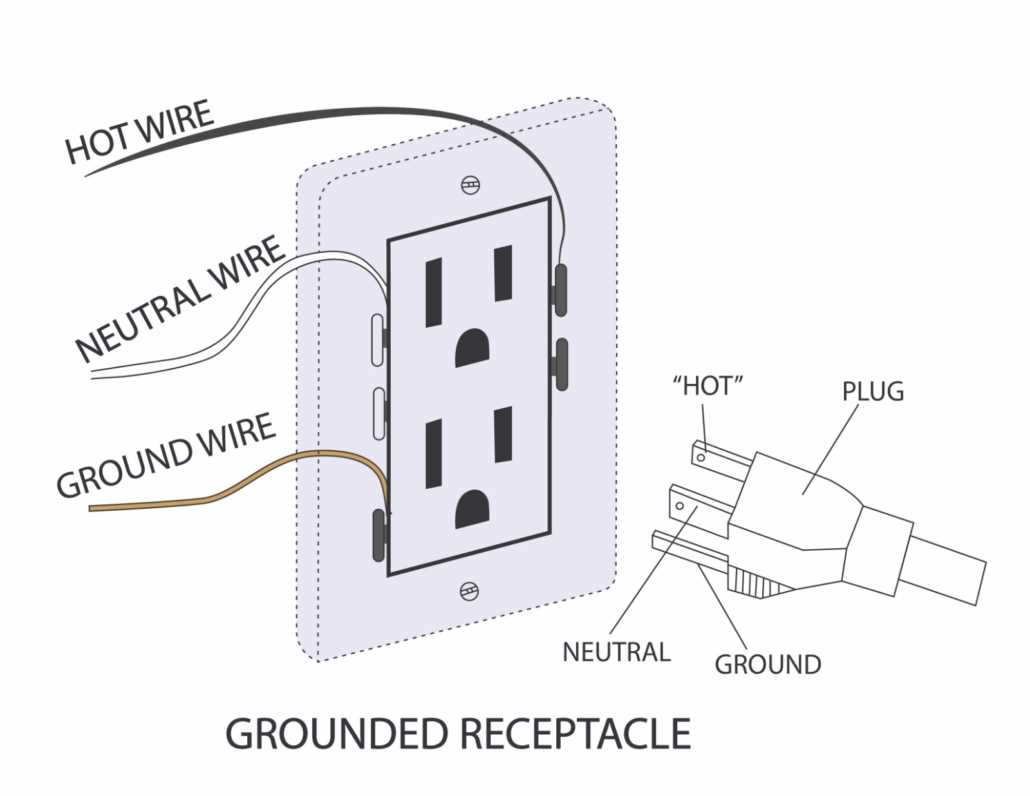
Connect the black or red live conductor to the brass-colored terminal screw, the white neutral conductor to the silver screw, and the bare copper or green safety conductor to the green grounding screw. This color-to-terminal rule appears in nearly every residential AC connection layout used in North America with 120-volt circuits. Brass indicates the energized line path, silver identifies the return path, and the green screw marks the protective earth connection bonded to the metal box or grounding system.
Terminal Colors and Their Electrical Roles
Brass screws correspond to the energized phase conductor that carries voltage from the breaker panel. In a 120-volt branch circuit this conductor typically uses black insulation, though red appears in multi-wire circuits. The silver terminal connects to the neutral path, which returns current to the service panel bus. Neutral conductors are white or gray according to NEC color conventions. The green screw connects to a grounding conductor, usually bare copper or green-insulated wire, which diverts fault current directly to earth and trips the breaker during a short circuit.
Physical placement also helps identification. The brass terminal usually sits on the narrower blade side of the receptacle face, while the silver terminal aligns with the wider blade slot. This blade width difference enforces polarity so that devices connect their internal switches to the energized conductor rather than the neutral path. The green grounding screw typically appears at the bottom or on the metal strap, linking the protective conductor to the mounting yoke and any metal electrical box.
Common Matching Errors and How to Avoid Them
A frequent mistake occurs when the white conductor is attached to a brass screw during replacement of an old receptacle. This reverses polarity and leaves appliance components energized even when switched off. Another error involves omitting the grounding conductor when replacing a two-slot receptacle with a three-slot type. If no grounding conductor exists, installation should use a GFCI device labeled “No Equipment Ground.” Verify conductor identification with a voltage tester: the energized conductor shows about 120 V relative to ground, while the neutral conductor measures near 0 V under no load.