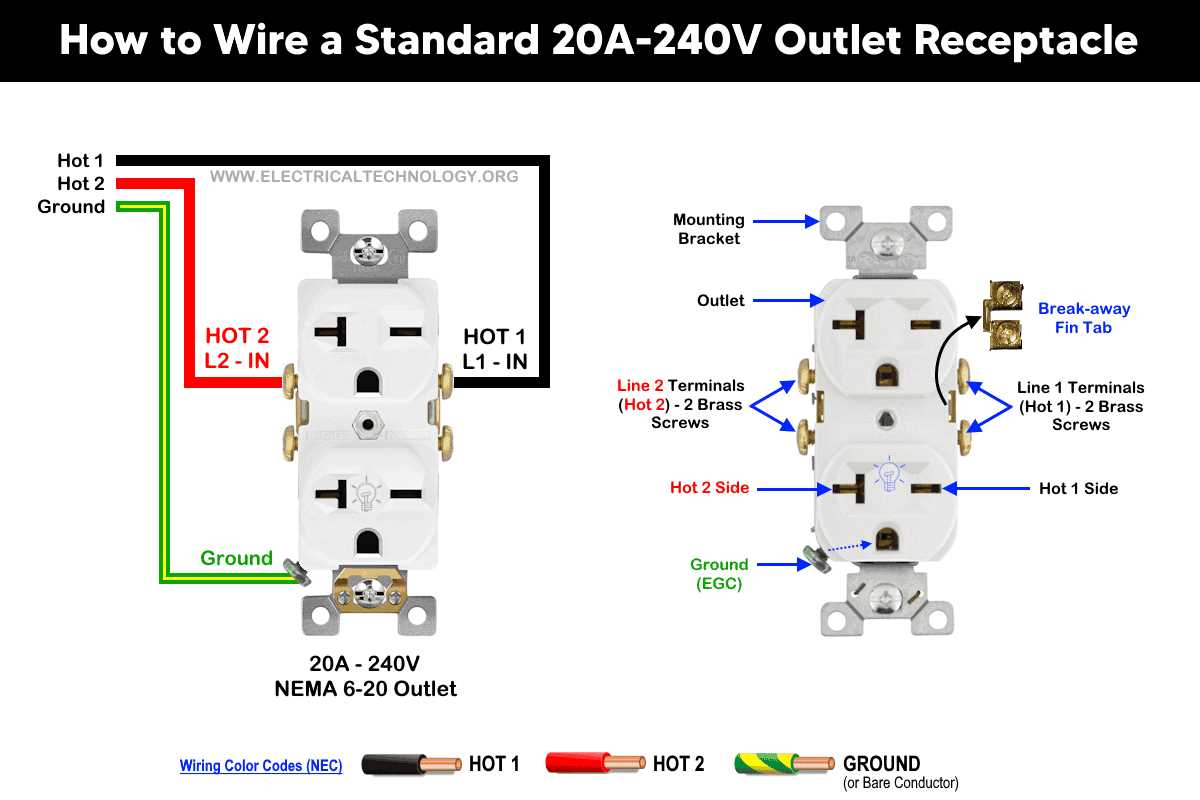
Ensure power is fully shut off at the main breaker before touching any live lines. Use a voltage tester to confirm no current is present and wear insulated gloves to prevent accidental shocks.
Identify all active conductors including the two hot lines and the neutral. Correctly matching each conductor to its designated terminal prevents short circuits and maintains stable operation for high-demand appliances.
Secure each cable firmly to the terminal screws, making tight but not over-torqued connections. Loose contacts can cause overheating, sparks, or permanent damage to both the socket and connected devices.
After installation, perform a load check with a multimeter or a small device rated for the voltage. Verify correct polarity and confirm there are no unexpected voltage drops before full usage of the circuit.
Step by Step Guide to Safely Connecting a 220 Volt Power Outlet
Cut power at the main breaker and confirm all lines are inactive with a voltage tester before beginning any connections. Safety checks at this stage prevent serious electric shocks.
Strip insulation from each conductor carefully to expose the metal core without nicking the wire. Exposed length should match the terminal requirements for a secure fit and stable contact.
Identify each conductor according to function: two live lines, one neutral, and a ground. Proper labeling and recognition of each conductor is critical to avoid reverse connections or overloads.
Attach conductors to corresponding terminals using firm, clockwise turns on the screws. Verify that each metal core is fully seated in the terminal to prevent arcing under load.
Fasten the device to the mounting box and ensure no bare wires are exposed outside the terminal points. This prevents accidental shorts or contact when the faceplate is installed.
Test the installation with a multimeter or compatible device before regular use. Check voltage across live lines and confirm proper grounding to guarantee safe operation under full electrical load.
Identifying Correct Wires and Terminal Connections
Confirm each conductor by function before connecting. Typically, two live lines carry the current, one neutral completes the circuit, and the ground ensures safety. Misidentifying any line can result in short circuits or device damage.
Use color codes and labels to distinguish conductors. Standard practice assigns black or red to live, white to neutral, and green or bare copper to ground. Double-check with a voltage tester for accuracy before proceeding.
Securing Conductors to Terminals
- Strip the insulation precisely to the terminal’s recommended length.
- Insert the exposed core fully into the terminal slot.
- Tighten screws clockwise to avoid loose connections and arcing.
Verify terminal alignment to ensure that no metal strands protrude outside contact points. Cross-contact between live and neutral lines can trigger dangerous sparks under load.
Final Verification and Testing
- Check each connection with a multimeter for correct voltage readings.
- Ensure the ground path is continuous and properly secured.
- Confirm that all screws are tight and conductors are stable before restoring power.