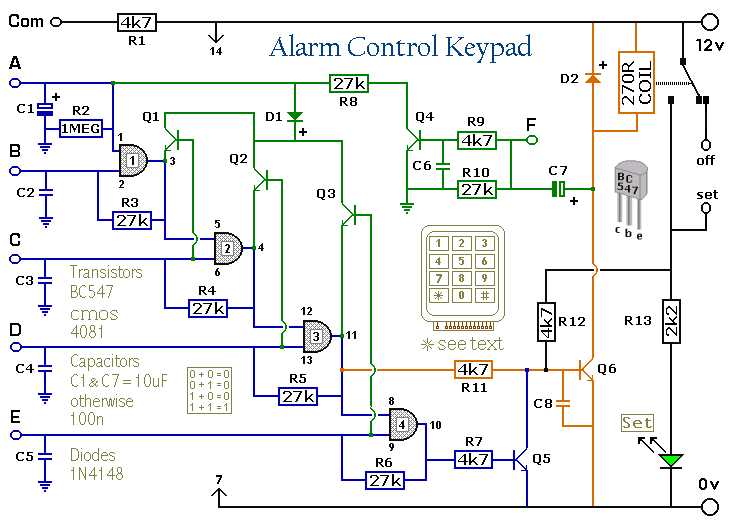
Place a door or window sensor at the entry point and connect it to a small control network that activates a siren when the contact opens. A common setup uses a magnetic reed switch mounted on the door frame and a small magnet attached to the door panel. When the door opens, the contact separates and triggers the control stage.
Power the detection system from a stable 9–12 volt DC supply. Small security builds often rely on a rechargeable battery so that the system continues operating during power loss. The detection stage usually includes a transistor or relay that switches the siren once the sensor contact changes state.
Link the sensor, switching stage, and sound device through clear signal paths. The reed switch feeds the base of a transistor through a resistor, while the transistor output drives a relay or piezo siren module. This structure separates the low current detection signal from the higher current load of the sound unit.
Mount the siren unit where sound can spread through hallways or near an entrance. Many small piezo sounders draw 20–150 mA at 12 volts and produce sound levels above 90 dB. High sound pressure alerts occupants and discourages unauthorized entry.
Burglar Alarm Circuit Diagram with Sensor Trigger and Siren Connection Layout
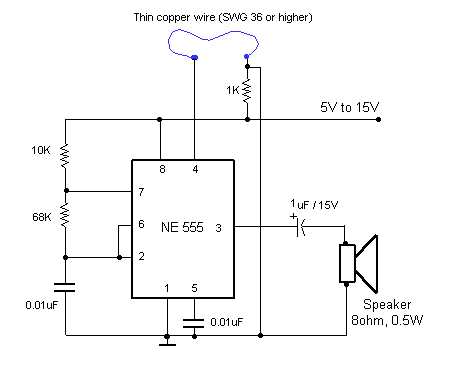
Place the door or window sensor in series with the control stage so that opening the contact immediately activates the sound unit. A magnetic reed contact mounted on the frame changes state once the door moves more than a few millimeters, sending a trigger signal to the switching stage.
Use a transistor or relay as the switching element between the sensor and the siren device. The sensor signal flows through a resistor to the transistor base, while the collector controls the load line powering the sound module. This arrangement allows a low current trigger to control a higher current device.
Main Components in the Security Circuit Layout
- Magnetic reed contact mounted on door or window frame
- Resistor limiting base current
- NPN transistor or relay module used as switching stage
- Piezo siren or buzzer producing sound signal
- 9–12 volt DC supply powering the entire system
Connect the reed contact between the positive supply and the transistor input so that the control path changes state when the door opens. A resistor typically ranging from 4.7 kΩ to 10 kΩ regulates base current and protects the transistor from overload.
Attach the siren module to the output side of the switching element. Many compact sounders draw between 30 mA and 200 mA depending on sound intensity. When the transistor saturates or the relay closes, full supply voltage reaches the sound device.
Signal Flow Through the System
- Door opens and magnetic contact separates
- Trigger signal reaches the transistor input
- Switching stage conducts current
- Siren module receives full supply voltage
- High volume tone alerts occupants
Mount the sound device near the entry zone or inside a hallway where sound spreads through multiple rooms. A typical piezo unit produces 90–110 dB at one meter, loud enough to alert occupants and discourage unauthorized entry.
Secure all conductors along walls or inside protective channels to prevent accidental disconnection. Stable connections maintain reliable triggering and avoid false activation caused by loose contacts or vibration.
How to Connect Motion Sensor Magnetic Switch and Siren in a Burglar Alarm Circuit
Sensor and Magnetic Contact Connection
Install the motion detector near the entrance or hallway and place the magnetic reed contact on the door frame. Connect both devices to the control path so that either movement detection or door opening activates the switching stage. The reed contact typically remains closed while the magnet stays within a few millimeters. Once the door opens, the contact changes state and sends a trigger signal through a resistor to the transistor or relay input.
Siren Activation Path
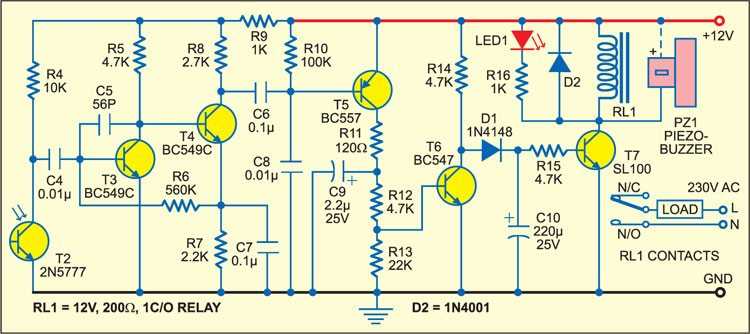
Link the output of the switching stage to the sound device using a direct power path from the 9–12 volt supply. When the sensor signal reaches the switching element, the device conducts and delivers full voltage to the siren module. Many compact piezo sounders draw between 50 mA and 150 mA and produce sound levels around 90–110 dB at one meter.
Connect all ground returns to a single chassis or common negative terminal. Stable grounding reduces noise and prevents false triggering caused by unstable voltage on the sensor lines.